

[ad_1]
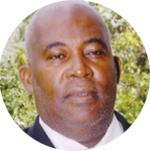
Prime Minister Philippe Pierre announced at the 36th annual general meeting of the Castries East Region that his government will implement plans to help young people get out of deviant behaviour.
In the first part of this series, philosopher Aristotle argued that all people are born good, but that a person’s environment can influence his behavior in positive or negative ways.
Indeed, the God of the universe states in the Bible that He created human beings and saw in them goodness. So how can we get young people to follow social norms?
So what does compliance mean? By compliance I mean changes in behavior that show people complying with the standards, rules, and laws set by the group or society.
Indeed, preventing behavioral problems is a serious responsibility. We must be prepared to work hard to get young people to change their behavior, or even worse, their deviant behavior.
Here are some suggestions that may help:
Parents should constantly monitor their children’s behavior. This is a serious responsibility. This means they should know where their children and teens are, what they are doing, who they are with, and provide appropriate supervision. This supervision is especially important during the teenage years, as young people become more independent and spend more time outside.
In fact, parents should develop some simple ways to supervise their children and teenagers. I would like to suggest three methods here: (a) Make a list of your child’s weekly activities and keep it nearby for easy reference; (b) Check on your child occasionally to see if he/she is where he/she said he/she is. (c) When your child or teenager comes home, you may want to discuss their activities. Your child or teenager will be sure that you are interested in his or her activity plans.
I would like to take this opportunity to point out that parents should encourage their children to make friends with people who do not have problem behaviors. In fact, children know which peers have behavior problems in the classroom and in the community. Those children will have a negative impact on your child.
Now, as a trained teacher, I can tell you that peers have a huge influence on your child or teen. They will do things in the group that they would not do in front of you at home.
In fact, parents and teachers should also avoid letting children with behavioral problems form unsupervised groups. Children may learn problem behaviors from each other and encourage each other to behave inappropriately. This is commonly known as peer influence.
Now, some children may not be as influenced as they could be if they were properly disciplined at home and in school. But parents should not “count” on this! These groups should be closely monitored to prevent young people from encouraging behavioral problems in their peers.
Parents and teachers should create fun activities for children and teens that are supervised by adults. Supervised recreational activities allow children and teens to interact with their peers while also keeping children and teens away from situations that might tempt them to try tobacco, alcohol, drugs, and risky sexual behaviors.
Indeed, it is very important for parents to limit the time their children spend after school. There are so-called extra-curricular activities in schools. These activities may include cricket, football and some kind of youth conference. These activities are very healthy if well coordinated and supervised. These activities will allow children and young people to release excess energy and build a name for themselves, which the community he or she lives in will take advantage of. To be continued.
[ad_2]
Source link

