


[ad_1]
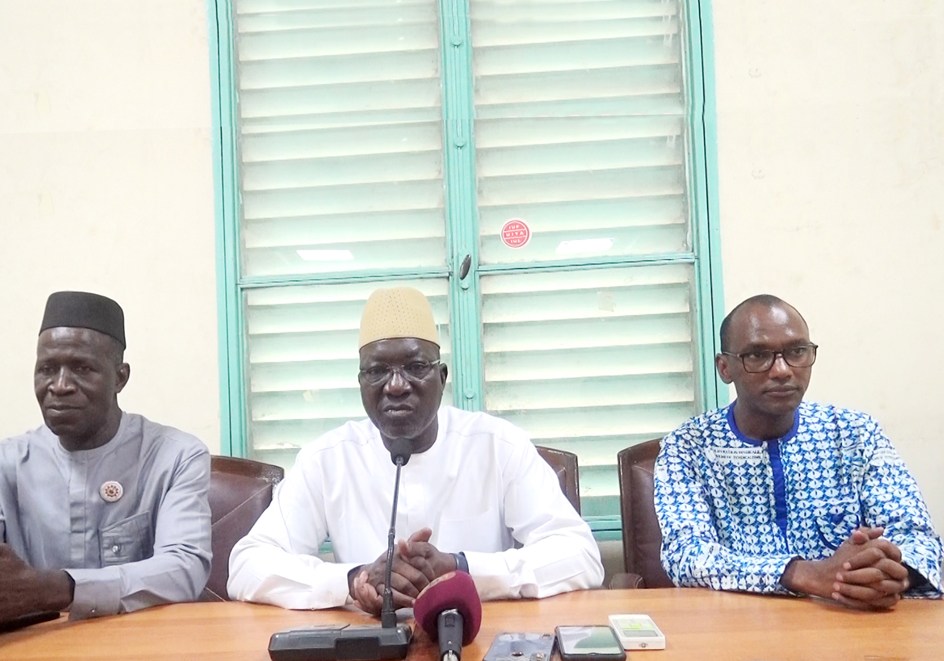
The National Union of Banks, Insurance, Financial Institutions and Commerce of Mali (SYNABEF) ended its strike campaign on June 10, 2024. The strike was triggered on June 5, 2024 after the arrest and arrest warrant of its Secretary General Hamadoun Bah following a complaint for counterfeiting and the use of forged goods. This numerous campaign, which began a few days before Tabaski Day, undermines the rights of users. Among other things, it reflects the growing uneasiness between the authorities and the unions and the pressures that threaten peace and social justice.
In protest against the arrest of SYNABEF Secretary General Hamadou Bah on June 5, 2024, the union decided to launch a 72-hour work stoppage on June 6. This widely watched campaign lasted until June 10. The union demanded the release of its leader, but ended the strike only after the latter was released, whom the union considered a victim of union action.
But the five-day strike had a serious impact on numerous operations on the eve of the holiday. “We are in the middle of Tabaski loan activities. It is true that there is a minimum service, but not all banks offer it, and it usually only involves refueling ATMs or opening one or two counters,” said a bank executive. Therefore, the closure has seriously slowed down operations, especially in terms of requests, which in principle only take 48 hours. This situation means that some people can only receive Tabaski loans after the party is over.
For those who had to make a cash withdrawal, great patience was required on June 11. Hundreds of people rushed to various bank branches very early. Arriving around 8 a.m., a customer of a large bank in the area was patient. “There were 299 people before me,” he said with a smile. A security officer revealed that given the number of people waiting, agents might work outside service hours, which have not changed.
Unfortunate consequences
In a press release published on June 9, 2024, the consumer associations expressed outrage at this situation and condemned this campaign that violates consumer rights. The Malian Consumer Association (ASCOMA), the Malian Association for Assistance and Protection of Consumers (ADAC – Mali) and the Malian Consumer Restructuring Organization (REDECOMA) expressed regret over the “total closure of certain banks, financial institutions and certain stations in disregard of the users of these economic sectors”. These associations condemned this mode of action by these institutions as “a violation of the fundamental rights of consumers, including the right to information and the satisfaction of basic needs”, and promised to give consumers their rights through legal means.
For economist Abdrahamane Tamboura, one of the consequences of this strike could be the erosion of users’ confidence in banking services. In these uncertain times, they may instinctively prefer to keep their cash with them rather than deposit it in a bank. For the state and businesses, this could also lead to delays in payments and create tensions in this moment of great need. For economic actors, these delays affect overall activity. For the state, which has several suppliers on standby, the continuation of shipments means an additional risk of tensions, so its intervention is “against its will” because it is a legal issue. Today, the banks are in a strong position vis-à-vis the state, because at the sub-regional level, for the state’s fundraising, it is mainly the banking institutions that respond to the state’s requests. Given this situation and the failure of the state to manage in some aspects, the authorities are faced with the “temptation” of a strike threat. And, with this first “victory”, the banks will no longer hesitate to repeat their actions, demanding that their demands be met. The leaders of SYNABEF do not exclude such demands, believing that a social truce does not amount to a renunciation of the right to strike.
Appeasement policy
The Secretary General of the main trade union centre and President of the Economic, Social, Cultural and Environmental Council, who was received by the highest authorities from the first hour of the strike, welcomed the outcome of the crisis. “We are responsible in the National Union of Mali Workers (UNTM). We have always taken the right actions to achieve results,” said Yacouba Katilé, Secretary General of SYNABEF and Deputy Secretary General of UNTM, after his release on 10 June. However, the Secretary General of UNTM was keen to clarify that there was joy and relief, but no sense of triumphalism. “His return is a moment of satisfaction and proof of the strength of our common commitment.” “You have shown that the UNTM is a united and resilient force. It was able to overcome trials with dignity and determination. It was essential to greet this victory with an attitude of appeasement and reconciliation, insists Mr Cartille. He also praises the authorities for respecting their commitments. For the Secretary General of SYNABEF, it is a “feeling of pride to belong to a responsible union”. And to “prove to the world that we can be united and act”. Even if for the union members this compromise is a contribution to the maintenance of social peace, for some observers it is a “victory” and a “pressure” that undermines the independence of the judiciary. In fact, the complaint of forgery and use of forgeries, although withdrawn by the civil party, is still a public action that usually follows its course. The case is still under investigation and the civil party’s lawyer, Maître Ladji Traoré, has not commented on it.
Rebound fear?
Should we call a strike for cases involving forgery and use of forgeries involving two persons, even members of a union? Mr. Tambura fears that if things continue as they are, the state may interfere in private matters, thereby influencing judicial decisions. In addition, two magistrates’ unions, the Union of Magistrates for Freedom (SYLIMA) and the Union of Magistrates for Autonomous Administration (SAM), spoke out in a press release on June 7, 2024. The statement follows the “ Special attention is paid to the evolution of the criminal prosecution of individuals involved in counterfeiting and using counterfeit goods by the National Economic and Financial Center », IThey invited other judges « Keep calm,” while assuring them that “the law will remain strong and equality before the criminal justice system will be respected.”.
Mr. Tambura regretted that these banks did not hesitate to create paralysis without considering the needs of users. An unwelcome choice that “leaves the State in a state of weakness”. However, this period is a period used to restore State power and prevent individuals from imposing it on others. In addition to the banking unions, other institutions may also be involved, calling into question the spirit of the Stability Pact signed by the State and social partners in August 2023. This situation is not worth encouraging. Instead, we must solve the problem and establish real communication between the State and these social partners to manage possible conflicts and, above all, avoid that future justice is at the mercy of any pressure.
[ad_2]
Source link

