


[ad_1]
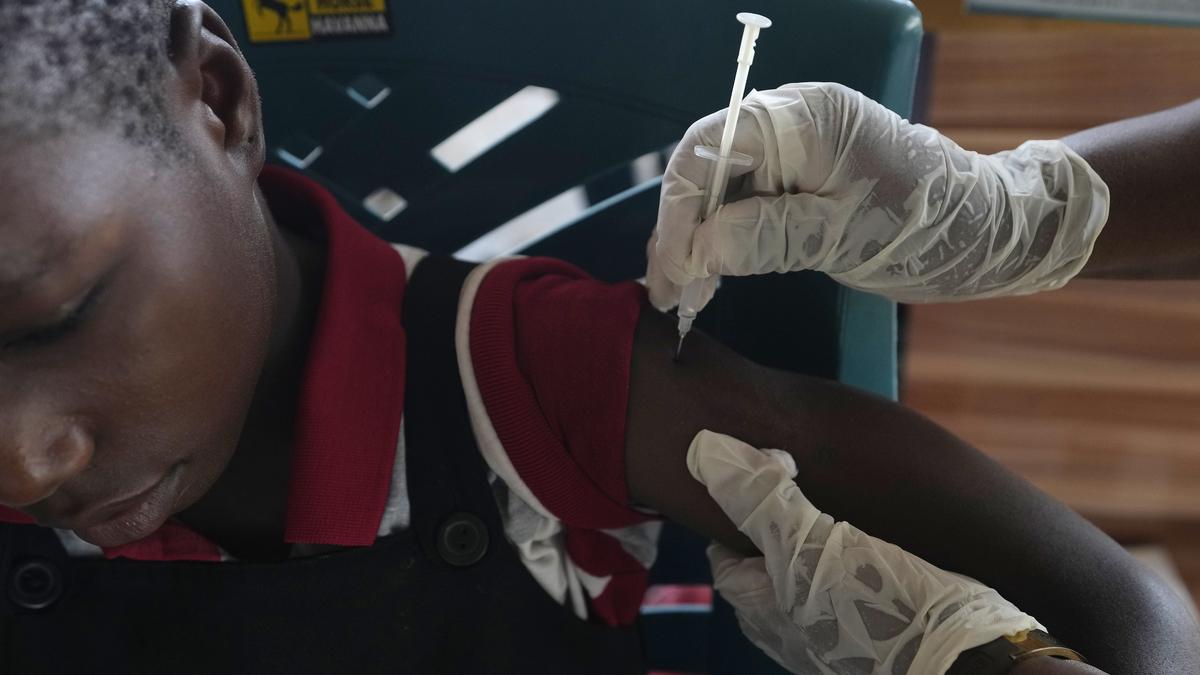
A medical worker gives a little girl a cervical cancer vaccine in Ibadan, Nigeria | Photo credit: Associated Press
Global childhood vaccination levels have stagnated, with millions more children unvaccinated or under-vaccinated than before the pandemic, the United Nations said on Monday, July 15, 2024, warning that dangerous gaps in vaccine coverage could lead to outbreaks of diseases such as measles.
According to data released by the United Nations health and children’s agency, by 2023, 84% of children, or 108 million people, will have received three doses of diphtheria, tetanus and pertussis (DTP) vaccine, with the third dose becoming a key marker of global immunization coverage.
The organization warned that this was the same as the same period last year, meaning that the modest growth seen in 2022 had “stalled” after a sharp drop during the coronavirus pandemic. In 2019, before the pandemic, the proportion was 86%.

“The latest trends show that in many countries, too many children are still missing out,” UNICEF head Catherine Russell said in a joint statement. In fact, the two organizations found that an additional 2.7 million children were unvaccinated or under-vaccinated last year compared to pre-pandemic levels in 2019.
‘Derailed’
“We are off track,” Kate O’Brien, the World Health Organization’s vaccines chief, told reporters.
“Global immunization coverage has yet to fully recover from the historic setbacks during the pandemic.”
Not only has progress stalled, but the number of so-called zero-dose children — those who have not received a single dose of the vaccine — has increased from 12.8 million in 2019 to 14.5 million last year, according to data released Monday. In 2022, the number is 13.9 million.
“This will put the lives of the most vulnerable children at risk,” O’Brien warned.

Even more worryingly, more than half of the world’s unvaccinated children live in 31 fragile and conflict-affected countries, where they are particularly vulnerable to preventable diseases due to a lack of safety, nutrition and health services.
Children in these countries are also more likely to miss out on necessary follow-up vaccinations.
Data released on Monday showed that a full 6.5 million children worldwide have not completed the third dose of the DTP vaccine, which is crucial for preventing diseases in infancy and early childhood.
“Canary in the Coal Mine”
The World Health Organization (WHO) and UNICEF have expressed further concern about lagging measles vaccinations amid a global surge in cases. Measles is one of the most contagious diseases in the world.

“Measles outbreaks are like canaries in a coal mine, exposing and exploiting gaps in immunization and striking the most vulnerable first,” WHO Director-General Tedros Adhanom Ghebreyesus said in a statement.
In 2023, only 83% of children worldwide received their first dose of measles vaccine through routine health services—the same level as in 2022, but down from 86% before the pandemic.
The organization noted that only 74% of people have received the required second dose of the vaccine, while a 95% vaccination rate is needed to prevent an outbreak.
“This number is still too low to prevent outbreaks and achieve the goal of measles elimination,” UNICEF’s chief of immunization, Ephraim Lemango, told reporters, noting that more than 300,000 measles cases were confirmed in 2023, almost three times the number of the previous year.
Low vaccination coverage (80% or less) was cited as a major factor in 103 countries experiencing outbreaks over the past five years. In contrast, 91 countries with high measles vaccination coverage experienced no outbreaks.
“Shockingly, nearly three-quarters of infants live in places at highest risk of measles outbreaks,” Lemango said, noting that 10 crisis-ridden countries, including Sudan, Yemen and Afghanistan, account for more than half of all children who are not vaccinated against measles.

On the positive side, vaccination rates against the HPV virus that causes cervical cancer have risen sharply. But the vaccine reaches only 56% of adolescent girls in high-income countries and 23% in low-income countries—well below the 90% target.
[ad_2]
Source link

