

[ad_1]
At the end of the asphalt next to the “Katr Yaar” market, immediately to the left, puddles and large holes filled with sludge welcome one. However, this road to the undeveloped area of ”Djikofê” is only the visible part of the iceberg.
As its name in the Dioula language suggests, “Djikofê” is located behind a waterway. This undeveloped area straddles the borders of Yamtenga and Ragnongo and is accessible through four main entrances. Only one bridge was built correctly in 2019The other three are temporary bridges. Residents of the surrounding area were worried after the rains on July 28-29, 2024. In addition to the fragile bridges, many houses were soaked like biscuits. It has to be said that it is the same scene every year.
The bridge at the southern entrance of the Jikofi district is eroded by water from multiple angles

In the southern region
It is difficult to find or give the limits of the “Djikofê” district. But in the southern part of the district, the weekend rains have left their marks. Gilbert Nikièma repairs two-wheeled vehicles near the bridge that leads to his residence. “The rainy season has not come quickly, but the last rain we saw already scared us. The heavy rain on Sunday washed away a lady’s bicycle. Fortunately, the water did not drown her. The bridge is in a bad state and part of it has collapsed. Even if it does not rain, the water will flow and it is dangerous,” worries the man who owns a shop less than 200 m from the bridge.
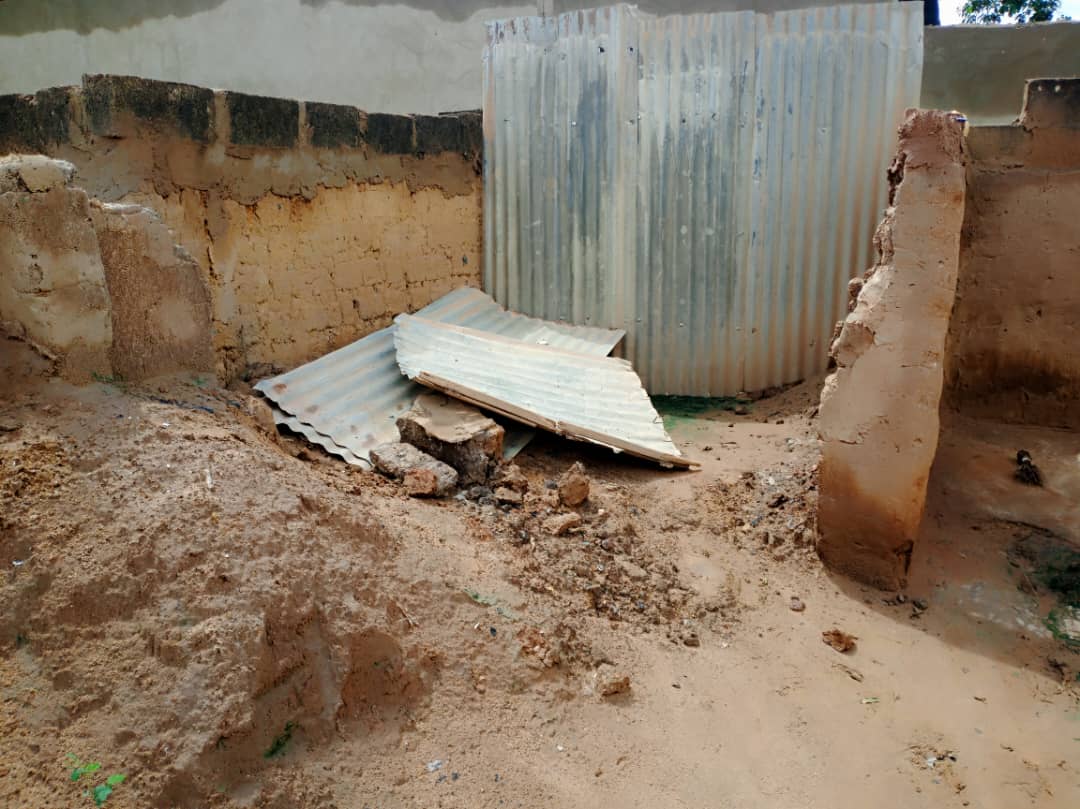
Houses not far from Gilbert Nikièma’s mechanics workshop have also been affected by the rains. Most of the courtyards are rubble and half-walls. But these demolitions were caused by last year’s rains. Currently, few houses have collapsed here. What is worrying is the humidity and the cracks. “When it rains hard, our entire courtyard and the inside of the house are flooded. Since the buildings are made of mud, the water seeps into the walls,” explains Ms. Rihannata Ouédraogo, who sits in front of the door with the laundry she wants to remove the moisture from. She and her husband have lived here for more than ten years. Despite this, Ms. Ouédraogo confirms that flooding incidents have decreased compared to when she arrived in the area.
Floods destroyed homes during 2023 rainy season, courtyard owners also worried this year
“On rainy days, we can’t see the bridge.”
The deterioration of the bridge worries the people in this area of Jicofi. Indeed, we can see that part of the bridge has been eroded by the water. “The day before yesterday, the water level was alarming. When it rained, we could no longer see the edge of the bridge. The worst case almost happened to a woman with a child on her back,” Rihannata Ouédraogo also reports, confirming the above comments of the mechanic. Residents are forced to stop large trucks from passing the bridge, fearing that it will collapse. Ms. Compaore, who sells fish next to the bridge, feels the same way. “Sometimes, the town hall staff come to check, but nothing is done. There is a good bridge on the other side of the block, but it is far from our house. This passage allows us to get home faster,” she insists. Despite the dangers that lurk around this waterway, children indulge in fishing under the inattentive gaze of their parents and passers-by.
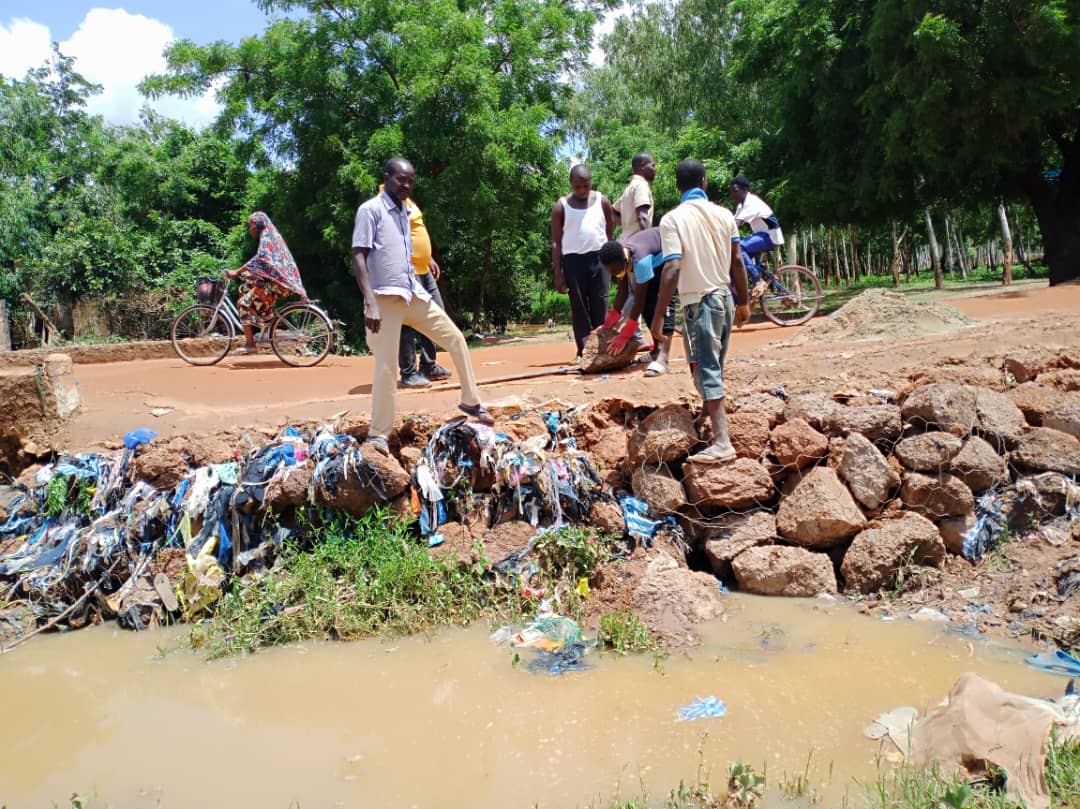
Ismaïla Kouanda and other local residents decided to use wild stones to reinforce the bridge.
Also read: Burkina Faso / Winter: A time of anxiety and fear for residents of Mkitta, Ouagadougou
“Good Bridge” Area
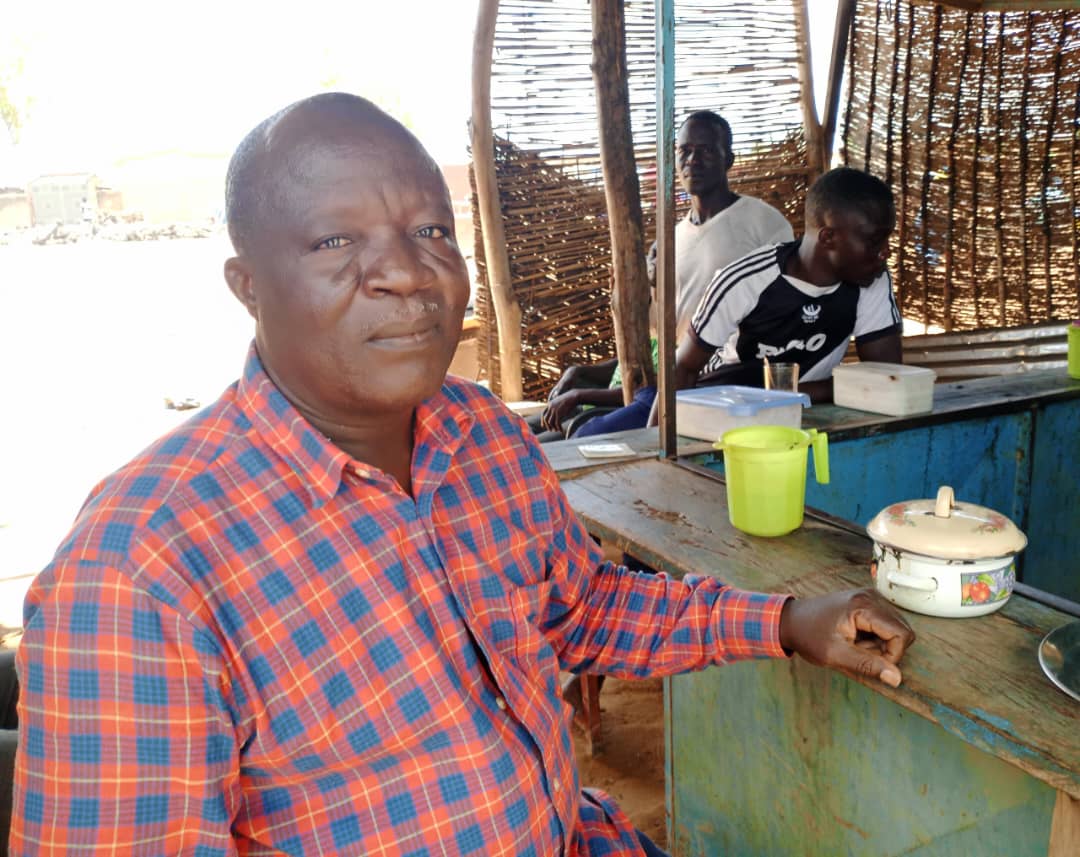
This part of the neighborhood seems to be the most populated. Two parallel bridges provide access. One of them is in good condition, the other is crumbling under the weight of erosion. According to local residents, the “good bridge” was built during the last election campaign. However, when you cross the bridge, you will find that the road is narrow and crowded with small shops on both sides. The worst part is that a pool of mud forces users to turn to the sides and risk entering the houses. Everything is crowded and it is difficult to distinguish the entrance to the road and the courtyard. The slum environment there is also easy to distract. It is another world. Mr. Compaore came to a kiosk for lunch and lamented the damage caused by the rain. “In the underdeveloped area, there are no drains and water flows everywhere. Many walls collapsed, and part of the wall in my yard collapsed. At least three houses in my neighborhood collapsed.” He added that everyone wants to build houses to avoid floods, but resources are scarce. For humans, most houses are built with mud, which is a major problem.
Heavy rain on Sunday damaged part of the wall of Mr. Compaore’s courtyard
“We have an obligation to build roads with our own resources”
This morning, Ismaïla Kouanda and her comrades were busy on a bridge in Jikofi. They tried to reinforce the ends of the bridge using large wild stones and wire. It must be said that the heavy rain on Sunday scared them. “We noticed that the water wanted to destroy the bridge, so we decided to pay for its repair. This is an initiative of the residents, we did not ask for any help from the town hall”, said Ismaïla Kouanda. However, these people gathered around the bridge hope that the construction of road infrastructure will alleviate their suffering. “Every year from July to September, we have the obligation to repair the road with our own resources.”
Between the mud and puddles, the neighborhood is still soaked after two days of rain on Sunday, July 28, 2024
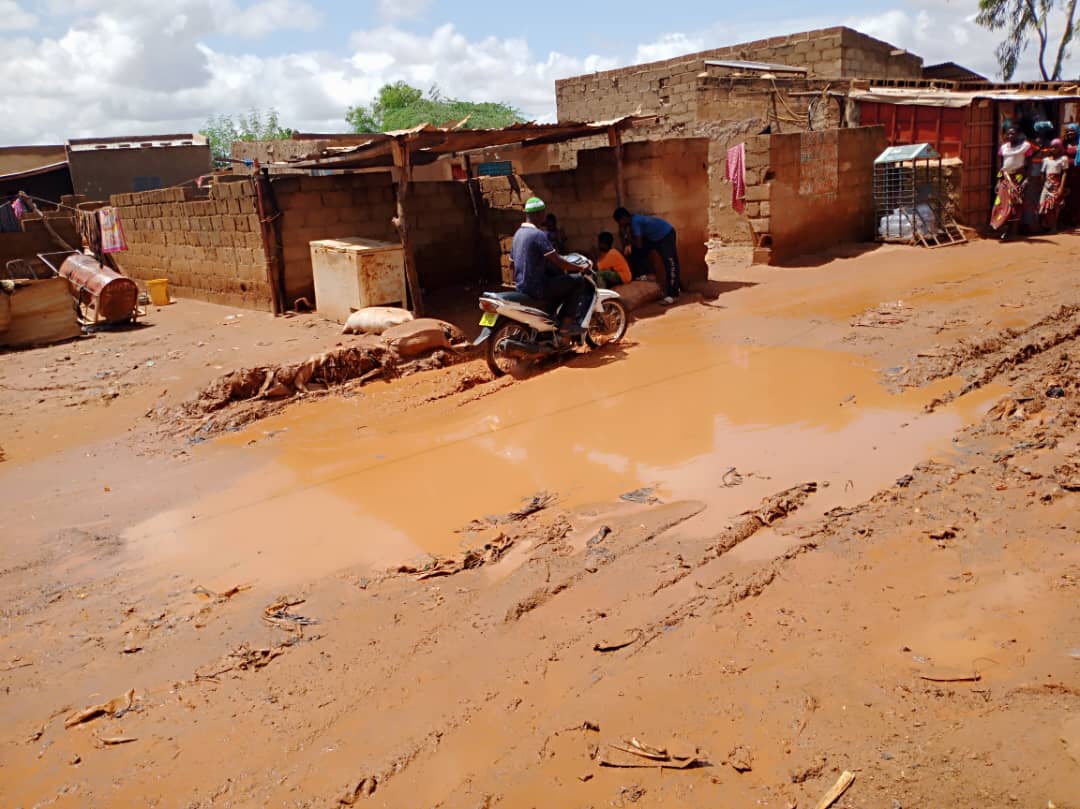
On-site observations have revealed that this peripheral area of the city of Ouagadougou is built on a natural waterway. As a result, runoff is generated without regard for human presence. Since there is no development, living in the area is a real torture for the residents. The latter point to their poverty and hope that the municipality will allow the “Djikofê” to survive.
Farida Tiobiano
Lefaso.com
[ad_2]
Source link

