

[ad_1]
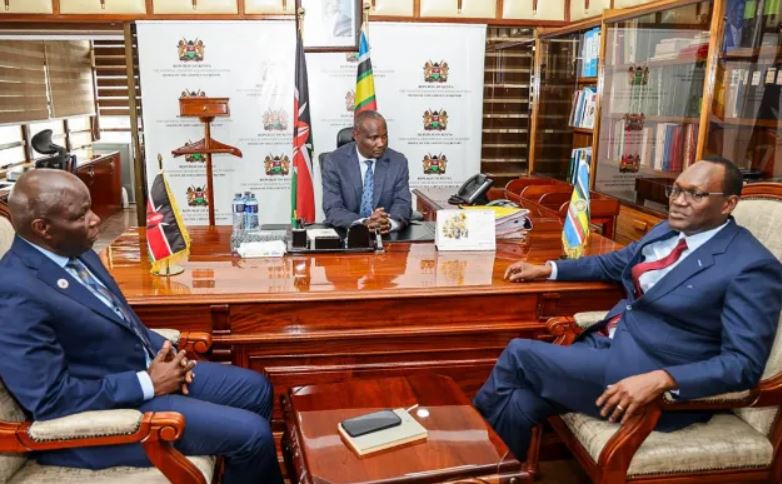
New Finance Minister John Mbadi made a bold promise when he officially took office on Monday to integrate the payroll system with the Integrated Financial Management Information System (IFMIS). At a handover ceremony in Nairobi, Mbadi stressed that the integration was crucial and long overdue.
“If we cannot integrate the payroll systems of the state departments into our main accounting system, IFMIS, and connect it to the Kenya Revenue Authority (KRA), then we don’t know what we are doing.” He told reporters.
He urged those standing in the way of this reform to withdraw, stressing that “Please allow Kenya to move forward. Do not be an obstacle. Wage reform must be done.”
Mbadi stressed that the new reforms are crucial to increase government revenue, especially after the setbacks in the 2024 Finance Bill and the 2023 Finance Bill.
“Given the scarcity of resources, we have no choice but to use public funds wisely and efficiently. We need to make the public procurement system more efficient and eliminate opportunities for abuse. We must ensure that the entire procurement process operates effectively,” He said.
To those who might have benefited from the previous chaotic system, he commented: “If you have benefited from the chaos, you have benefited enough. Now let Kenyans get their money’s worth.”
Mbadi also said he was firmly committed to increasing state revenue and fully supported the strategy developed by the Kenya Revenue Authority (KRA). His goal is to increase revenue by about Ksh400 billion.
“If we can increase tax revenue to GDP by 3%, I believe we will have close to 400 billion Kenyan shillings in additional funds. This will solve many of our problems, close the budget deficit and move the country forward,” He explained.
Outgoing Finance Minister Njuguna Ndung’u briefed Mbadi on the challenges ahead, especially after the failure of two fiscal bills. He noted that the ministry faces high tax expenditures, which currently stand at 2.94%. “Our goal is to address these tax expenditures during this fiscal year. A reduction of just 2% would significantly increase revenue,” Ndung’u noted.
He also drew attention to the serious liquidity problems posed by short-term debt, including notes and bonds. “That’s why it sometimes takes us up to three weeks to clear the payroll, because of liquidity issues, even though it’s not a solvency issue.” He clarified.
Ndung’u urged Mbadi to devise a strategy to address solvency issues within the ministry. “I encourage my friend CS John Mbadi to address these liquidity constraints through strategic choices to prevent them from becoming solvency challenges. A strong signalling approach is necessary,” he added.
[ad_2]
Source link

