

[ad_1]
pay tribute
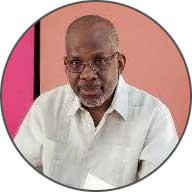
“Has anybody seen my old friend Martin? Can you tell me where he’s gone? He heals a lot of people; but good people seem to die young. I just looked around and he’s gone.”
I had just started playing chess with my brother-in-law when I learned of the death of my dear friend and distinguished physician, Dr Martin Didier, SLC, CBE, MBBS, DM, FACP, FESC, FACC, FRCP (Edinburgh). After losing three games in a row, I thought it best to “walk away with the pain” and find a quiet place to reflect on Martin’s untimely death and his excellent care for my health for nearly 35 years.
It is an understatement to say that I am devastated by the news of Martin’s passing. Martin became my personal physician shortly after he opened his own private practice in the early 1990s. Because of his popularity, I was not always able to see him when I needed him, so I sometimes sought help from my good friends, Dr. Keith Deligny (now deceased) and Alphonsus St. Rose.
Martin’s “wellness checks” with me always lasted at least an hour and covered topics ranging from my health to national, regional, and global issues. I felt guilty whenever I left his office, in part because the patients in the waiting room felt that I had spent too much time with him and that they were “looking at me.” When I told him of my guilt, he assured me that all who came to see him received adequate attention. His response only added to my guilt, as Martin had long since established his reputation as a dedicated physician with his trademark angelic clinical manner and genuine care. Even so, I would always seek out the latest appointments that his longtime assistant, Michelle, could provide.
Martin had shared with me his recent health problems. Doctors rarely do this, which led me to believe that Martin did this to encourage me to take prompt action to address my own health problems. In our recent WhatsApp exchanges, he often wrote about severe pain that medicine could not heal. However, in the midst of physical pain, he considered himself lucky because he was receiving the best care that his team of doctors, including his beloved wife and daughter, could provide. Therefore, I shared with him my ardent hope and confidence that he would soon be free of pain and able to resume his medical practice.
Final Notes
The last time Martin wrote me was about six weeks ago. I had asked for his opinion on a relatively new procedure that my urologist had recommended for me. He admitted that he was unfamiliar with the procedure but that he would research it. His response, a day later, was brief but encouraging. “Go for it!”
Two days later, I told him I had scheduled surgery and promised to keep him updated. When he did not respond to my text message within the usual 24 hours, I began to worry that his condition had worsened. Later that week, his wife (Dr. Marie Granderson-Didier) confirmed this to my wife, warning that “we haven’t given up yet.” Then came the suspension notice from Martin and Marie. At that moment, my despair reached a new depth.
Perfect professional
For Martin, practicing medicine is more than a profession, it is his life! This is evident from the array of certificates that adorn his office wall. I am sure many of Martin’s patients would agree with me that the bareness of his walls does not diminish his status as a consummate and accomplished physician in our eyes. It was not until my last visit, about six months ago, that I noticed a certificate on Martin’s wall attesting to his expertise in cardiology. When I admitted this oversight, he revealed that cardiology was his first love and that he had switched to internal medicine because there were so few specialists in the field at the time. He was so committed to this new field that he continued his studies and obtained a Doctor of Internal Medicine from the University of the West Indies (UWI).
Hermann Notnagel wrote, “Only good people can make great doctors.” I firmly believe that Martin loved medicine because he loved people. And we, his patients, loved him just as much. We loved him because he believed in empowering us to take charge of our health by helping us understand the most complex terms and conditions of health. We loved him because he cared not only about our health but our lives. We loved him because he was humble. There was truly not a trace of arrogance in him.
With the passing of Martin, Saint Lucia has lost a truly remarkable man, an insatiable patriot who has done more to advance healthcare in Saint Lucia than most local doctors. I can say without fear that no other husband and wife doctor duo has saved as many lives as Martin and Mary. I wholeheartedly commend the Government’s decision to rename the Gros Islet Polyclinic in his honor.
Throughout Martin’s life and career, he remained caring and gentle. To paraphrase Shakespeare, there was in him such a mixture of elements that, if nature could speak, it would rise up and say to the world, This is a man! We shall not see his like again.
Confession
I dedicate the rest of this review to a cause that I know Martin would support. I feel I should encourage all men over 40 reading this review to get regular prostate exams.
Prevalence
According to the American Cancer Society, a man’s likelihood of developing prostate cancer rises rapidly after age 50. About 6 in 10 cases of prostate cancer occur in men over the age of 65. For reasons that are not entirely clear, African-Caribbean men are at a higher risk of prostate cancer than any other group of men in the world. Each year, about 304 out of every 100,000 men in Jamaica and about 160 out of every 100,000 men in Barbados develop prostate cancer, according to a 2022 study published by the National Institutes of Health (NIH). In Tobago, nearly 10% of adult men are diagnosed with prostate cancer each year.
According to the World Health Organization (WHO) in 2020, prostate cancer caused 56 deaths in Saint Lucia, accounting for 4.24% of all deaths. The age-adjusted death rate is 46.15 per 100,000 population, ranking Saint Lucia 9th in the world. In 2019, the Pan American Health Organization (PAHO) estimated that in Saint Lucia, prostate cancer was the most deadly cancer of all cancers, killing 46.1 men per 100,000 men, compared to 14.7 per 100,000 for lung cancer and 10.3 per 100,000 for colorectal cancer.
Whichever way you look at it, these grim statistics clearly demonstrate the magnitude of the problem prostate cancer poses to the Caribbean. Multiple risk factors such as obesity, diet, smoking, exposure to harmful chemicals, family history and inflammation of the prostate gland (prostatitis) are thought to be associated with prostate cancer.
Globally, approximately 50% of men aged 51 to 60 and up to 90% of men over 80 experience symptoms caused by an enlarged prostate, known in the medical community as benign prostatic hyperplasia (BPH). For these men, an enlarged prostate is a natural consequence of aging. Symptoms of BPH often include frequent urination (which can severely disrupt sleep), pain between the anus and scrotum, impotence and an inability to urinate, which often requires the placement of a urinary catheter.
good news
The good news Martin wanted me to share is that with early diagnosis, most, if not all, prostate problems can be treated with medication and/or surgery. Unfortunately, most Caribbean men are unaware of this fact. Some who do know are reluctant to get screened because they are worried it might reveal cancer, or are reluctant to undergo a digital rectal examination (DRE), where a doctor inserts a lubricated, gloved finger into the rectum to feel the texture of the prostate.
Given that Saint Lucia’s population is ageing and prostate cancer is the leading cause of death among men, it is good that our Ministry of Health and Wellness has made prostate health a top primary healthcare issue. Free prostate cancer screening is available at all health centres. Therefore, there is no reason for our men not to get screened. Therefore, I once again implore all men over 40 to get screened for prostate cancer as soon as possible!
My sincere condolences go to Martin’s beloved wife Mary, their daughter, extended family and many friends within and outside the medical community in St. Lucia and around the world.
“Has anyone seen my old friend Martin? Can you tell me where he is? He healed so many people, but it seems that all the good ones die young. I just looked around and he was gone.”
[ad_2]
Source link

