


[ad_1]
“Clearly, much more needs to be done to significantly reduce drug use in prisons and to eliminate the subculture of widespread violence among prisoners, which causes many of them to live in constant fear. Without thoughtful changes and a radical and urgent increase in staffing, the dire conditions in Lithuanian prisons will continue, with very harmful consequences not only for many individuals, but for Lithuanian society as a whole,” the report concludes.
As criminologist Gintautas Sakalauskas, associate professor at the Vilnius University Faculty of Law, told Delphi, the report basically says nothing new and the issues have been known for years.
“This was also mentioned in previous reports. The report of the Parliamentary Inspectorate on prison conditions was very critical. The Commission did not say anything new. But the Commission’s harsh tone puts us on the same level as Russia. Similar reports were made when Russia was a member of the Council of Europe. It is a shame, a pity, disappointing and sad,” commented the criminologist.
There is a severe shortage of workers and violence is rampant
CPT committee members are harshly critical of Lithuania even after inspecting prisons in 2021. This year, they again visited prisons in Alytus, Mariampol, Vilnius and Praviniyskii.
The report acknowledges that Lithuania has succeeded in implementing some of these changes, for example reducing the prison population by 10% in three years, which was achieved by reducing penalties for property crimes.
“However, the situation in the prisons inspected shows that only partial progress can be achieved through legislative and administrative reforms. It is clear that more financial resources are needed to adequately address these problems.
If we want to make a real reform of the Lithuanian prison system, first of all, more resources are needed to rebuild the prisons from dormitory-style facilities to cell-style facilities. Most importantly, it is necessary to significantly increase prison staff, only in this way can violence and drug abuse problems among prisoners be prevented,” the report reads.
The officers’ union has been complaining about worker shortages for years. Currently, the prison is short 450 guards, a 19.3 percent shortage. As a result, violence is not only prevalent among inmates, but attacks on officers themselves are also a common occurrence.
In its report, the CPT also drew attention to the fact that supervisors themselves sometimes overstepped their boundaries. Prisoners complained about excessive force used during searches.
“We also heard complaints that guards threatened prisoners and moved them to rooms with members of lower castes,” the report said. – There were also complaints that guards at Alytus and Maryanpol prisons insulted prisoners.”
The report notes that not only is violence between prisoners widespread, but also the fear of complaining to someone is a particularly sensitive issue. In the four prisons visited, with a total of 2,500 prisoners, 13 pretrial investigations were launched last year into assaults. In Panevezh prison, with just 200 women, 11 investigations were launched in the same period.
“The findings suggest that the root causes of inter-prisoner violence remain: drug abuse, subculture and catastrophic understaffing, which partly explains the persistence of dormitory-style accommodation.” Prisoners also do not trust guards to provide them with food. Safety. “The Lithuanian authorities are still far from fully fulfilling their responsibilities,” the CPT declared.
Change did not happen
Criminologist Gintatas Sakalauskas, who has been analyzing the prison system for years, said there had been no serious structural changes to the system.
“What’s worse is that they are imitated. They brag about things that have not been completed, the interlocutor said. – The fundamental problem is that the management culture of the system has not changed, it is highly militarized, based on hierarchical management, and led by generals. This system is a continuation of the Soviet system, where everything is done by orders. So many problems are hidden, suppressed, and not reflected.”
This is a huge problem and there has been very little investment in infrastructure, with not a single new prison built to this day, although there is still a promise to build one.
“The new prisons will bring not only better infrastructure, but also better conditions for officers,” G. Sakalauskas noted. – The prestige of the profession of officers themselves is low, which is caused by low salaries and lack of professional recognition. Until now, they have played the role of guards, working in shifts, arriving 24 hours a day, and then doing other things. Such contact does not allow the creation of the necessary relationships with the prisoners to get to know them, communicate and trust among them. And the preparation is low-level, in a few months, a few courses come out, and you can work. International standards stipulate that a person needs at least 2-3 years to do such a job with quality. But the officers themselves are against it. “
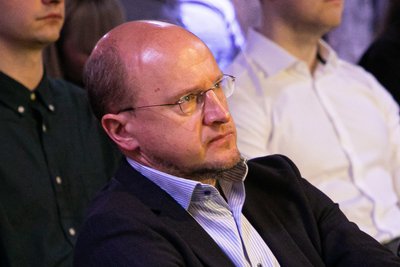
He believed that in the absence of police, power would naturally shift to the hands of the prisoners themselves.
“The subculture is thriving, even though they say it doesn’t exist. The same drugs, they’re more accessible to them than in the wild,” he said.
When asked what it takes to make real change, he said three things are needed: “will, expertise and money.”
“First you need a will, a real will. I expect a lot of change in this government. Of course, the pandemic may have ruined a lot of things because a lot of money has gone in a completely different direction. But it requires real will. Will start with management decisions and get the people in charge of the system to adapt to the system. Unfortunately, such will does not exist.
Secondly, you need competence. As far as I know, the Norwegians who gave us a lot of money are very unhappy with the way things are being done. No real management experience from the West has been adopted.
Finally, money is needed. Obviously, without money nothing happens. That includes staff salaries and infrastructure, prisoner employment, drug addict rehabilitation and all programs,” he said.
“There is still a lot of homework.”
Minister of Justice Evelina DobrowolskaAsked to comment on these conclusions, I am firstly pleased that the Commission has positively assessed the reforms that have been undertaken.
“Firstly, I am pleased that the Committee appreciated the openness and constructive cooperation of the Ministry of Justice and the Prison Service in providing all the necessary information for the Committee’s visit and assessment. I am also pleased that the Committee positively assessed the reforms implemented by the Ministry of Justice in the regulatory and administrative fields,” the Minister said.
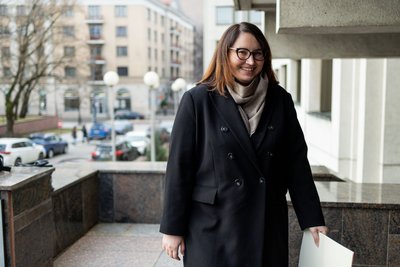
She acknowledged that the criticism of Lithuania in the report was correct – and there was still much work to be done.
“We clearly agree with the Committee’s comments that there is still a lot of work to do – both to improve infrastructure and to continue to fight against violations in prisons. Therefore, we regularly inform the Committee every few months about the actions taken in response to its observations and recommendations, and at the same time we invest in infrastructure – we hope to sign the construction contract for the Šiauliai prison this year (funds have been allocated), the renovation of the rooms in the Alytus dormitory should be completed this year, and the technical project for the renovation of the rooms in the Vilnius dormitory has been completed (work is expected to start next year)”, E. Dobrowolska named these plans.
She added: “I believe the committee’s insight that there has been a clear reduction in offender subculture, a reduction in staffing levels on disciplinary teams and helping offenders get off drugs is an important assessment of our work.”
“Stretching pressure is useful”
Karolis Liutkevičius, adviser on human rights issues to the director of the prison service, said he had started the application and was still preparing measures to implement the issues listed in the CPT.
“As a concrete example, a rapid response system for cases of injury to offenders has been implemented. Our goal is to create safe spaces where offenders at higher risk of violence can serve their sentences. In cooperation with the Prosecutor’s Office, we initiate pretrial investigations in as many cases of violence by offenders as possible. Here, we also face regulatory issues: many cases of mutual violence end up with minor health disorders, and pretrial investigations can be initiated only if the victim complains. Due to informal mutual rules, offenders rarely agree to file such complaints”, comments K. Liutkevičius.
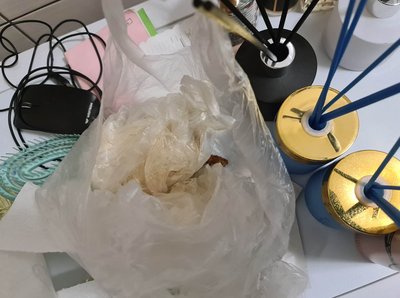
In the fight against the drug epidemic, controls on correspondence have become stricter: it is now fashionable among prisoners to send letters or procedural documents, the paper of which is soaked in psychotropic drugs.
For K. Liutkevičius, who only started working at the Prison Administration at the beginning of this year, changing the attitude of his colleagues towards CPT reports is very important.
“These reports are not only a critique of our system, but also a very useful form of pressure to evolve and change for the better. Not only do they provide an outside, professional assessment of what is wrong with us, they also provide specific suggestions for solutions that should not be debated but sought to be implemented,” he said.
The deputy director pointed to a lack of police and poor infrastructure — jails are old and dilapidated — as the underlying problems.
“The two problems are closely related and often reinforce each other. The current infrastructure is extremely ‘intensive’ for the number of staff. With a modern infrastructure, we can provide a higher level of supervision and control with fewer staff. At the same time, the current infrastructure makes the officers’ job more difficult and less attractive.
The necessary changes are perhaps best stated by the ECP in its report: In order to achieve fundamental change and address the problems that have persisted for many years, Lithuania must decide to invest in its prison system.
“Legal and organizational changes are underway to address some of the problems. However, to update the outdated prison infrastructure and attract a sufficient number of officers and other specialists, much greater resources than are currently allocated are needed. Without this, we can hardly expect rapid change,” he said.
When asked about his comments on the criticism of the militarized management system, K. Liutkevičius mentioned that he himself had not spared her comments before.
“There was almost a complete change in management at LKT in the short time around my joining the team. These new people showed a different, more open attitude and a genuine desire for change and solving long-standing problems. So I felt it was a stark contrast to what I encountered when I was ‘out there’ myself.
I hope that all levels of the prison system will adopt this approach and effectively solve the problems encountered. However, here again it is worth remembering the comments of the CPT: In order to achieve a major change in the prison system, Lithuania needs to make a fundamental decision to invest,” he said.
[ad_2]
Source link

