


[ad_1]
Mohammad Zahir, a resident of Mazar-i-Sharif, the capital of Balkh province, said 17 of his children died before birth due to a lack of medical facilities.
He said in an interview with Azadi Radio:
“We have lost 17 children of the same number. Recently, my wife had an operation and lost a lot of blood. My child also died and she herself was dying. She stayed in this government hospital for two days and they said she was fine, so I took him to a private doctor.”
Mohammad Zahir is not the only one who complains about the lack of facilities and adequate medical services in government hospitals.
Doctors Without Borders (MSF) recently said that the lack of long-term basic support for Afghanistan’s medical centers has led to problems for these centers.
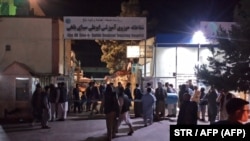
The organization published a report titled “Death and Access to Medical Services in Afghanistan” on June 17, saying that Afghan public health centers such as the Mazar-i-Sharif Seminary Hospital in Balkh Province cannot pay the wages of Afghan people. Their employees do not have enough medicines, oxygen and oil to buy, and they are dealing with many problems.
Doctors Without Borders: People must travel to remote areas for treatment
MSF is a sponsor of the Madrasah Hospital in Mazar-i-Sharif, which provides medical care for children, especially infants, adding that it is the only regional hospital in the province that accepts referrals from neighbouring provinces.
The group said most patients have to travel long distances to get medical care because facilities near them are not fully operational or do not have adequate facilities and equipment to meet their needs.
Director of Balkh Theological Seminary Hospital: We have no problems
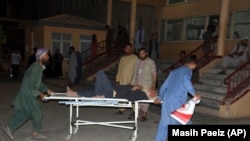
Doctors Without Borders said one of the main problems at the Madrasa Hospital in Mazar-i-Sharif is the overcrowding of patients. According to the organization, sometimes the number of patients in the hospital increases to 200, which means that there is more than one patient in each hospital.
Doctors Without Borders, or Médecins Sans Frontières, said that at the Madrasa Hospital in Mazar-i-Sharif, patients came for treatment but died because they were late.
The authorities of the Madrasa Hospital in Mazar-i-Sharif confirmed that the hospital was short of beds but did not accept other issues including lack of facilities to pay the staff’s salaries.
Dr. Mohammad Ashraf Rawan, director of Abu Ali Sinai Balkhi Teaching Hospital, told Azadi Radio:
“We paid salaries last week. We have the biggest oxygen concentrator in Afghanistan in our hospital which supplies oxygen to all our hospitals. Not enough medicines does not mean we don’t have medicines. When the monsoon increases, we face a shortage of beds to some extent and when the number of children reaches 500 to 600, then we face a problem.”
related:
Mounting problems in Afghanistan’s health service heighten concerns
MSF: Number of sick babies on the rise in Afghanistan
He said that to address the shortage of beds, they have spoken to officials from the Taliban government’s Ministry of Public Health and suggested that they start a 500-bed children’s hospital.
Previously, several international organizations have expressed concerns about problems in Afghanistan’s health system.
The World Health Organization (WHO) has expressed concern about the state of health services in Afghanistan, saying that 24 mothers and 167 babies die every day from preventable causes in the country.
[ad_2]
Source link

