


[ad_1]
Kathmandu, July 31. The National Order and Good Governance Committee of the House of Representatives met on Thursday to discuss amendments to the Prevention of Corruption Act 2059. One of the topics discussed was whether it was right to immediately suspend employees in the event of corruption cases.
Under the current Anti-Corruption Law, once the Commission for Investigation of Abuse of Power registers a corruption case against a public official, the accused is automatically suspended from office.
The MPs said that the clause needed to be discussed in depth. Former Prime Minister and Maoist Centre chief Pushpa Kamal Dahal Prachanda recalled that employees who were suspended in corruption cases had been acquitted and returned to work. He said some were acquitted after being given a chance, “People were suspended but the court’s decision was delayed.” What is the solution?
He further said, “Should we wait for the court’s verdict before arranging suspension or should we suspend them and arrange compensation after the court’s verdict or should we force the state to upgrade the retirees during the suspension period?”
He said that if the knot needs to be untied, experts can be consulted.
Nepali Congress General Secretary Gagan Thapa said that employees should be reassured that there will be no trouble if they do not make mistakes. In order to end the situation where cases are suspended after filing but no judgment is made, it is recommended to discuss a plan to determine the time for filing cases.
He also tried to link it to the party constitution. He said there is a provision in the law to suspend politicians from public office in case of corruption cases, but there is no legal provision to suspend their party membership. “According to the party law, party membership is retained until the final decision of the court. However, the question is why you should not be expelled from the party,” said Minister Thapa.
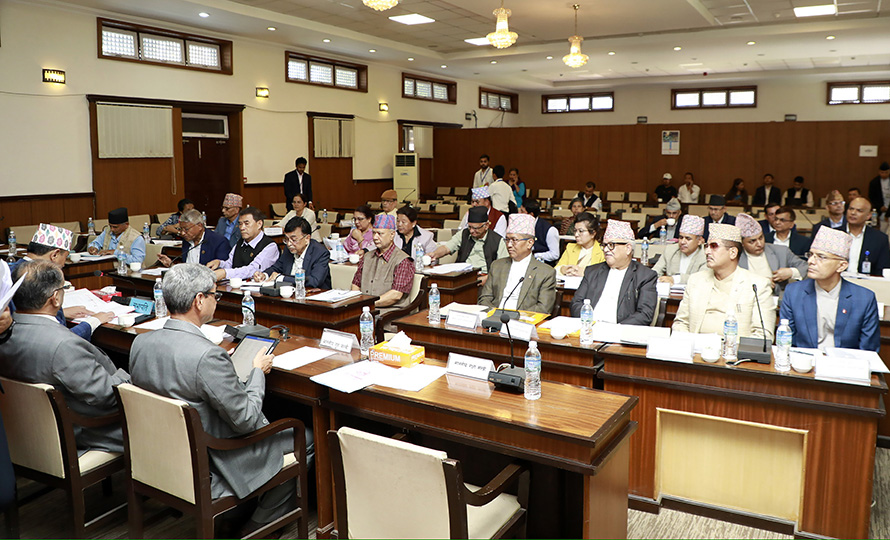
He said there should be unity on the matter, “while suspending the membership of the council, let us arrange that the membership of the party should also be suspended. “Instead, we can say that it will be suspended and cannot be postponed.
In addition, MP Thapa said the Commission for the Investigation of Abuse of Power should only open a case after a thorough investigation. “In some places, it is said that the investigation of the respected courts has not been reached. The investigation should be more thorough, and there is a saying that “the law does not conform”, he pointed to the case of the local people’s congress representative and questioned the work of the authorities.
Nepal Communist Party-United Marxist Party MP Raghuj Pant said there was a tendency to harass and file cases against people holding public office. He said the trend was ruining people’s future. “The court should investigate and make (a verdict) within a certain time. Otherwise, a person’s career will be ruined.”
He suggested to make laws against the tendency of accusations and entanglements. Pant also raised the issue of impeachment motion against Chief Justice Jolendra Shamsher Jabara. On February 1, 2078, the House of Representatives registered an impeachment motion against Jabara, alleging obstruction of justice. Till he got a chance, the Parliament did not take any decision on the matter.
Pant said that to end the trend of blaming someone and pestering them, we should think about a system of suspending public servants immediately after registering a case.
Recommended actions for not making a decision
Councillors said there was a tendency among staff to not make decisions and such behaviour should be punished.
Congress MP Narayan Khadka said that during the previous government, he had asked the prime minister, ministers and the secretary of state to take up the construction of the bridge, but the secretary of state did not take a decision.
The Prime Minister said that the work that the Prime Minister asked to be completed in three days was not even completed.
Congress minister Gagan Thapa also said that the tendency of employees not to take decisions on time is increasing. He said that the damage caused to the country if decisions are not taken on time should be taken into consideration when framing the law.
Maoist Centre chairman Prachanda said an environment should be created for employees where they should not be afraid to do the right thing. He believed that some of the authorities’ work had caused fear among employees and he believed that the government would be in trouble because of this contradiction.
“There are times when there is a panic among staff and the need for the committee to move forward in order for it to work effectively, and there is sometimes a conflict between the need of the committee and the need of staff not to make decisions, whether or not the government itself will be blocked,” he said.
In the Prevention of Corruption Act, which is being discussed in the State Administrative Council, action has been proposed against employees who fail to comply with the decision.
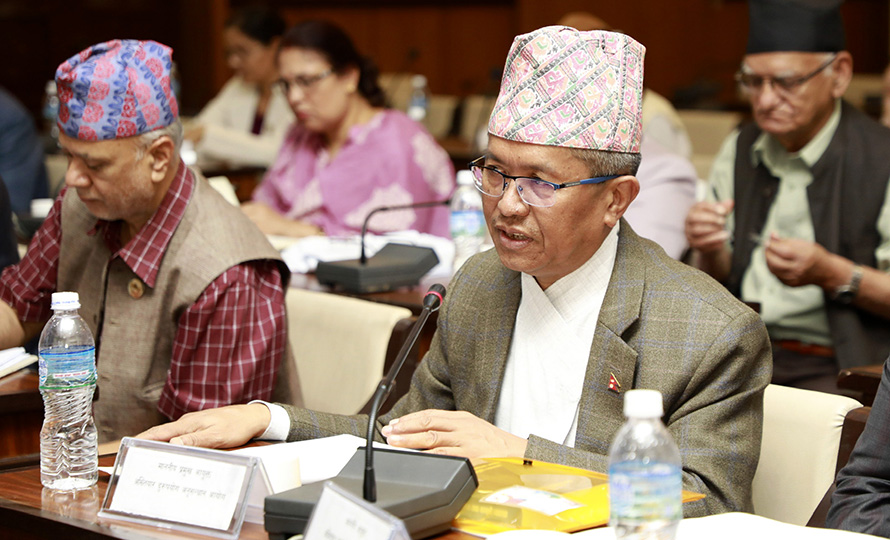
The commission’s chief commissioner Prem Kumar Rai said there was a need to discourage the tendency of those who have to take decisions to shelve documents. “Those who take decisions should be punished if they do not take them. It should be brought under the umbrella of corruption. You should be able to say why it did not happen,” Rai said.
The Prevention of Corruption Amendment Bill 2059, which was passed by the National Assembly and approved by the House of Representatives, is being discussed by the National Order and Good Governance Committee, which on Thursday summoned officials of the Commission for Investigation of Abuse of Power for discussion.
The bill was registered in the National Assembly on January 6, 2076 by the then Prime Minister KP Sharma Oli and passed by the House on March 27, 2079.
The proposed bill has provisions, including that cases should be registered within five years of knowing that an act of corruption has taken place. The MPs are giving their opinions on this. According to the committee chairperson Ramhari Khatiwada, theoretical discussions are currently underway. After the theoretical discussions, weekly discussions will begin.
[ad_2]
Source link

