


[ad_1]
Kathmandu, July 27. The departure of Dr Baburam Bhattarai from the Maoist party has raised serious questions about the leadership of Pushpa Kamal Dahal Prachanda, who has remained unchallenged for nine years.
Deputy Secretary General Janardhan Sharma submitted a 14-page proposal asking for Prachanda’s dignified departure at the Standing Committee meeting held in Paris from July 25. Sharma said that a change in leadership was necessary to establish Prachanda’s contribution so far and build the party.
Reviewing the failures faced by the party since the peace process, Sharma proposed three options for leadership change. Under the first proposal, Prachanda will have to retire.
According to his proposal, Prachanda will be given the opportunity to lead the party as per his proposal. “The remaining time to establish Prachanda’s contribution as president to ensure his role is to transfer the role of the organisational department to the person he wants to be in charge of ideological work and power leadership,” Sharma wrote about the transfer of leadership.
Under the second option, the transfer can be made within the Maoists. Sharma’s proposal is to have a third-generation leader as president, while Prachanda will continue to be the patron and the current officers will continue to do departmental work, supervision and training.
President Prachanda will lead in the role of protector with ideological authority and power. The incumbent officers will play the role of advisors and be responsible for departmental work, monitoring, evaluation, education, training and handing over the leadership of the administrative organization to the third level youth,” Sharma wrote.
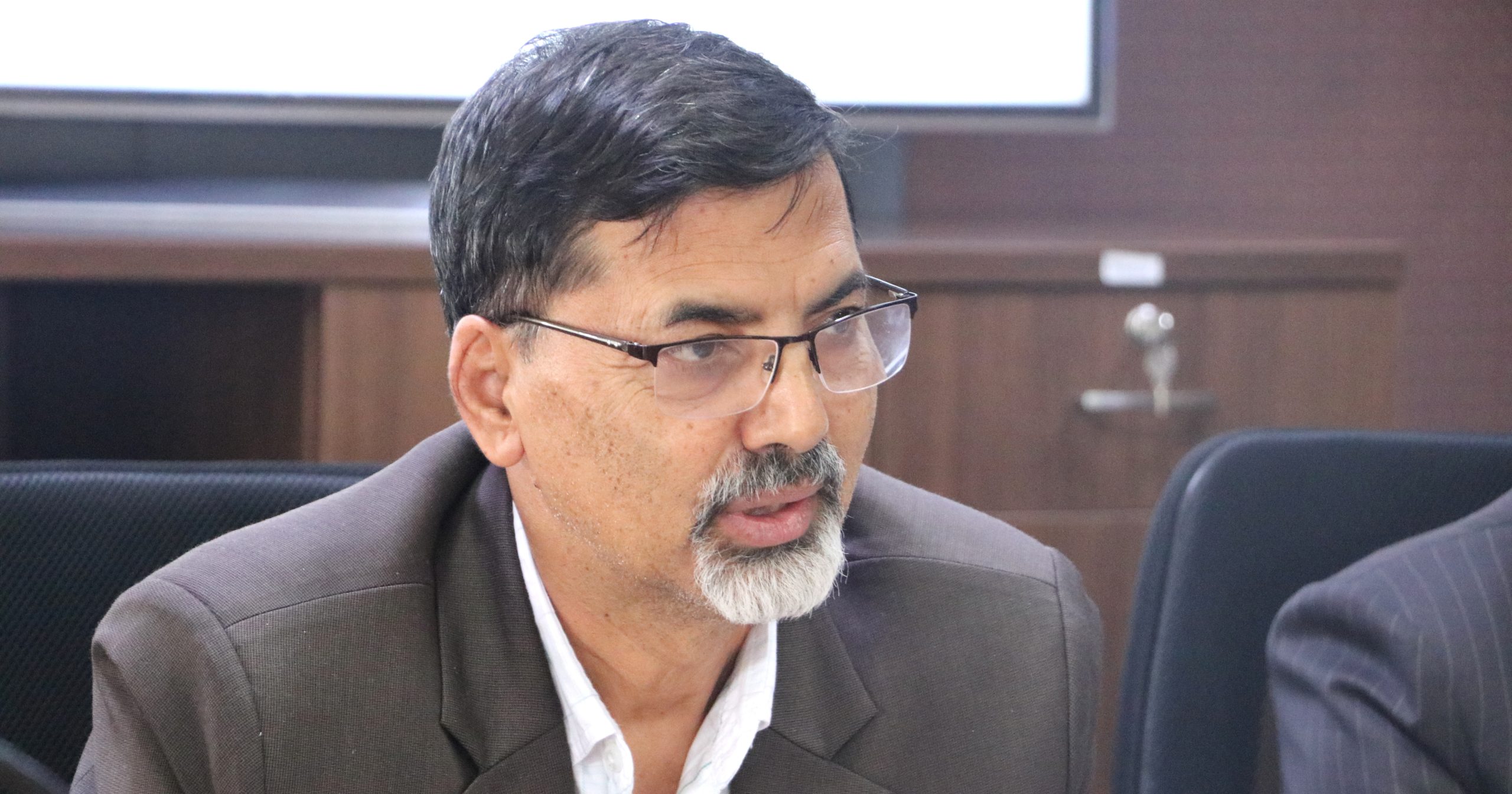
Sharma’s third option is to leave the leadership choice to the workers. Sharma has proposed a third option, which is to dissolve the current committee, form an organising committee for a conference headed by Prachanda and elect a new leadership from that conference.
Of the three options given by Sharma, if Prachanda is to continue as president, he has to win the third seat or win the National Congress.
Earlier, Sharma had proposed that the winner of the Assembly should lead the party. After the Eighth Congress was held two and a half years ago (December 2078), Sharma, who had been divided over opinions, proposed different options for the election of leaders in the Legislative Assembly held in February last year.
His suggestion was to abolish the nomination and election system and adopt the method of direct election of representatives. Sharma made suggestions for democratization, such as all public officials should be directly elected by the General Assembly, the state should not be interfered with, and people’s organizations should run according to their own plans.
But Sharma’s proposal caused uproar as the exact opposite approach was happening within the Maoists. But Sharma, who has supported Prachanda in every conflict, did not propose a change of president at that time.
This time, Prachanda made some serious allegations and proposed to resign from the post of chairman. After Sharma proposed Prachanda to resign from the post of chairman, the atmosphere of the Maoist meeting changed. According to sources in the meeting, the leaders were serious when they spoke.
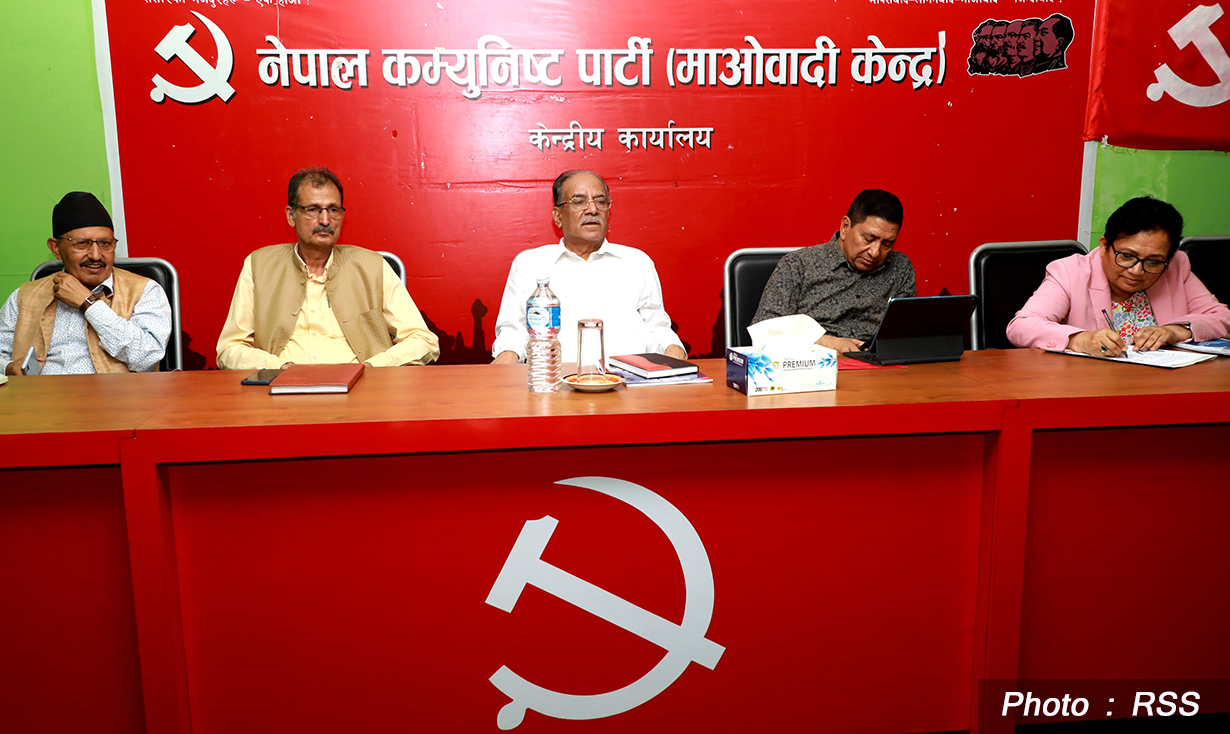
However, after Baburam left the Maoists on October 9, 2072, no one has challenged the leadership till now. Even if there is unity with the UML and the Maoists are revived, people still tend to think that Prachanda is the undisputed leader. But Deputy Secretary General Sharma has made a proposal to cancel the plan.
A series of crises
A former Maoist leader said the crisis was not new for Prachanda but should be seen as a continuation of the past. “This is not the first time that a leader has proposed in a meeting that Prachanda leave the leadership,” said a leader who has been in close contact with Prachanda for a long time.
But he said that he had not left the chairmanship for 36 years after doing many tricks. The leader said, “Nirmal Lama was asked to leave, Mohan Bikram Singh was asked to leave, and now Mohan Vidya is being asked to make concessions, but leaders keep leaving the party and Prachanda remains the chairman.”
But before Baburam left the Maoists, the leaders who challenged Prachanda were in the party. As the leaders were opposing Prachanda from time to time, “bombing the headquarters” was popular among the Maoists. In 1967, Prachanda was forced to resign as the Prime Minister of Baburam because of the Dobigat Alliance. But within a short time, those who formed the Dobigat Alliance against Prachanda left the party. Now some of them have their own parties and some leaders are in the UML.
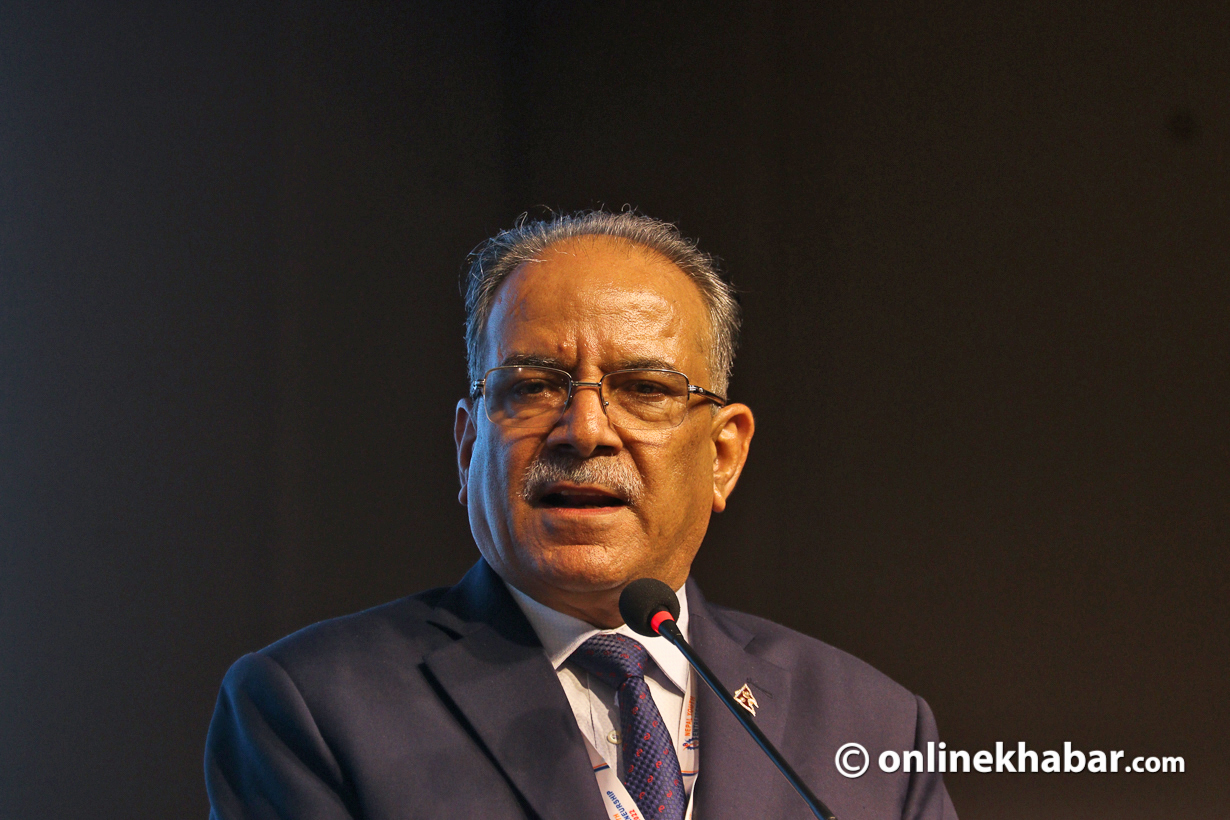
When those challenging leaders left the party, Prachanda was running the party as per his wish. Like- Janardan Sharma and Barshaman Pun were the strong contenders for the post of general secretary of the 8th Congress. But Prachanda nominated Dev Gurung as the general secretary to suit his needs.
This time, the party led by Prachanda is challenged by his former ally Sharma.
People who know Prachanda and the Maoists believe that there are two possibilities for the proposals made by Sharma. If the issues raised by Janadan Sharma are considered theoretical issues for the Left parties, then Prachanda’s leadership will be scrutinized. Even in China, the leadership is scrutinized by arranging two terms,” said analyst Hari Roka. “No, if it moves towards reciprocity and hostility, Sharma may have to face difficulties.”
Even from the suggestions made by Deputy Secretary General Sharma, the matter does not seem to be so easy to resolve. Sharma concluded that since the peace process, the party has been suffering continuous defeats due to Prachanda.
“After the peace process, it is possible, appropriate and necessary to involve thousands of people in the movement by calling on the entire party to campaign for production and job creation. We are at a loss on this issue. Even when a proposal on this matter was placed within the party, no hearing was held,” Sharma wrote.
Sharma has since argued that the Maoists are now heading towards zero because they are losing one opportunity after another. “The Maoist party has become planless and disorganised. Today, we have neither a popular base nor an organisation except the Constitution,” he wrote in his written opinion. “Except for some limited achievements, there is nothing to show for it and no original model of development.”
Instead, he concluded that the classes, castes and communities that supported the Maoists were disappearing. As a result, Sharma wrote, the Maoists were constantly losing public opinion.
“The voters who gave us 120 seats and majority in almost all constituencies in the 2064 elections have been taken away. We are heading towards zero,” Sharma’s written opinion said. “The votes of 3.1 million voters that we got in the first assembly election are now falling. Although the total number of voters has increased in subsequent elections, we are still losing 1.4 million, 1.1 million.”
Sharma believes that Prachanda should be held responsible for the decline in public opinion. “Unfortunately, today in the party, we are all living in discontent. Why are we not willing to accept the responsibility of the current core leadership and leadership team?” Sharma asked.
Prachanda is a dictator!
Another reason why the Maoists continue to lose popularity is that Sharma sees undemocratic practices within the party as a problem. ‘..the shift from a wartime command system to a democratic organisational system is necessary. But the wartime mentality continues in the organisational structure and leadership system,’ Sharma concluded.
Sharma raised some issues that arise if the wartime system does not change. Can we make a party that only operates on orders automatically serve the people? Is it possible to change the relationship between other parties and our party politically and for the people? Sharma asked.
But he concluded that this was a trend that emerged within the party after the peace process.
Sharma is not limited to party leaders. Sharma mentioned that since the prevalence of familism, there has been a tendency towards fear and stigmatization in party behavior.
“Instead of creating and running a political party that functions properly within the rules and regulations, we have created a situation where people deserve to be feared, threatened and humiliated. It is clear that even state power is being misused to incite more violence,” Sharma wrote about Prachanda’s trend.
Sharma accused Prachanda of running the Maoists in an authoritarian style, although he did not put it in writing. The conclusion Sharma mentioned was that there was no collective leadership.
“The general secretary is higher than the secretary, the general secretary is higher than the deputy general secretary, … the chairman is higher than the senior vice chairman, and the party practices a Western ministerial system. But the trend of not taking moral responsibility for bad work is becoming dominant,” Sharma wrote.
Improve the situation
After reviewing the developments after the peace process, Sharma made a long proposal, including that Prachanda should resign from the presidency. It listed what needs to be done for the welfare of the people and for the development of the country. But the initial proposal was still organizational.
He proposed a review of the Government’s achievements and weaknesses over the 15 years since the peace process.
“Play the role of an effective opposition in parliament and announce that it will not enter the government before 2084. Publish the true details of the party leaders’ assets…” The list of immediate decisions reads: “Develop a special management plan for the families of martyrs, missing soldiers, and injured soldiers, take the initiative, and complete the peace” process.’
But even after such a long explanation, Sharma saw the real problem with Prachanda. Marx, Engels, and Lenin were not without their shortcomings. Mao Zedong once said that Stalin’s weakness was 30 percent. “Mao Zedong’s weakness was also reflected in determining the path of party building, development and prosperity,” Prachanda’s weakness is being generalized.
But the conclusion was that Prachanda should give up the presidency.
Political analyst Harry Rocha believes that the questions Sharma raises about the state of the Maoists and Prachanda’s leadership style are natural. Rocha said: “Janadan Sharma’s point is that it has reached an extreme failure like Maoism, and this cannot be done without review, but because of Junkar, we are facing a theoretical ideological crisis. On this basis, Sharma may have a hard time.
He said the issue was not easy to resolve within the Maoists because there was a tendency to regard those who spoke about theoretical issues within the party as enemies. “There is a leadership of the Communist Party and the general secretary is the spokesperson. But this is not the case in our practice,” said Roca, the analyst.
However, Sharma, who had been insisting on his proposal that Prachanda should leave the leadership for 12 pages, seemed to have a different mindset in the last two pages. Sharma mentioned that because he raised the issue of democratization in the party, he had to bear the blame for the UML’s impending entry.
He called it Prachanda’s old style, “The president believes that to resolve small conflicts, one should create bigger conflicts, and that has worked.”
Sharma has since become even louder. Sharma has accused Prachanda of abusing state power and taking revenge, spreading misinformation about Baluwata, running parallel committees, etc.
[ad_2]
Source link

