


[ad_1]
In the VG photographer’s apartment in Oslo, bags of photography equipment and luggage are always ready.
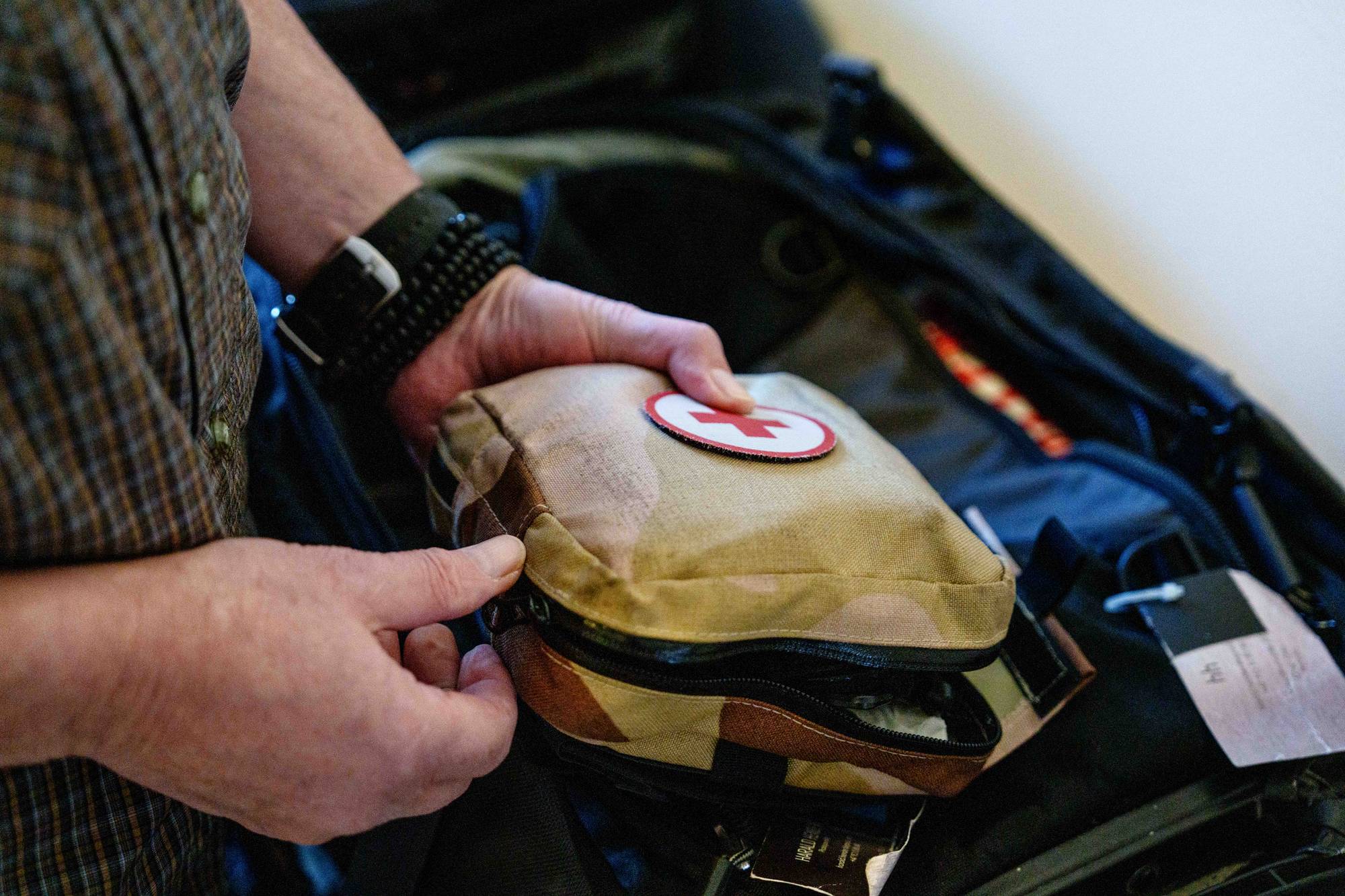
First aid kit, bulletproof vest, helmet. Everything is packed.

When NRK visited in January, Harald showed the binder banknotes of various currencies from around the world: India, Lebanon, Israel, Ukraine, Iraq.
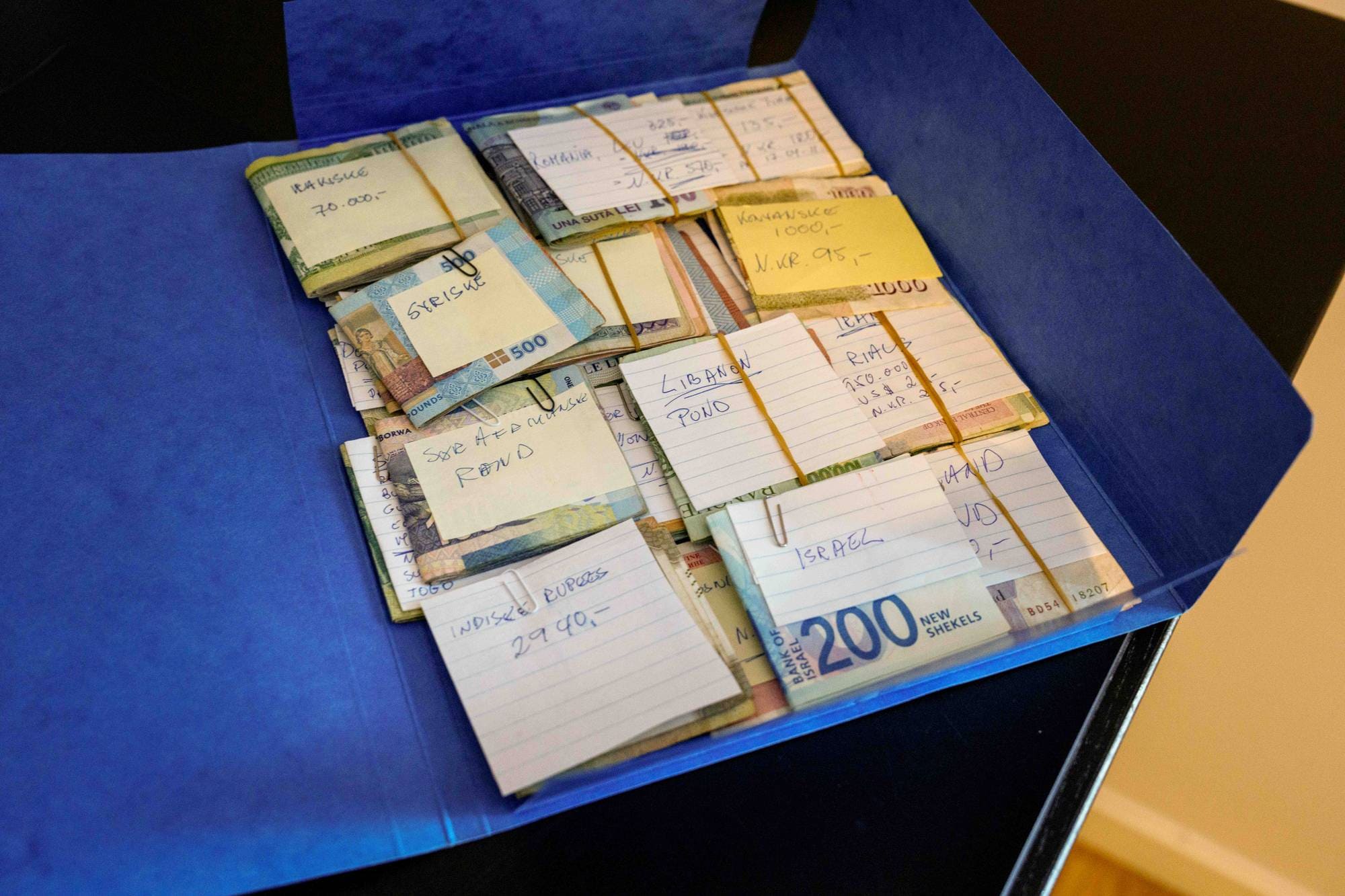
He knows how important it is to be prepared and to stay in order.
VG photographers travel up to 280 days a year, always to places where there is war, crisis or disaster.
He is a living legend and a role model, also outside the media environment. The only Norwegian news photographer to have been awarded the Great Journalist Award and made Knight of the Royal Norwegian Order of St. Olav, First Class.
But now it’s all over, Harald Henden no longer takes any pictures.
Hit by a bullet
It was October 2023, and the war between Hamas and Israel had just begun.
The experienced VG photographer set out despite not feeling well. It was impossible to stay at home in Norway when something important was happening in the outside world.
No one knew this would be the last assignment.
Harald photographed Israeli soldiers, destroyed houses and traces of the bloody attack on the Gaza border. In Kfar Aza, the dead still lay in the streets.
At the same time, he also felt something was wrong, something in his body was gurgling.
He called his good friend Morten Rostrup from Doctors Without Borders, who also worked at Ullevold University Hospital. The advice he received was to go home.
But Harald wanted to work more, even though he felt weak and his eyes were starting to turn yellow. He consulted a doctor in Israel and got the same message. These symptoms could indicate a serious problem.
Everything is moving very fast now.
Harald flew home and was taken to hospital for examination. X-rays gave the answer: a tumor on the pancreas. This is one of the most serious types of cancer.
The war photographer, who had survived travels to the most dangerous corners of the world, was suddenly out of action.
But there is little hope.
The doctor said that if the cancerous tumor in the stomach could be removed through surgery, all would be well. The samples had been collected, and all that was left was waiting.
He had had bad luck before.
Harald was shot by Israelis in the West Bank in 2001. A rubber-coated steel ball struck him in the back of the head, sending him to hospital with severe lacerations and a concussion.
The fear he felt when he was hit later proved to be a significant experience.
In the Dictator’s Bathtub
At a young age, Harald started climbing and began taking pictures of his fellow climbers on the rock face. Unlike the others, looking up from below, you mainly see the back end of the climbers in front. The pictures Harald took caught people’s attention and that’s how it all started.
He told NRK that he enjoys the thrill of steep climbs and calculated risks.
Dealing with danger and minimizing the risk of things going wrong proved to be something Harald excelled at. From 1987 on, he worked as a photographer for VG and was sent all over the world, to Kuwait and the Gulf War.
It soon became clear to newspaper bosses that young Hendon was someone who could cope with being uncomfortable and always came home fully prepared.
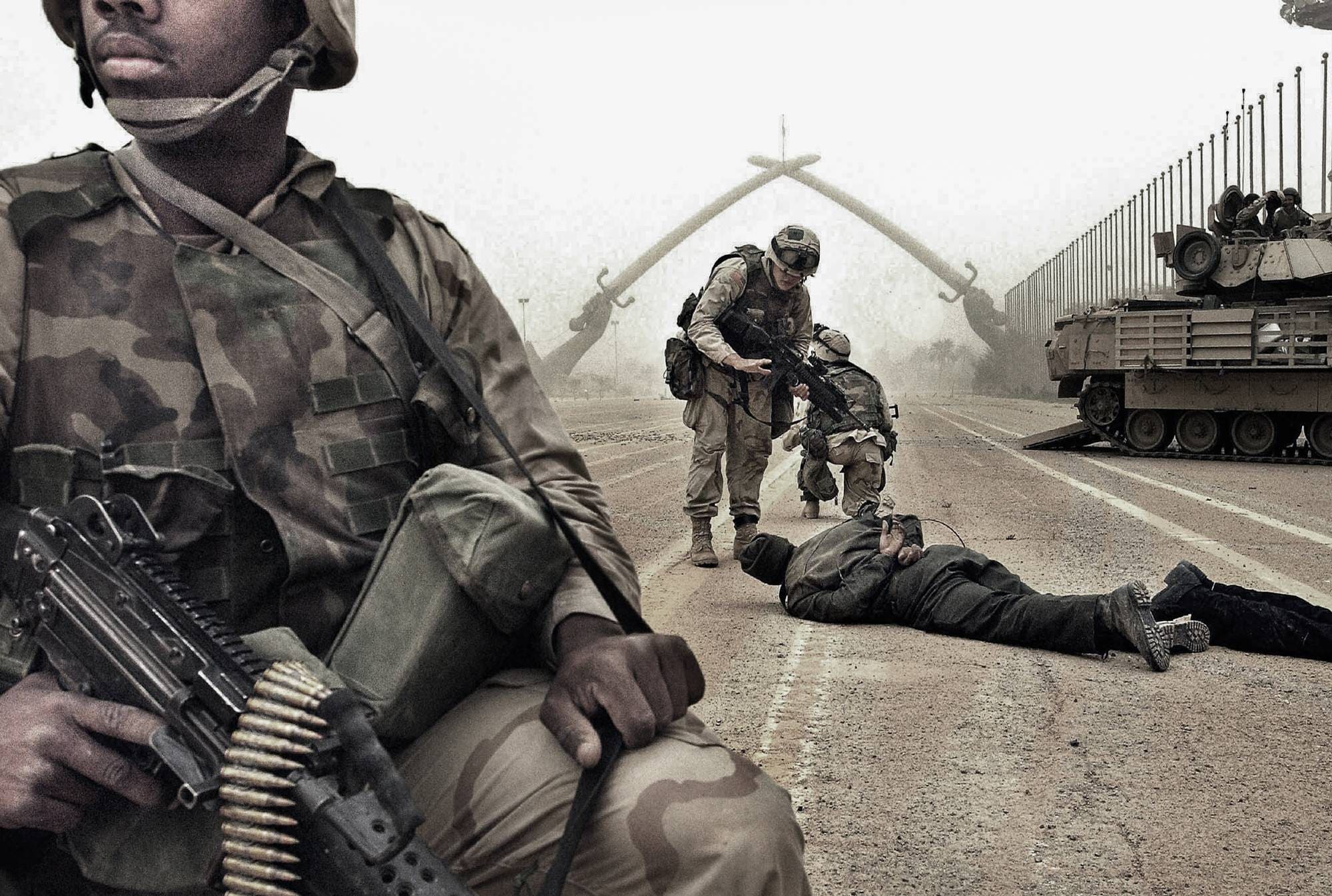
When the United States invaded Iraq in 2003, Harar was one of the few photographers on the streets of Baghdad.
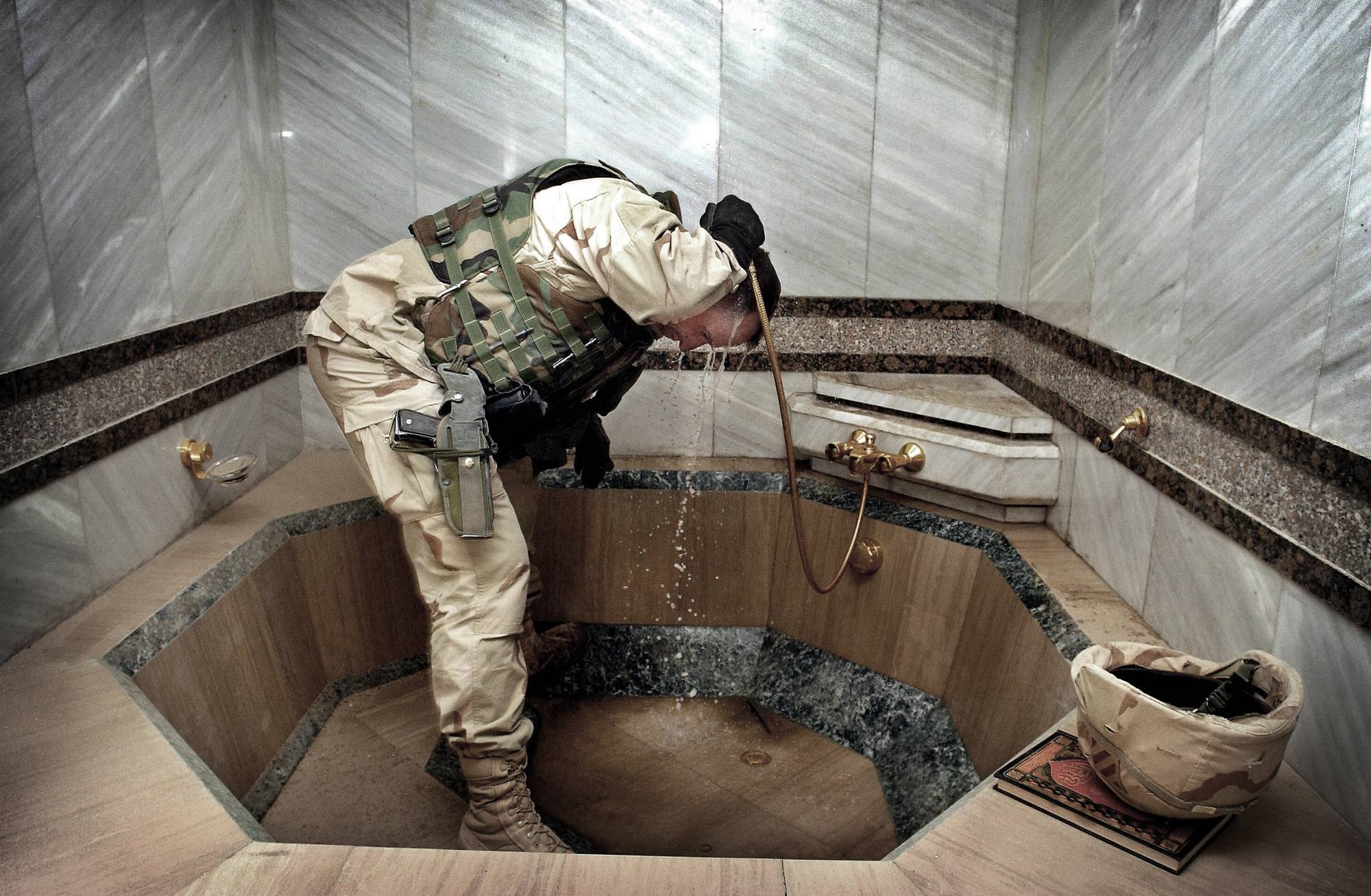
He photographed soldiers bathing in marble bathtubs at dictator Saddam Hussein’s palace.
The conflict Harar covers most is the one between Israel and Palestine, often called the most difficult conflict in the world.
He was present during the stock market crashes in 2006, 2008, 2009, 2012, 2014 and 2018.
In Khan Yunis, southern Gaza, Harald filmed a young Palestinian throwing stones at the Israeli border fence.

The air was filled with black smoke from burning car tires.
Judging by the pictures he takes, he often gets close. That means he’s often afraid. But Harald says fear is a natural part of everyday life when you work in war and conflict zones. He says it’s about being able to control the fear. Then it can be used for something positive.
– Fear made me more cautious. So I didn’t overdo it and make the situation more dangerous.
Worst day at work
On 14 January 2008, seven Norwegian journalists travelling in Afghanistan were attacked by a terrorist attack.
Harald had just checked in. Behind the high walls was a five-star hotel with white marble floors and a spa. Foreign Minister Jonas Gahr Stoll was also present. The Serena was said to be the safest place to stay in Kabul.
Suddenly, gunshots and explosions rang out. Taliban terrorists launched an attack.
Harald saw a badly injured man on the floor in the reception area. He knelt down to help.
Sometimes first aid is more important than documenting the incident.
– It wasn’t until I realized that it was Carsten Thomasson lying there, Harald said. NRK podcast “Shoot at Serena”.».
The Daily News reporter was interviewing Stoll when the terrorists began shooting him. The 38-year-old father of two was seriously injured and in critical condition.
Harald had to improvise to stop the bleeding. He had learned advanced life-saving techniques, and now he could put them to use.
An hour and a half later, Harald and other Norwegian journalists were able to carry the stretcher and Carsten to a military vehicle and then to the hospital.
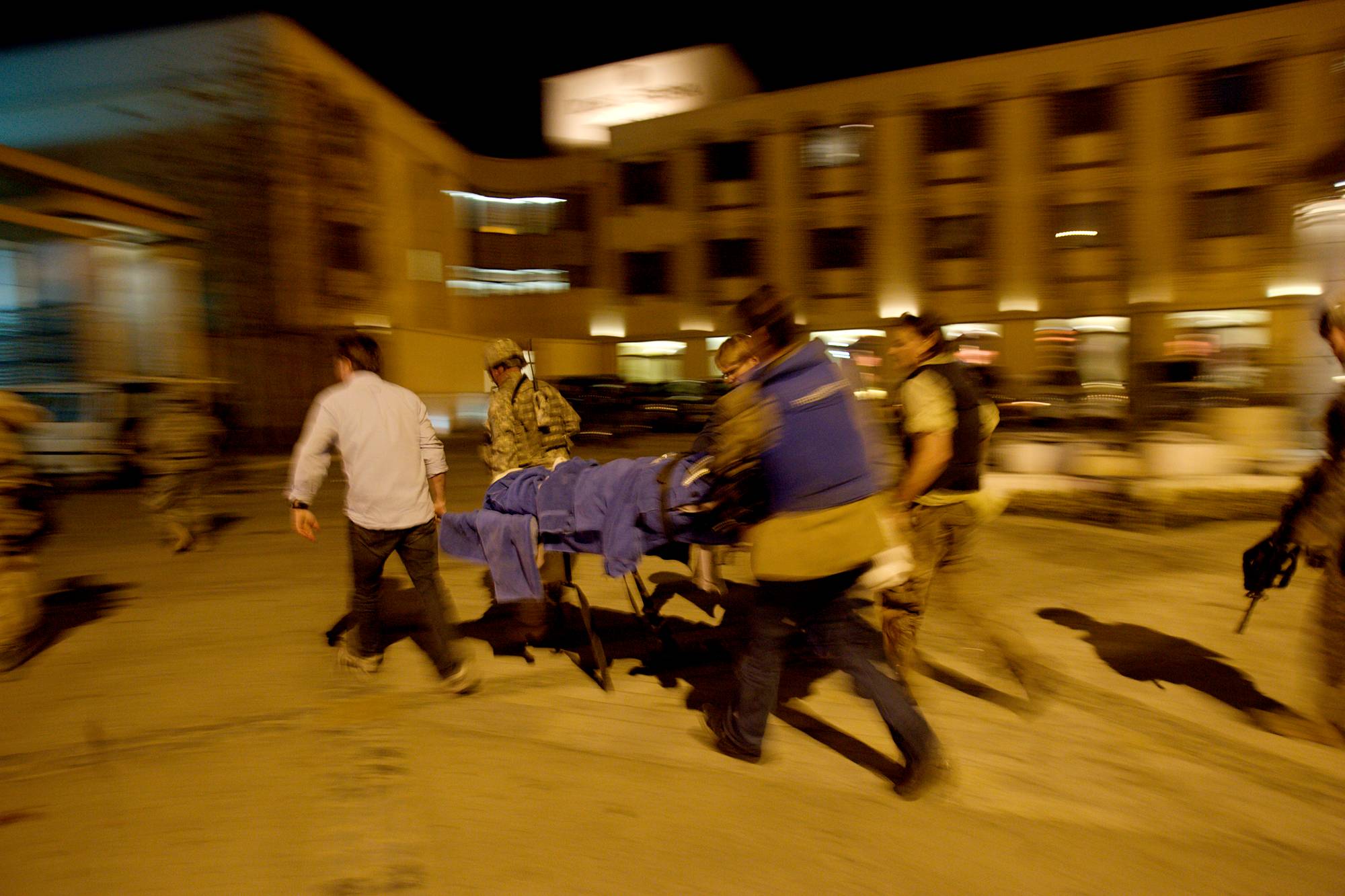
They breathed a sigh of relief, thinking they had succeeded.
But despite their best efforts to save their colleague, Carsten Thomasson bled to death later that night.
Photographing a Dying Child
There are more dead bodies, more wars, mass graves and natural disasters than Harald Henden, who has been a war photographer for 35 years and often has to explain how he endures the job.
What was it like to raise the camera, focus, and expose when the subject in front of him was a small child who would soon be out of breath?
The 1998 famine in South Sudan was one of the worst famines ever.
For 48 hours, VG’s team was close to famine in the village of Ajep. As they lined up to seek help, their weak bodies starved to death.
Things have gone too far, they are beyond help.

There are many people who need to be buried every morning.
One-year-old Manon died surrounded by her family in a thatched hut. Harald was allowed to be there. He took photos of the mother lying on the dirty floor, crying, as she realized her little girl had starved to death.
– If I can make a picture that evokes emotion in the viewer, then I am satisfied. The goal is for these images to produce something, Harald says of the subsequent undertaking.
The VG had five pages, and also had fundraising records for aid organizations. Harald’s photos opened the eyes of Norwegians, and their wallets.
Then he did what he always did, putting the terrible impression, his own crying and his powerlessness into a mental drawer and closing it again.
This is how he copes with the pain of his job.
He turns it on and off. He distinguishes between being on duty and not on duty. In technical language, this is called compartmentalization: what you experienced is there, but when you return to your daily life, you try to put the impression aside.
Some of his favorite things to do to relax at home are skydiving. Harald has made over 3,800 jumps and is an instructor.
But some sensory impressions could not be erased, even for the experienced Harald.
– The smell of death. I can never get used to the smell of old death.
He always asks for permission before taking a photo. He often uses simple body language. He holds up the camera, shows his eyes, his hands, and waits for a nod in response.
Almost no one said no.
“People often want to tell their story, they want the world to know what happened,” Harald said.
He primarily photographs those affected by war and conflict. Not actual acts of war.
Each person he photographed has their name printed on them, even though they are only four weeks old.
Like Mariam and Eman, malnourished twins in Iraq.

At a clinic in Mosul, where Doctors Without Borders tries to save starving babies, a newborn brother and sister lie side by side, their faces covered by a small mosquito net.
Harald won several awards, including the photo of a father with a broken hand embracing his little daughter, which was named the best photo of 2000.

In Sierra Leone, people are missing arms, legs, lips and tongues. Rebels are trying to prevent people from voting in elections by maiming them.
The jury wrote that Harald Henden conveys warmth and love in a cruel world.
The Final Mission
Last October, after spending ten days at the Gaza border, Harald returned home to hospital and was diagnosed with cancer.
Despite his careful Google and thinking, he knew that without surgery he would not survive.
Eight out of ten people with pancreatic cancer die within a few months.
– When I received the news, I was fired. It’s not just cancer, it’s the worst kind of cancer, Harald said. Three months after receiving the death sentence, he received NRK in his apartment.
He lived alone, without a wife or children, and work took up most of his life.

For a short time, there was hope that the tumor could be removed, but new tests showed that the cancer had spread. Surgery would be useless anyway.
Most people live 2-6 months after receiving this diagnosis. Harald agreed to undergo life-extending treatment – chemotherapy, which gave him a few more months.
He chose to be open about the disease and gave countless newspaper, radio and television interviews.
As a photographer for more than thirty years, he has lived on the stories that others agree to tell. Now he wants to meet his colleagues and the public in the same way.

Harald called it bad luck that he was ill. But that was not fair.
– I’ve seen a lot of people die suddenly and brutally, and they were much younger than I was. I was allowed to live 63 years, which is not bad.
In March 2024, he received the Honorary Award for Press Photographer, and in May, Harald Henden was awarded the Fritt Oder Prize for his great efforts for freedom of expression.

That same month, many of his best photographs were published in the photo book The Human Eye.
Harald said even those who have passed away must be respected.
– The photograph must be taken in such a way that the deceased retains his or her dignity.
For Harald, photographing the dead and dying was never the worst thing. The hardest part was meeting relatives in the midst of crisis and grief.
– Dying is easy. Sitting down is much harder.
Harald Henden died peacefully at 11am on Wednesday, July 3 at Diakonhjemmet Hospital, with his good friend Morten Rostrup from MSF by his side.
[ad_2]
Source link

