

[ad_1]
For Fazil, who has missed nearly a thousand days of classes, the renaming of the “Education Crossroads” in Herat to “Iqra” is disappointing.
Iqra means “to read” in Arabic; but 17-year-old Fazle and hundreds of thousands of Afghan boys and girls have been deprived of secondary and higher education under Taliban rule.
The intersection near the Ministry of Education in Herat province was known as Maarif. But the Taliban changed its name to Iqra Crossing a few weeks ago.
Fazle was in grade 11 when the Taliban returned to power, and after a while she was banned from going to school.
Student: What did the Taliban want to prove by changing the name of Chaharah?
He expressed the following feelings about the Taliban’s recent actions:
“What did the Taliban want to prove to society by building Iqra Bazaar? Although they banned us from going to school for three years and did not let us learn, what did they want to prove with these symbolic works? Our hearts are bleeding because not going to school will make us bleed more.”
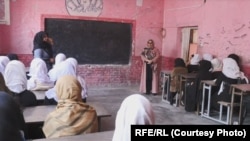
Fareeha, a 24-year-old third-year student at the University of Herat Medical School, shared a similar view:
“We have been deprived of education for almost two years. We cannot study. The construction of this square is symbolic. They want to destroy people’s eyes. When I cannot study, then what is the meaning of this square?” Iqra? “What to read? Such an action is more ostentatious.”
Nisar Ahmed Mossadegh is a civil society activist and head of the Herat Doctors Union.
Last Monday (Thor 31), at the opening ceremony of a private company in Herat to start exports, he sharply criticized the closure of girls’ schools and universities, saying that this action has caused grief and pain to the Afghan people.
“Until yesterday, people were crying because of kidnappings, but today, people are crying in their homes because of the 7th, 8th, 9th, 10th, 11th and 12th grades of Afghan girls and the closure of colleges. So what is the difference?” “Yes, if they cried like this before, they cry like this now. You write and read in the streets, but you tell girls not to read? Open up, we have to satisfy the other ten percent.”
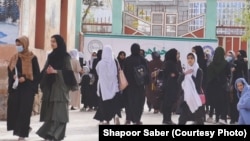
The program was attended by senior local Taliban officials including Hayatullah Mohajer Farahi, Deputy Minister of Publishing of the Taliban Ministry of Information and Culture and Director of the Herat Provincial Office.
But despite widespread criticism at home and abroad, the Taliban has yet to give the green light to reopen schools and higher education institutions for girls and women.
shahpur sabel
[ad_2]
Source link

