

[ad_1]
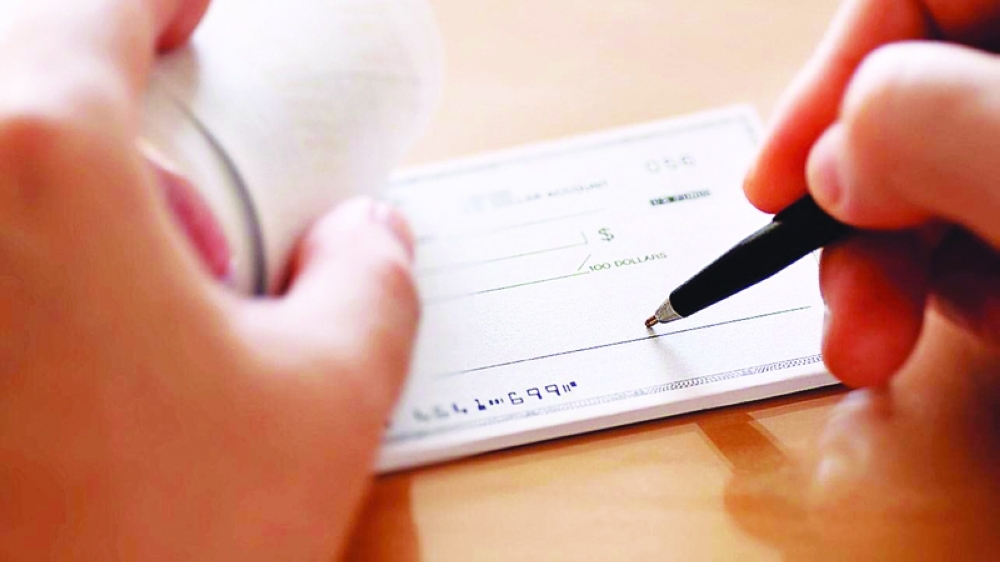
Muscat: Bounced cheques are a serious offence in the Sultanate of Oman, but are declining due to the growing use of digital payment systems in transactions.
According to the Central Bank of Oman (CBO), about 362,000 cheques were classified as “bad” or “void” in 2023, mainly because of insufficient funds in customers’ bank accounts. In contrast, about 387,000 cheques were bounced in 2022, a year-on-year decrease of 9.8%.
“It is important to note that bounced or unpaid checks are considered serious offenses in Oman and may result in legal consequences, including fines and imprisonment,” the Central Bank of Oman warned in its 2024 Financial Stability Report released on Tuesday.
Of the total number of bad checks recorded in 2023, 291,444 checks (80.5% of the number) were dishonored by banks due to “insufficient funds” in the account of the issuer. In addition, in 8.73% of the cases (equivalent to 31,614 checks), the relevant accounts were “closed, frozen or transferred.” A small number of other cases were blamed on “MICR encoding errors.”
In order to mitigate the impact of cheque bounce phenomenon on the different parties involved in a transaction (drawer, payee and payee), the Central Bank said it is actively studying the possibility of implementing partial cheque cashing in Oman for the first time.
The document explains: “In some countries, partial cheque cashing has been introduced as an alternative measure. Under this system, if the cheque drawee does not have the full amount stated on the cheque in his account, the bank must cash a partial amount equal to the available funds, unless the cheque holder refuses partial payment.”
The central bank noted that it is currently working with various government agencies to develop regulations to allow partial cashing of cheques in Oman. The central bank said the measure would provide businesses and individuals with greater flexibility in managing cash flow and account balances.
“Previously, cheques in Oman had to be paid in full upon presentation. The new rules will allow banks to accept and process cheques even if the payee’s account does not have sufficient funds to cover the full amount. The bank will then deduct the available balance from the account, and the payee can choose whether to accept partial payment or reject the cheque entirely.”
It added that the partial fulfillment option would reduce the number of cheque defaults and provide a more efficient payment system.
Looking ahead, the central bank expects bad debt trends to gradually decline, especially as electronic payment methods begin to replace cheque payments. The use of cheque payments has been on a downward trend since 2018, plummeting from about 4.7 million in 2018 to 3.7 million in 2023.
“This decline clearly demonstrates the shift from paper-based payments to digital payment methods,” it added in the report.
[ad_2]
Source link

