


[ad_1]
As European leaders worry about Viktor Orban’s foreign policy adventures, the Hungarian leader has stepped up his campaign against independent voices, increasing pressure on media and civil society groups that oppose the government line, The Guardian reported.
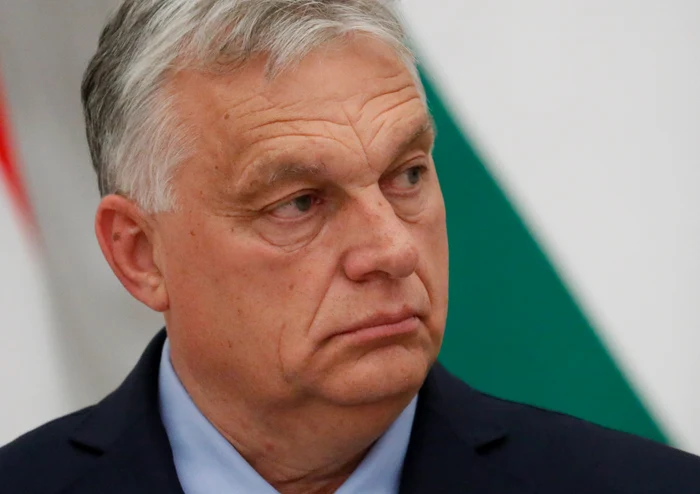
Viktor Orbán recently created an Office for the Protection of Sovereignty Photo EPA-EFE
Recent meetings with Russian President Vladimir Putin, Chinese leader Xi Jinping and U.S. presidential candidate Donald Trump have sparked controversy in diplomatic circles, further isolating Budapest as Hungary formally assumes the rotating presidency of the European Union Council.
On the other hand, some measures towards independent press and regulatory bodies have received much less attention abroad. These come from the newly established Office for the Protection of National Sovereignty.
The office, which is headed by a figure close to the ruling Fidesz party and has the power to call on intelligence services without judicial oversight, was formally set up by Orban’s government to monitor foreign influence.
But protesters say that in reality it is not an independent body but a tool to put pressure on government critics.
“It’s all so ridiculous, I’d put it somewhere between Orwell and Kafka”said József Péter Martin, executive director of Transparency International Hungary, one of the organizations investigated by the Office for the Protection of Sovereignty.
“In an EU country this should not happen,” Martin said in an interview in Budapest, adding that the office’s activities violated free speech and were unconstitutional.
“The regime is strengthening, so instead of Orban moving in the direction of consolidation, he is clearly Putinizing it year after year in a more obvious way,” said Ágnes Urbán, an academic and expert in the Hungarian media.
Organizations under investigation by the Office for the Protection of Sovereignty
So far, the Office for the Protection of Sovereignty has said it is examining two entities: Transparency International Hungary and Átlátszó, an investigative body known for exposing allegations of government corruption.
In public reports, the office also targeted some well-known media, believing that their news damaged Hungary’s national interests.
“They didn’t investigate the fact that public media was saturated with Russian propaganda,” He was praised by Márton Kárpáti, chairman of the board of directors of Telex, one of Hungary’s leading independent news portals, and was mentioned several times in a “disinformation” about the war in Ukraine published by the new office in July.
“They don’t investigate how much money social media influencers close to the government are getting paid, what war messages they’re sending, what pro-Russian narratives they’re promoting,” He added.
News reports in the report that quoted foreign officials such as European Commission President Ursula von der Leyen, Czech President Peter Pavel and U.S. Ambassador to Hungary David Pressman were classified as Western disinformation narratives.
Targets of the report included some of Hungary’s most respected foreign policy experts, who have spoken publicly about the government’s cozy ties with the Kremlin.
The report quotes former Hungarian intelligence officer Péter Buda as saying: “In such a fragile and complex international situation, giving incompetent propagandists space to suppress critical analysis, especially when they act in the interests of the party waging war and aggression, runs the risk of deadly escalation.”
Speaking alongside senior ruling party officials, Lanzi warned in July that there was a “grey area of sovereignty” where organisations “call themselves different things – media, civil society groups – but in reality they are bodies for exerting political pressure”.
In February, the European Commission announced it would take the first legal action against Hungary for its law to establish a sovereign office. The US State Department has also criticized its creation.
Hungarian government defends new agency
However, the Hungarian government claims it is necessary. Prime Minister Balazs Orban, political director, said in an emailed statement that Hungary has faced “increasing threats” in recent years and that the office is a key part of the response.
“The Office for the Protection of Sovereignty was established to investigate foreign interference in Hungary’s internal affairs and to protect Hungary’s sovereignty and the interests of Hungarian citizens. Although the Office is not a national security service or investigative body, it promotes transparency by collecting and publishing detailed reports on its findings.”He said.
“Such an office is essential in every democratic country and some countries already have similar institutions,” He added.
The Hungarian government promotes a narrative that media outlets and civil society groups receive large amounts of funding from abroad in an opaque manner and that this funding distorts their work and has a negative impact on Hungarian society.
Independent NGOs and media outlets have refuted the allegations as baseless and ensured full transparency in their funding.
They say many of the grants cited by the government and its allies are funded through open processes such as the European Union budget or the U.S. State Department.”We don’t get our money from North Korea or Russia, we get it from our allies or from institutions in the European Union,” Karpáti de la Telex.
Some observers warn that one of the main impacts of a sovereign office could be to spread chaos.
“One of the key elements here is to instill uncertainty and insecurity among civil society and media actors, thereby generating fear. This can lead to self-censorship.” Zsuzsanna Végh is a program director at the German Marshall Fund.
Hungary’s EU Affairs Minister János Boca said the Hungarian Office for the Protection of Sovereignty “enjoys complete independence and fairly broad discretion in carrying out its activities within the legal framework.”
He said the “independent office” had no coordination or connection with the Hungarian government.
[ad_2]
Source link

