


[ad_1]
High inflation and the resulting sharp rise in house prices, high loan interest rates, extended payback periods and uncertainty around laws and regulations in the housing sector have changed the preferences of Turkish investors, while housing is a traditional investment vehicle in Turkey.
While house sales fell on a monthly basis to their lowest level in a decade, housing investors turned overseas, particularly to Montenegro, Spain, Dubai and London.
Could make $4 billion this year
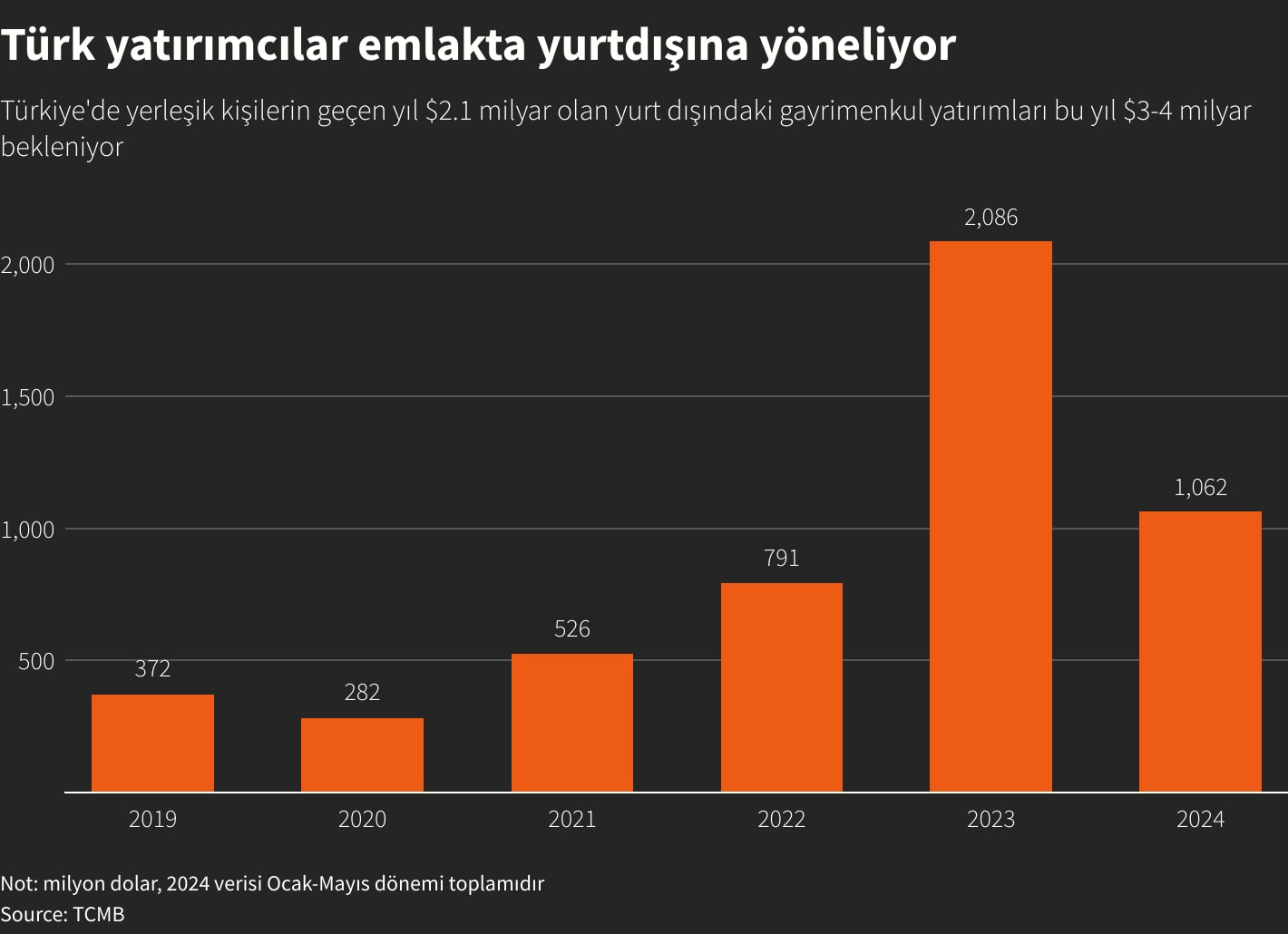
Turkish residents’ overseas real estate investment was US$2.1 billion last year and is expected to reach US$3-4 billion this year; seeing Turkish investors’ interest in foreign real estate markets, Turkish construction and real estate companies have also taken this opportunity to go abroad.
Foreign investments in Turkish construction companies, especially in Spain, Montenegro and the Turkish Republic of Northern Cyprus, grew by more than 400 percent in the first five months, according to information provided by industry representatives.
Tolga, 56, is one of those who have turned abroad as Turkish housing investments have lost their appeal, selling his home in Istanbul and buying one in London.
The purpose is to earn foreign exchange income
Tolga, who works in the energy industry and did not want to give his last name, said his goal was to diversify his investments and earn foreign currency income this way, saying that “house prices in Turkey are very high, but rents are still low for those who want to own a house as an investment vehicle. “When you rent a house, the payback period is about 30 years, and in London it’s about 15-20 years,” he said, adding:
“The rules there are clear and precise. We sold a property in Turkey and bought a house in London with some of our own savings.”
According to CBRT data, domestic residents’ overseas real estate investment increased by 164% to US$2.09 billion in 2023. The latest published data shows that in the first five months of this year, sales of similar goods reached US$1.062 billion, an increase of 51% over the same period last year. Last year’s figure was US$2.044 billion.
Numbers in Türkiye are decreasing, numbers in London are increasing
On the other hand, house sales in Turkey have continued to decline since last year. TÜıK data showed that house sales fell to 75,000 569 units in April, the lowest level in nearly 10 years. House sales in June were 79,000 313 units, slightly above the historical low.
Arzu Uygun, founder of London property consultancy Unique London Consultancy, noted that Turkish interest in the London property market has grown exponentially recently, noting that Turkish property prices are high and payback periods are long.
Comparing similarly priced homes in Istanbul and central London, Uygun said: “The payback period for renting a property in Istanbul is 26 years, while buying a similarly priced home in London is around 17 years.”
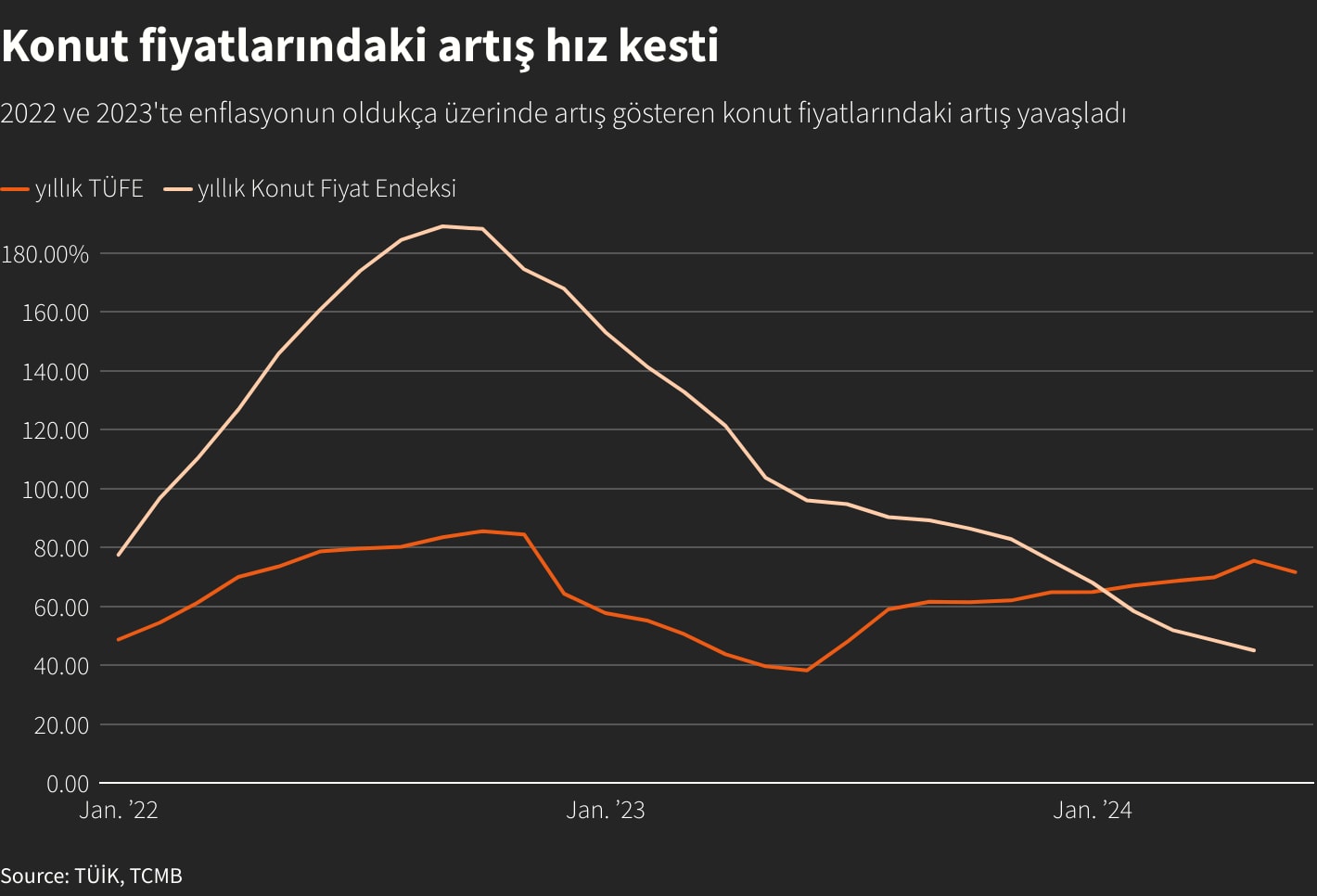
According to CBRT data, the growth of house prices across Turkey peaked at 189% in September 2022. Although price increases have slowed since then, they continue to remain above inflation in 2023. The latest data shows that house prices rose by 45% in May this year.
Investor interest is also pushing Turkish builders abroad
Fenercioğlu Group of Companies, which operates in the construction and real estate sectors, is one of the companies that decided to focus its projects abroad after seeing Turkish investors’ interest in foreign real estate markets.
Chairman of the Board Aycan Fenercioğlu said that they have launched housing projects in 6 different locations in the Turkish Republic of Northern Cyprus and will start construction in the Alicante region of Spain in the fall, having completed the licensing process. Turks have shown great interest in housing investments in Montenegro until the New Year, and then in Dubai.
Fenercioğlu said he does not think housing will provide returns as an investment tool in Turkey in the next five years, “Housing in Turkey is no longer an investment for most citizens. Turkish investors are currently looking for. TL interest is currently high interest rates, but investors predict that interest rates will fall in the coming period, “People are now looking for ‘keep my money in foreign currency and make a profit in foreign currency’,” he said and added:
“The purchasing power of the Turkish people has fallen, there are very high interest rates. Construction production has stopped and the industry has reached a dead end. However, the construction industry is like a bicycle, if you stop, you will fall. So we saw an opportunity and went abroad.”
“Don’t buy for investment purposes,” the government said
“The government’s current policy is that people buy houses only for asylum purposes. It says ‘they should not buy houses for investment purposes’ … It wants houses to no longer be an investment vehicle. This will lead to more Turks going abroad in the future,” Fenecioglu said.
Media reports in recent weeks have said the government is preparing to impose an additional property tax on people who own more than one home as part of a tax study, and that the practice of not taxing homes sold after the fifth year will be abolished. However, the tax law already enacted does not provide for this.
Industry representatives said even rumours in this direction were worrying property investors and causing them to stay further away from the market.
Laws and regulations make real estate investors anxious
“If the first reason why Turkish real estate investors are turning overseas is inflation and a sharp rise in house prices, the second reason is legal reasons,” said Bayram Tekçe, chairman of the Association of Real Estate Services Exporters (GIGDER). He continued:
“The rent cap was a big problem for housing investors. It was repealed. However, this time rumors about the tax system emerged… Even if the law is not passed, just rumors are enough.”
Turks’ housing investments abroad are expected to increase by at least 50% this year to $3 billion, and the amount could reach $4 billion, Tekce said. “Investments by Turkish construction companies, which want to catch up with the number of Turks going abroad and create alternatives to the stagnant market, increased by 249% in the first five months.” “This figure was at the level of $47 million in the first five months of last year,” he said.
Tekçe pointed out that other important factors driving Turkish investors abroad are foreign currency rental income in the context of a depreciating Turkish lira and shorter investment payback periods abroad.
According to information provided by industry representatives, the payback period for investments in Turkey is about 30 years, while the payback period for investments in the United Kingdom and Spain, which are equivalent places of residence, is less than 18 years, and the payback period for investments in Montenegro, which is preparing to join the European Union, is less than 12 years.
A 25 percent cap on housing rent increases, which the government imposed for two years and ended earlier this month, is one of the factors extending the payback period for investments in Turkey.
Tolga, who is investing in a property in London, also said that one of the factors in his decision was the recent or expected legal provisions in Turkey:
“The 25 percent limit on rent increases, the property and income taxes, the lack of rules… We don’t know what’s going to happen tomorrow. Will our house be worth less or more? Or will something else be built next to our house?”
[ad_2]
Source link

