


[ad_1]

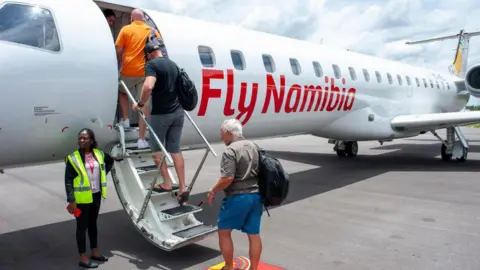 Getty Images
Namibian Michelle Nehoa spent nearly $500 (£390) applying for a Canadian visa – but more than two years later, she still hasn’t received one.
The 38-year-old, who lives in Namibia’s capital Windhoek, was eager to travel to Quebec to visit her aunt and cousins whom she hadn’t seen for nearly a decade.
The visa application required filling out several forms, and she had to provide, among other requirements, six months of bank statements, a letter of invitation and a detailed travel history.
There was no way to apply in Namibia, so it also meant she had to travel to South Africa to submit her biometric data, which included having her fingerprints taken and having her photo taken.
Her experience is not uncommon for Africans traveling to Western countries.
Data from consulting firm Henley and Partners shows that in 2022, seven of the 10 countries with the highest visa rejection rates in the European Schengen Area are African countries.
“The process has been long and frustrating. I have not received any explanation as to why it has taken so long,” Ms Nehoya told the BBC.
However, if her family in Quebec decided to travel to Namibia on Canadian passports, they would not face the challenges and expenses she did. Canadian citizens currently do not need a visa to enter Namibia.
But that will change in eight months.
Starting next April, Canadian citizens, as well as citizens of Germany, the United States, the United Kingdom and 29 other countries, will need a visa to enter the country.
These include all “non-reciprocal countries” – meaning the new visa rules will affect citizens of all countries that require Namibian passport holders to hold a visa.
“Namibia has shown goodwill and preferential treatment to citizens of various countries. However, despite these efforts, some countries have not reciprocated,” Namibia’s immigration department said in May.
“Given this disparity, the government believes it is necessary to implement visa requirements to ensure equality and fairness in diplomatic interactions.”
But while these tourists can buy a 90-day visa when they arrive in Namibia for $90, African passport holders need to obtain a visa in advance, which has cumbersome requirements.
British High Commissioner to Namibia Charles Moore said he respected Namibia’s right to implement the new regulations.
“(The UK) unfortunately imposed a visa regime on Namibia last year because of the large number of asylum seekers we were receiving. That affected our relationship with Namibia,” he said.
The British government further explained in a statement that since 2016, the number of asylum applications from Namibians at the UK border has continued to increase significantly.
“This constitutes an abuse of the provisions for visa-free nationals to visit the UK for a limited period of time,” the report said.
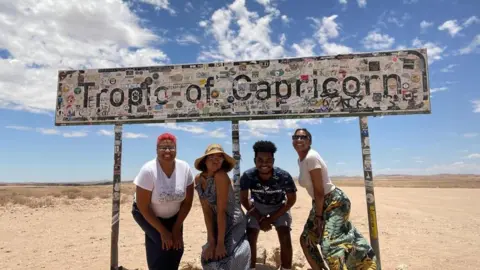 Michelle Nihoa
For Ms Nehoya, Namibia’s visa announcement was long overdue: “I think it’s fair. It feels like Namibia is standing up for itself.”
Social media reaction to the news echoed her sentiments.
“Finally. I hope they also require them to submit extensive documentation, take a medical exam, (and) a Namibian language test,” one commenter wrote.
Another said: “If I need to bring bank statements… and documents and buy a visa to enter a country, then that country should do the same to allow me into my country.”
For African passport holders, applying for visas to the Schengen area, the United States and Canada is not cheap.
According to a recent report by the Lago Collective, a think tank on immigration issues, the EU made more than €53m ($58m; £45m) in profits in 2023 from rejected visa applications from African countries.
Visas are refused for a variety of reasons, with the report saying most refusals are based on “reasonable doubts about the visa applicant’s intention to return home.”
In June 2024, the cost of a Schengen short-term visa (for adults) will increase from €80 to €90, and in October 2023, the cost of a UK visa will increase from £100 to £115.
The report also shows that nearly one-third of Africans applying for Schengen visas are rejected, which is higher than the global average.
Even when visas are approved, African tourists say their experiences with border security make them feel uncomfortable and unwelcome.
Winnie Byanyima, a Ugandan who heads UNAIDS, called attention to the issue in a tweet in 2022: “I’m at Geneva airport, almost denied boarding, all documents double checked and double checked, phone calls made… I’m finally on board.”
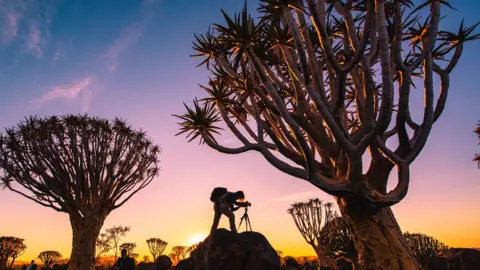 Getty Images
While Namibia’s visa move was praised on social media, the tourism industry was less enthusiastic.
The Namibian Hotels Association said it was “very concerned” about the message it was sending “to the global tourism industry”.
In 2022, tourism accounted for 7% of GDP, making it the third largest contributor to the economy – with most tourists coming from countries such as Germany and the United States.
However, Soni Nrupesh, a tourism expert in Windhoek, believes that the visa reform will not stop tourists from visiting: “It won’t change much; you can still board the plane without a visa.
“When you arrive at the airport, you just fill out the form, pay the fee and you’re allowed in.”
Would-be travelers like Ms. Nehoya hope this mutual benefit will be the future for everyone.
“People come to Namibia and they love it. But we also want to see what’s happening on the other side,” she said.
“It would be nice if we could go to Canada, the United States or the United Kingdom and get a visa as soon as we land. But now, we have to plan everything in advance.”
You may also be interested in:
 Getty Images/BBC
[ad_2]
Source link

