


[ad_1]
Conspiracy theories flourish after computer outage
The computer outage that hit the world on Friday, July 19, caused conspiracy theories to spread across the Internet.
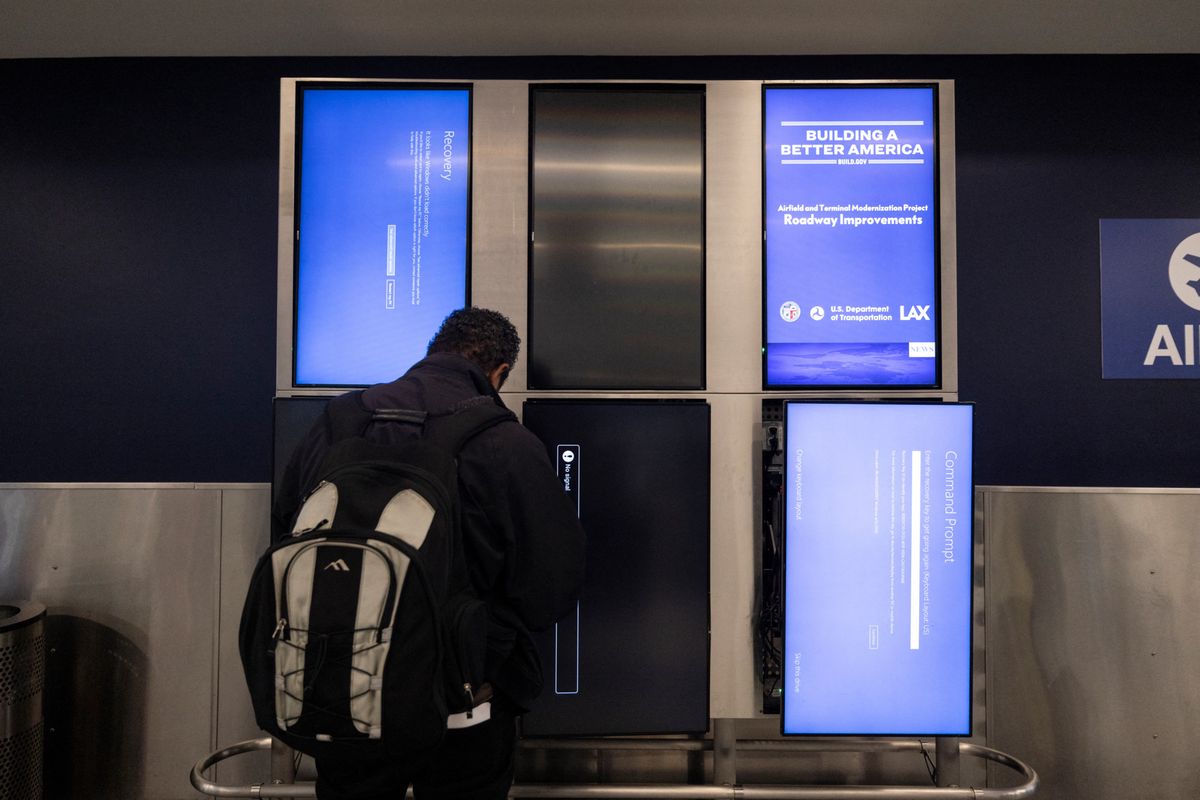
Dozens of planes remain grounded Friday, July 19, 2024, due to a global computer glitch.
AFP
World War III about to break out? A major cyberattack by the global elite? Conspiracy theories are proliferating online following an unprecedented computer glitch.
A faulty update to Microsoft’s Windows operating system rocked the world on Friday, grounding planes, throwing workers out of work and disrupting financial markets. The idea of a cyberattack or IT security issue was rejected by US cybersecurity group CrowdStrike, whose software was the source of the glitch.
Davos stands out
But that hasn’t stopped conspiracy theories from proliferating on social media, many of which have removed safeguards to prevent the spread of false information. This speaks to the fact that today, information chaos almost systematically accompanies global events.
“I read somewhere that World War III will be primarily a cyber war,” one internet user wrote on X (formerly Twitter). To some, the disruption could be a cyberattack launched by the World Economic Forum, which brings together officials, multinational bosses, bankers, billionaires and even intellectuals for an annual meeting in the luxury Swiss ski resort of Davos.
Those sharing the false theory based it on an old video on the forum’s website that warned of the possibility of a “cyber attack with similar characteristics to the coronavirus.” The video warned that the only way to stop a cyber attack would be to disconnect millions of vulnerable devices from the network.
“Global audience”
The World Economic Forum has long been a target of conspiracy theorists, who believe in the existence of an elite group of people who use the excuse of solving the world’s problems to serve unclear and private purposes.
“The proliferation of conspiracy theories following a major global event like this outage is a sad demonstration of the unstable nature of the information ecosystem,” said Rafi Mendelsohn, vice president of Cyabra, a company that specializes in combating disinformation.
“What is unique about this type of activity is how social media, forums and messaging apps facilitate the rapid spread of posts, allowing theories to quickly gain traction and reach a global audience.” Without safeguards and effective moderation, the network can find itself overwhelmed by these theories and rife with confusion in this torrent of false information.
‘Malicious motives’
“This raises broader questions about combating disinformation and misinformation,” said Michael Moser, director of the Center for the Study of Disinformation at the University of Texas at Austin.
“Trust in credible sources has dropped so much that people are more likely to believe a conspiracy theory that appears to be true than factual information.”
The computer outage was caused by a bug in an update for the Windows operating system security program. Its manager, George Kurtz, tried to reassure users by confirming that the bug “is being corrected,” but this did not stop Internet users from speculating.
“It’s difficult to counter this misinformation with factual rebuttal because the issue is so technical,” Michael Moser said. “Explaining that the problem is a misconfigured system file and a fix is being done may be accurate, but those who tend to see malicious motives behind errors won’t believe it.”
“latest news”
Want to stay up to date with the latest news? The Tribune de Genève offers you twice-daily meetings, directly in your email inbox. This way you don’t miss anything that’s happening in your canton, in Switzerland or around the world.
AFP
Did you find the error?please tell us.
[ad_2]
Source link

