

[ad_1]
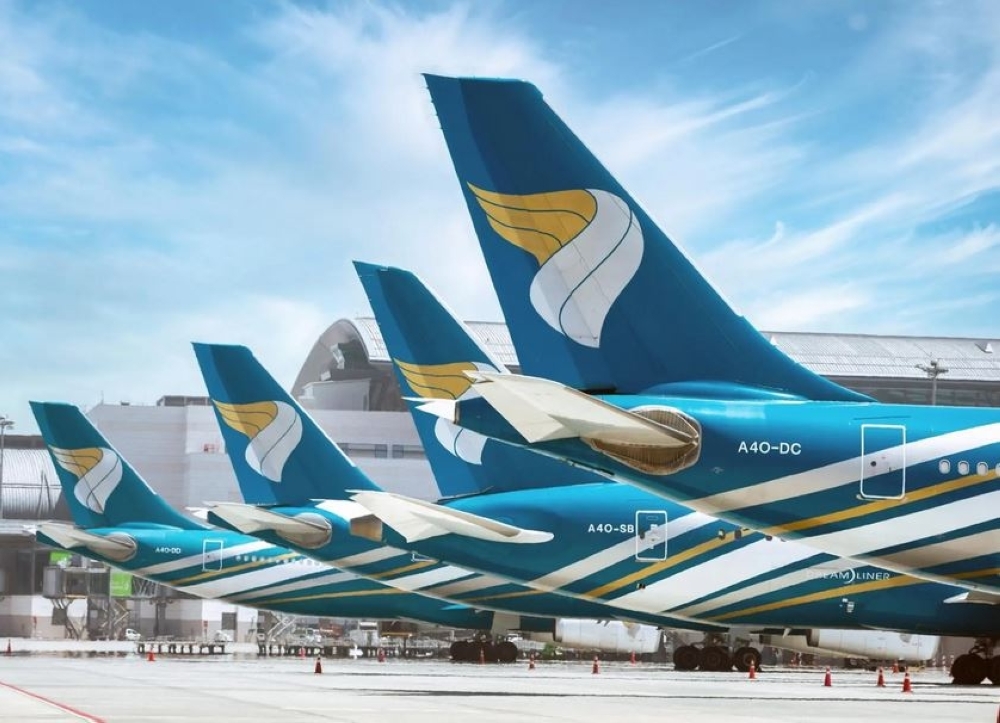
MUSCAT: A four-year transformation plan launched by Oman Air aims to enable the national carrier to achieve operating profit, among other targets, by 2026, a commercial goal that has eluded the state-owned carrier for more than a decade.
Eng Saeed bin Hamoud al Maawali, Oman’s Minister of Transport, Communications and Information Technology and chairman of Oman Air’s board of directors, said the strategy also reflects a commitment to reshape Oman Air from a state-owned enterprise into a “self-sustaining commercial enterprise”.
“Businesses need to achieve financial sustainability by generating positive cash flow and it is imperative that Oman Air rapidly transforms itself from a state-owned airline to a self-sustaining commercial enterprise,” Al Maawali said.
“To achieve this goal, Oman Air’s management launched a four-year transformation plan in September 2023, which addresses four key pillars – financial sustainability, commercial aspects, human capital and corporate governance. To date, several major initiatives have been launched, focusing on improving financial and operational performance,” he said in the airline’s 2023 annual report.
In the message, Al Maawali lamented the “unprofitable” nature of the airline’s current business model. Oman Air lost SR185.6 million in 2023 due to a chronic “mismatch” between unit revenues (RASK, revenue per available seat kilometer) and unit costs. He said that this discrepancy has led to cumulative losses of SR2 billion at the operational level for the airline since 2011.
However, despite Oman Air’s commendable progress in recovering from the devastating impact of the COVID-19 pandemic, its financial situation remains in trouble. “Oman Air continues to burn through cash in 2023, requiring a 60 million riyal cash injection from the Omani government, and having borrowed 392 million riyals over the past five years, the airline’s debt position remains unsustainable as of December 2023,” Al Maawali explained.
Long-term liabilities (debt and leases) amount to Omani riyal 1.6 billion in 2023, compared to Omani riyal 800 million to 900 million in 2018-2019, and future cash flow forecasts are insufficient to meet operating and investment needs without further state cash injections. Equity is negative Omani riyal 1.4 billion, and the value of Oman Air’s asset base has almost halved since 2019 as the poor outlook led to severe asset impairments. “The minister said the transformation plan for the period 2024 to 2028 envisages a range of measures, including various route changes, namely the abandonment of unprofitable destinations, and adjustments in flight frequencies across much of the route portfolio.
“To achieve financial sustainability, the entire business needs to be right-sized and Oman Air is phasing out excess aircraft. As the network and fleet size is reduced, management needs to streamline and optimise overhead costs, including origination costs, to ensure the cost base is lean enough to achieve financial sustainability and position itself for future growth.” Despite these efficiency measures, Oman Air remains committed to its role in supporting tourism and commerce by connecting Oman to the wider world, Oman Air said.
As a key pillar of Oman’s tourism industry, Oman Air has pledged to play its part in helping the Ministry of Heritage and Tourism achieve its goal of attracting 11 million tourists per year by 2040, up from 3.2 million in 2019. These passenger flows are expected to boost tourism revenues from around SR1.2 billion in 2019 to around SR9 billion by 2040.
[ad_2]
Source link

