


[ad_1]
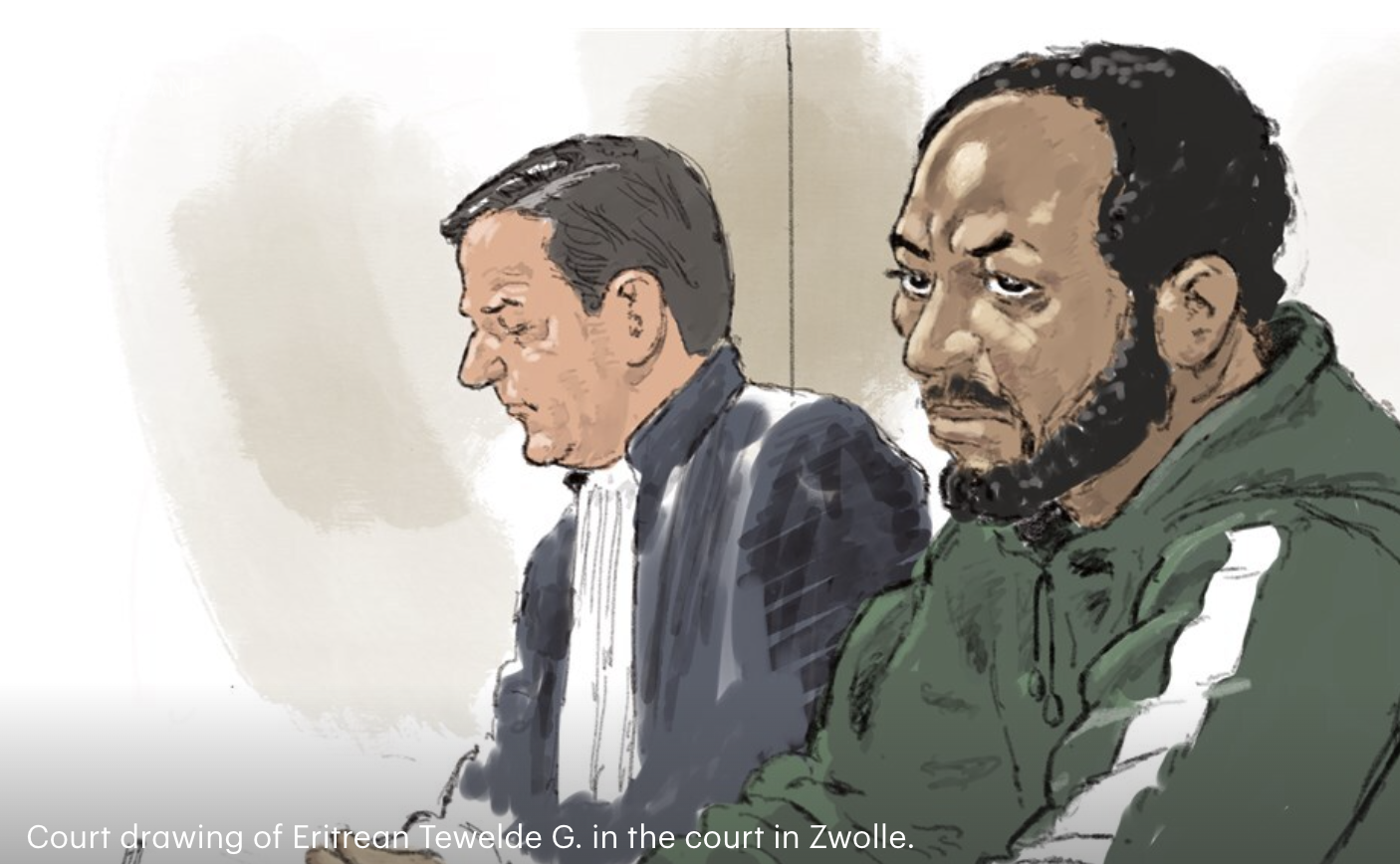
source: RTL News
April 6, 2023 at 10:26 AM Modified April 6, 2023 at 10:26 AM
Today, the trial of notorious people smuggler Amanuel W. continues. The Public Prosecution Service (OM) suspects him of horrific crimes in Libya and of extorting refugees in the Netherlands. This is a special case, as it is the first time that an Eritrean people smuggler has been prosecuted in the Netherlands.
Torture, sexual violence, starvation: the most horrific practices come to light as the UN Security Council investigates human trafficking in Eritrea and Libya. More than 3,000 kilometres from Libya, an alleged ringleader of a human smuggling ring went on trial today in Zwolle.
According to the Dutch prosecutor’s office, Amanuel W. (also known as Tewelde G., Welid or Walid) is guilty of human smuggling, hostage-taking, extortion and (sexual) violence. He is said to have been the head of a refugee camp in Libya, which researchers say is more like a “makeshift prison”. A key accomplice is Kidane, a 39-year-old Eritrean who is currently being held in Dubai. The Netherlands has requested his extradition and will bring charges against him.
Dutch blackmail
According to the United Nations, there is almost no food, medical aid or sanitation in the refugee camps, and torture and abuse are common. People often die of hunger or violence. After arriving, people are forced to call their families and are only allowed to continue their journey after paying thousands of euros. Initially, the trucks they were riding in were so packed that people inside suffocated to death.
These refugee camps are located in Libya, so why are Dutch judges investigating this case? Walid and Zidan are not being tried at the International Criminal Court in The Hague, but at a “regular” Dutch court in Zwolle. According to the prosecutor’s office, the case has a clear link to the Netherlands, as several Dutch people have been blackmailed by the organization.

Also read:Notorious people smuggler arrested in Eritrea
It is relatively easy for Eritreans to obtain asylum in the Netherlands due to the human rights situation in Eritrea. But once in the Netherlands, they can be approached by people smugglers and forced to pay for relatives in refugee camps. These fees are then paid through Dutch intermediaries. Five of the intermediaries also had to appear in court.
Daily abuse
An Eritrean refugee (whose name has not been released for security reasons) described to RTL Nieuws his experience in Walid camp, where he estimated there were 1,600 people, no proper sanitation and only one meal a day at most.
The only gate is guarded by a man who sometimes shoots his rifle into the air. “There is violence every day,” he said. “I also saw two people die from lack of food.”
“Sadism” is one of the words researcher Mirjam van Reisen often uses when she talks about the Libyan refugee camps she has been studying for years. She and her colleagues estimate that more than 200,000 people were held in the camps over a five-year period, but she says that is likely an underestimate. In their investigation, they interviewed more than 400 eyewitnesses, uncovering many shocking details.
A man from Mali cries inside a safe house in Bani Walid (Libya).
For example, several witnesses recalled the infamous story of an organized soccer match. Walid and Zidan each picked out some of the weakest refugees and had them play soccer on the field. If the players made a mistake, they were shot by the men on the sidelines. At the end, the human smugglers on the winning team were allowed to choose a woman to rape.
‘Ridiculous scenario’
“These scenes are really grotesque,” Van Reesen said of the stories. Another example she cited was of people being drugged, then chained and forced to imitate sheep. All while receiving electric shocks.
The researcher said these atrocities are a key component of the group, which uses people smuggling as a revenue model. “People in countries like the Netherlands are willing to pay much higher amounts for family members because of this torture.” So it was surprising in her study that abuses increased significantly at a time when people smuggling became more difficult. For costs to rise, revenue must also increase.

Also read:Helping immigrants could lead to heavy prison sentences, but Pieter is not afraid
Van Reysen hopes that the case against the two alleged ringleaders will send a signal that Europe finds this kind of behaviour unacceptable. The end result is that the revenue model comes under pressure, as this seems to be the only thing that people smugglers are really sensitive about. “At the end of the day, this is nothing more than slavery, because people are completely controlled and exploited. I hope we as a European society can draw the line.”
An Eritrean refugee who has been to Walid camp said he was glad the Netherlands had the courage to bring the man to justice. “He is lucky to be here,” he said. “Many of my compatriots are imprisoned without trial and he has the right to speak out. He is lucky.”
Response from Amanuel W.
Amanuel W.’s lawyer told RTL Nieuws that he did not want to respond to the case for the time being, partly because they did not yet have a complete file. At an earlier hearing, the lawyers said their client claimed that he was not Walid and had never used violence. The lawyers also doubted whether the Dutch court had the power to rule on the case.
[ad_2]
Source link

