

[ad_1]
Photo: Dr. Jaime Awe studies ancient Maya strategies and resilience in the context of environmental stress
Written by Orlando Pulido
Santa Elena, Cayo District, Wednesday, June 26, 2024
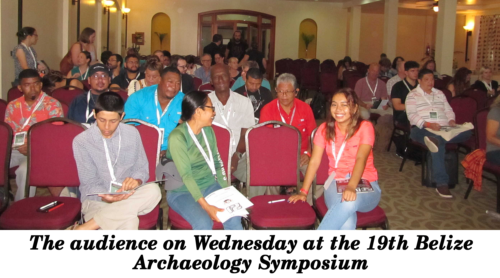
The 19th Belize Archaeology Symposium (BAS) opened Wednesday at the San Ignacio Resort Hotel, with about 40 presentations over three days from experts in the region.
Dr. Melissa Badillo, director of the Institute of Archaeology, told Amandala that the matters that needed to be studied were related to Belize and the Maya world region.
“We can improve … to have more sustainable economies and sustainable livelihoods, and this year we have a partnership with the Maya World Organization; so in addition to all the researchers working in Belize discussing Belize-specific research, we have partners from across our region,” she said.
Some of the data from the three-day presentation will be compiled and posted on www.nichbelize.org The Institute of Archaeology is working with the Ministry of Education to “look at the end product, look at where all the artifacts that were excavated went, and try to compile it in a way that is accessible to students in the classroom. So, keep an eye out for announcements that are coming because we do have exciting research and exciting information that will be released to the public very soon,” Dr. Badillo shared.
Dr. Badillo stressed, “There is a lot of data that can tell us what strategies they used during their 3,000 years of occupation of this land. So we invite people to come out and listen and learn, and maybe we can take some information from this to help us create a better environment for us to continue to survive. We know that we face a lot of threats from forest fires, land loss, and declining agricultural yields, so we want to see what the ancient Maya did and how they were able to survive and thrive over 3,000 years.”
One of the speakers on Wednesday morning was Dr. Jaime Awe, who shared information from western Belize and the Maya land.
“So when we get into what’s called the Late Classic period, which is around 750 to 900 AD, the Maya world was at its maximum population. They had exploited all the available land; I mean wetlands, mountains, river valleys, they didn’t have any more land to expand on. If they had a severe drought that lasted more than three years, it would have been very difficult for the Maya to remain resilient in that situation,” Dr. Avi said.
Dr. Awe also explained: “If they can’t do that, then they eventually run out of food or lose the ability to produce more food for such a large population; so when all the adaptation strategies of people start to become incapable of coping with this situation, what do they do? They turn to religion. You’re looking for divine intervention; you’re hoping that the gods will come and enable you to produce food. In this case, you start performing more rituals, more human sacrifices.”
Dr Jaime Awe’s research shows that we need to develop long-term adaptation strategies, not just short-term ones. He argues that we cannot just apply temporary fixes to problems. For example, with climate change, we cannot just assume that it will be a problem for the next generation.
He continued: “We know the climate is changing, we know the sea levels are rising. If we don’t start building seawalls to protect coastal communities from flooding, Belize City will eventually be flooded. If we don’t recognize that climate change is affecting us, making it drier, with more forest fires, and reducing our ability to produce food, then we’re going to have a problem; so we may need to start thinking long-term and thinking about irrigation systems so that we can move water from areas where there’s a lot of water to areas where there’s limited water.”
Major sponsors for this year’s Belize Archaeology Symposium include the Ministry of Tourism, Belize Tourism Authority, Protected Areas Conservation Trust, and the Social Security Commission. Other sponsors for the Belize Archaeology Symposium include Bank Atlantic, Belize Electricity Company Limited, and Builders’ Hardware.
[ad_2]
Source link

