


[ad_1]
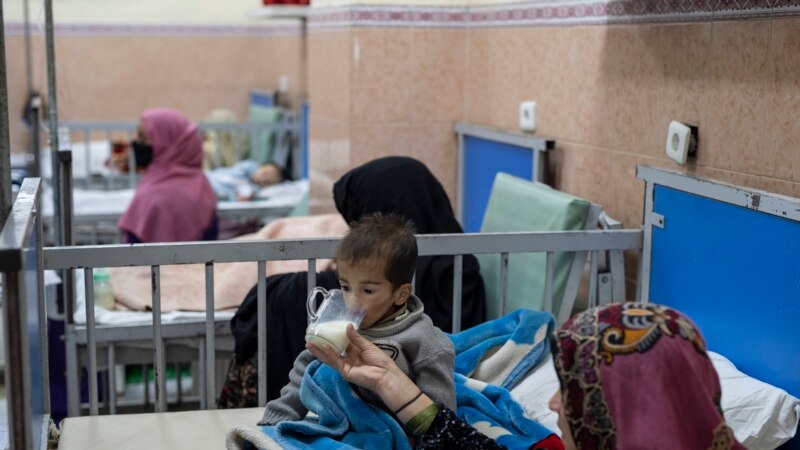
The Taliban government informed the Ministry of Public Health that seasonal diseases are increasing in the country.
This was confirmed by the ministry’s spokesman Sharaf Zaman in an interview with Taliban-controlled state radio and television on Monday.
But he did not reveal further details.
Families in Kabul said they had seen an increase in their children suffering from various illnesses, including diarrhoea and colds.
Nurullah was one of them, who took her sick children to a hospital in Kabul for treatment. “There are many diseases, diarrhoea came late, two or three of my children got sick, the heat was high, and there was no clean drinking water,” he told Radio Azadi.
Prush, another resident of Kabul city, told Radio Azadi: “It was very hot this year and we also had a lot of problems. Our children had diarrhea. We went to the doctor several times and they didn’t recover. Now we are treating families.”
Azizullah, a resident of Maidan Wardag, told Azadi Radio that seasonal diseases have increased not only among children but also among adults.
“Children and adults suffer from diseases. Diarrhoea is a common childhood disease, as well as diseases such as gonorrhoea, for which we go to the health centre. We cannot use any medicine they give us and we cannot buy medicine from private pharmacies.
Dr. Faridullah Omari, an infectious disease specialist at Kabul Infectious Diseases Hospital, said the increase in the disease was due to the heat, lack of clean drinking water and poor hygiene.
“Due to the hot weather, children suffer from several infectious diseases such as diarrhoea, measles, mumps, malaria, jaundice, etc. These infections increase during the hot season, while the use of unhygienic water, lack of personal hygiene and improper dishwashing lead to an increase in infectious diseases among children.
Dr. Omari said children should drink plenty of fluids, have access to clean drinking water, practice hygiene such as hand washing, and use mosquito nets and bed nets on windows are important ways to prevent illness during hot weather.
The World Health Organization has previously reported multiple cases of cholera in Afghanistan.
The organization released a report on June 19 saying that from January 1 to May 26 this year, Afghanistan had registered 46,758 cases of cholera.
According to the World Health Organization, Afghanistan has more confirmed cases than cholera in the world.
The organization cited population growth, natural disasters and climate change as reasons for the increase in cholera and hoped that countries would cooperate with each other to fight the disease.
[ad_2]
Source link

