


[ad_1]
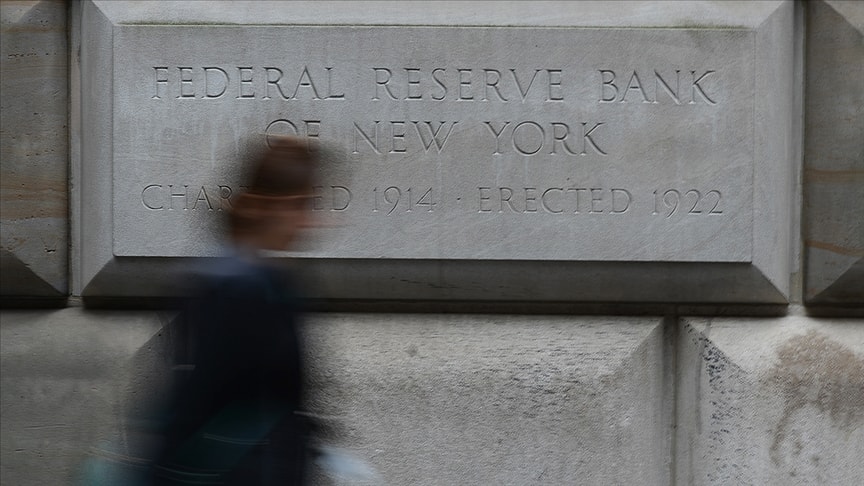
Although global inflation concerns eased in the first half of the year, several major central banks adjusted interest rates after a long break.
The global economy’s fight against inflation, which has lasted for about three years, is slowly coming to an end. Although many central banks have not changed their monetary policy stance, signals of market weakness are growing day by day.
In the first half of the year, against this backdrop, only the European Central Bank and the Swiss Central Bank cut interest rates, while the Turkish and Japanese central banks raised them.
Fed rates at highest level since 2001
The Fed has been pursuing a tight monetary policy since 2022 as part of its fight against high inflation, but did not change its policy rate at its meetings in the first half of this year.
Faced with high inflation in the country, the Federal Reserve began raising interest rates in 2022, and has raised interest rates 11 times since March 2022, for a total of 525 basis points.
The Fed last raised interest rates by 25 basis points in July 2023, reaching the highest level since 2001.
At the Federal Open Market Committee (FOMC) meetings held in the first six months of this year, the bank did not change its policy rate as expected, leaving it unchanged in the range of 5.25-5.50%, the highest level in 23 years.
On the other hand, the bank revised its inflation forecast for the first half of the year, raising the inflation forecast for this year from 2.4% to 2.6%, and the inflation forecast for 2025 from 2.2% to 2.3%, while the inflation forecast for 2026 remained unchanged.
After the US inflation rate was higher than expected in January, February and March (annual rates of 3.1%, 3.2% and 3.5%), the inflation rate in April was in line with expectations (3.4%) and the inflation rate in May was lower than expected (3.3%).
ECB cuts interest rates for first time in five years
After the European Central Bank raised interest rates by a total of 450 basis points in 10 consecutive meetings since July 2022, it decided in June to cut interest rates by 25 basis points after about five years.
The ECB decided to reduce all three key policy rates by 25 basis points, raising the refinancing rate from 4.50% to 4.25%, the deposit rate from 4% to 3.75%, and the marginal financing rate from 4.75% to 0.50.
ECB President Christine Lagarde said in a statement after the central bank’s June meeting that the decision to cut interest rates was justified by confidence in the forward-looking roadmap.
In addition, Lagarde said the bank needs more data to conduct the deflation process, saying, “We will continue to go step by step and stick to the data.” He said.
On the other hand, the eurozone’s annual inflation rate fell from 2.8% in January to 2.6% in May.
Bank of England expected to move slower than Fed
The Bank of England began its tightening cycle in December 2021 and is one of the central banks that has maintained its current monetary policy stance in the first half of this year. The Bank of England did not change its policy rate in the first six months of this year, keeping it at 5.25%, the highest level in nearly 16 years, in line with market expectations.
Finally, the Bank of England noted in its statement following its June Monetary Policy Committee meeting that headline inflation fell from an annual rate of 3.2% to 2% in May, close to the forecast in the May Monetary Policy Report.
The statement reminded that the country’s general election, which will be held on July 4, had no influence on the bank’s decision, which was made, as usual, on the basis of issues deemed necessary to achieve the second objective: to achieve the medium-term inflation target in a sustainable way.
The Bank of England has already raised its policy rate to 5.25% and has kept it at the same level as of August 2023, although it is expected that the Bank of England may start cutting interest rates in the second half of this year. It is slower than the Federal Reserve in this regard.
The Bank of Japan’s era of negative interest rates is over
The Bank of Japan has held four monetary policy meetings this year and unanimously kept its policy rate unchanged at -0.1% in January. At its March meeting, the central bank raised its policy rate for the first time in 17 years, raising it from -0.1% to 0.1%.
As a result, the Bank of Japan ended its negative interest rate policy that had been in place since 2016, becoming the last central bank to abandon its negative interest rate policy after the global economic recession and debt crisis.
It was reported that after a two-day monetary policy meeting in June, the central bank decided to keep the policy rate unchanged between 0% and 0.1%.
A statement issued after the meeting said that although the economy remained weak in some parts of the country, it had partially recovered, and corporate fixed investment was showing a moderate growth trend as corporate profits increased.
The country’s inflation rate was 2.2% in January and rose to 2.8% in May.
The Bank of Japan is expected to hold its next meeting in late July and has room to raise interest rates as inflation accelerates and the yen falls to its lowest level in the past 38 years.
2 Swiss National Bank cuts interest rates in the first half of the year
The Swiss National Bank unexpectedly cut its policy rate by 25 basis points at its first meeting in March 2024, becoming the first central bank in the developed world to cut interest rates.
Contrary to expectations that the policy rate would remain unchanged, the central bank announced a 0.25% cut to 1.50% and said: “Monetary policy easing is possible due to the effective fight against inflation over the past 2.5 years.” including his assessment.
The Swiss National Bank said it decided to cut interest rates in view of the appreciation of the Swiss currency.
While the March rate cut was the SNB’s first in nine years, the bank cut rates again by 25 basis points in June.
Therefore, after the June meeting, the policy rate was lowered from 1.50% to 1.25%.
Bank of Canada cuts interest rates for the first time in four years
The Bank of Canada (BoC) cut its policy rate by 25 basis points to 4.75% on June 5, in line with expectations.
The bank said in a statement that the latest data strengthened its confidence that inflation will continue to move towards its 2% target, but risks to the inflation outlook remain.
China’s central bank cut its policy rate this month for the first time in four years. The bank also drew attention as the first central bank in the Group of Seven nations to ease policy after sharply raising rates to tame inflation.
CBRT raises interest rates twice in 2024
In order to cooperate with the tight monetary policy, the central bank decided to raise interest rates twice in the first half of 2024.
Looking at Turkey’s inflation data, the annual inflation rate was 64.86% in January and rose to 75.45 in May.
The central bank raised its policy rate by 250 basis points to 45% in January from 42.50% in December 2023, following rising annual inflation figures since the beginning of the year.
The bank raised its policy rate by 500 basis points to 50% in March through a second rate hike and kept the one-week repo auction rate, or policy rate, unchanged at 50% in the first half of the year.
[ad_2]
Source link

