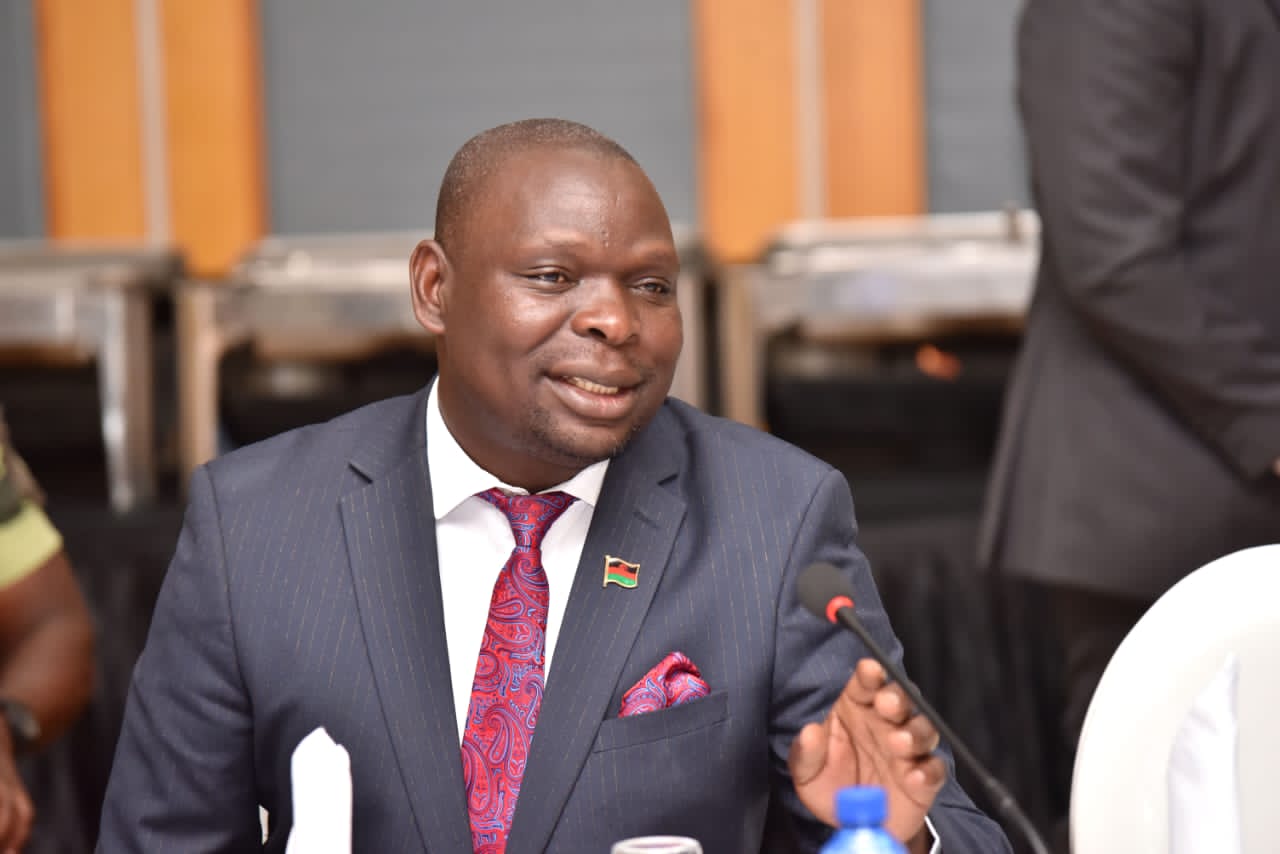
Despite serious concerns from the US government that Malawi has failed to meet its commitment to receive the second tranche of International Monetary Fund funding necessary to keep the country on the path of economic recovery, Finance Minister Simplex Chichola Banda said the government remains optimistic about the implementation of the Malawi Economic Financing Plan.
Finance Minister Chijora Banda: We will proceed as planned
The US government yesterday said Malawi may not be able to meet the commitments needed to access the second tranche of the International Monetary Fund’s (IMF) Extended Credit Facility (ECF) in the coming months. It cited low tax revenues, ballooning expenditures and delays in the full implementation of the Integrated Financial Management and Information System (Ifmis) as making it impossible for Malawi to continue its cooperation with the IMF.
However, Chitiola-Banda said some situations require parliamentary intervention while others require a change of approach. He said parliament will begin meeting next week to discuss some of these issues.
On the integration of Ifmis, the Minister said most ministries, departments and agencies have already been integrated and the remaining ones will be integrated soon.
On the inflation in spending, the minister said it was partly due to the government having to fulfil its social obligations such as procuring fuel and medical supplies.
“Some of the investments they are talking about are not liabilities because they are potential investments that can help the country generate foreign exchange by adding value and increasing exports.
“Malawi remains optimistic about implementing the plan and we believe that most conditions will be met in the next two weeks,” Chichola-Banda said.
Speaking to reporters in Lilongwe at the end of a four-day visit to Malawi, U.S. Treasury Deputy Assistant Secretary for Africa and the Middle East Eric Meyer said he was deeply concerned that developments would affect all Malawians, especially Malawi’s most vulnerable citizens.
During the visit, Mayer met with Malawian Vice President Michael Usi, Attorney General Titus Mwalo, Local Government Minister Richard Chimwendo Banda, Reserve Bank of Malawi Governor Wilson Banda, Presidential Economic Advisor Kafela Panjira, and officials from the Ministry of Finance, the International Monetary Fund, and the World Bank.
The senior U.S. official noted that Malawian authorities have been dragging their feet on reaching an agreement with some of Malawi’s international creditors on a necessary debt restructuring.
Meyer said the situation was further complicated by deals Malawi had struck with some investors that could undermine agreements it had with the International Monetary Fund and bilateral creditors.
“This is a critical time for Malawi to achieve macroeconomic stability and progress towards Vision 2063 goals.
“Urgent leadership and action is needed at all levels of government to ensure Malawi moves forward with the Economic Cooperation Framework Program, implements the reforms it has pledged, stabilizes the economy, and lays the foundation for economic growth and long-term benefits for all citizens,” Meyer said.
Since the IMF concluded its first review of the four-year, $175 million ECF program on May 23, there has been silence on the program’s future.
Meyer could not comment on whether the ECF program in Malawi is still ongoing.
“I will let the IMF give their views on the plan. They are the judge of this plan. We understand that they are currently engaging with the Malawi government and working towards a successful review.
“Our goal is to ensure that the review is completed successfully and we want to ensure that Malawi does everything in its power to achieve that goal,” he said.
Amy Diaz, the U.S. chargé d’affaires in Malawi, said the U.S. government is Malawi’s largest bilateral partner and will spend about $450 million this year. But she said the administration does not want to just provide humanitarian aid.
“We are a strategic investor and the return we want to see on our investment is that the people of Malawians are better educated, healthier and the government is better governed.
“The point we are making now in sharing this with the people of Malawia is that everyone needs to be working towards the same goal and that goal is to build the economy. We have to make hard choices but we all need to work together if we are to see the growth that we need.
“As I travel around Malawi, young people ask me about jobs, and we can’t create more jobs without reducing spending, increasing revenues and controlling bad purchases. So that’s what we’re urging the government of Malawi to do, we’re reminding them that we’re here. We’re here to support, and we’re going to do everything we can to help, to thank you in the form of investments,” Diaz said.