


[ad_1]
China’s debt-laden real estate sector has been in a prolonged slowdown since late 2021, with house price falls accelerating in recent months. Although strict COVID-19 controls were eased in late 2022, the weak property market has dented confidence and demand for consumer goods.
After the outbreak, many domestic and foreign companies doing business with China expected consumption-focused stimulus measures to boost economic growth. Although this has not happened, economists believe that Beijing may take such measures if Donald Trump is re-elected.
Fitch Ratings analysts pointed out that data showed that in the first half of this year, except for the period of the COVID-19 pandemic, the growth rate of China’s catering industry slowed down to below 8% for the first time since 2010.
“Uncertainty about the outlook for disposable income, coupled with a further reduction in household wealth due to falling house prices, has led consumers to reduce non-essential spending or shift to value-for-money products,” Fitch analysts said, adding that the trend was extending beyond dining to “key discretionary categories” such as apparel, cosmetics and jewellery.
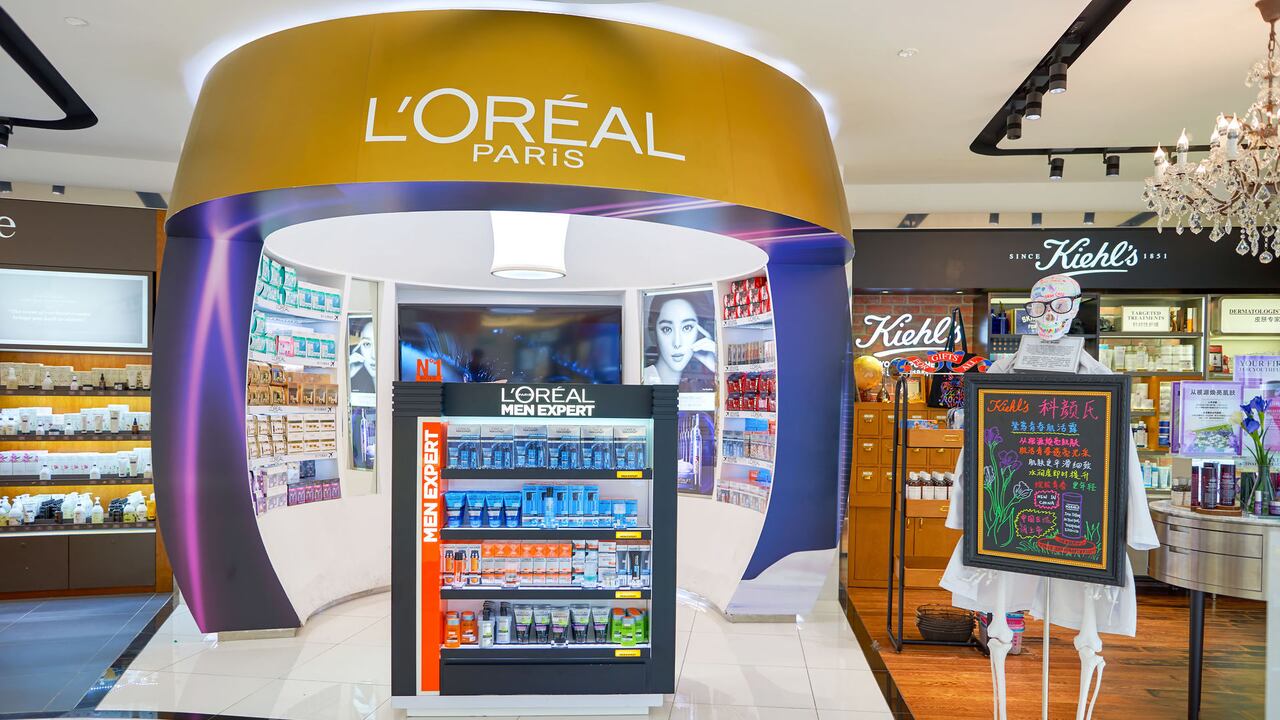
“The only place in the world where consumer confidence is still very low is China,” said Nicolas Hieronimus, chief executive of L’Oréal. “The job market is unhealthy and many Chinese have invested their savings in real estate, which has lost a lot of value.”
While China remains a growth market for many multinational companies, they face a huge threat from domestic competitors in some areas, such as automobiles.
Data from Shanghai-based consultancy Automobility showed that amid the rapid development of electric vehicles, overseas brands accounted for 38% of China’s passenger car sales in the first half of this year, down from 64% in 2020.
German carmakers have been particularly hit by slowing sales in China, their most important market.
Oliver Blume, CEO of Porsche and Volkswagen, said it was unclear whether demand for electric sports cars such as the Porsche Taycan would pick up. “We don’t know at this point,” he said, adding that currently “the luxury segment for electric cars does not exist (in China)”.
Mercedes-Benz has shifted its focus to more expensive models in recent years, and its car sales in China fell 9% in the first half of this year compared with the same period last year. Mercedes-Benz CEO Ola Källenius said China’s luxury market is cooling, which he blamed in part on China’s real estate crisis. “We don’t know how long it will take for Chinese consumers to regain confidence.”
Bill Russo, former president of Chrysler China and founder of Automobility, said foreign automakers other than Tesla have “collectively failed to pivot in the face of the shift in Chinese consumer preference toward electric vehicles.”
However, Yum China CEO Joey Wat was more optimistic with investors this week after the operator of Pizza Hut and KFC in China reported better-than-expected first-half results, with net revenue rising 8% to $212 million.
“It seems fashionable to be bearish on China these days. But … even at its current growth rate, China still accounts for nearly a third of annual global growth,” she said, adding that economic growth had shifted to China’s “second- and third-tier” cities.
“Last year alone, China opened 400 shopping malls, mostly in second-tier cities and below…How many countries in the world have opened 400 shopping malls now?”
But she did admit that “business is tough right now” and did not expect the market to change this quarter.
Beverage group Anheuser-Busch InBev blamed weak consumer demand and bad weather in parts of the country for a 15% drop in second-quarter sales in China.
Chief Executive Michel Doukeris said the trend of drinking less and paying more in China continued despite lower consumer spending. “I think the long-term fundamentals are still there,” he said.
Executives and analysts also warn of the long-term threat posed by growing competition from a growing number of Chinese brands.
Lei Xiaoshan, managing director of Shanghai-based China Market Research Group, said that despite the bright spots, many foreign brands face strong domestic competitors. “Many Western brands have lost out to Chinese brands in the competition,” he said.
author: Edward White and Thomas Hale in Shanghai with Madeleine Speed, Daniel Thomas and Claire Jones Patricia Nilsson in London and Frankfurt
© Financial Times
[ad_2]
Source link

