


[ad_1]
A PBX phone system uses hardware and software to connect devices such as routers, phones, adapters, and servers. The term dates back to the days of manual switches and patch cords, but the technology has changed dramatically over time.
Modern systems such as IP PBX and VoIP PBX offer more cost-effective and feature-rich solutions that increase productivity, such as call recording and voicemail-to-email capabilities.
If you’re looking to upgrade your traditional phone lines to a PBX, this guide will walk you through everything you need to know to make the process as smooth as possible.
1. There are three types of PBX systems
As a business owner, the most important decision to make at the beginning of the implementation process is to choose an on-premises PBX, a hosted PBX, or a hybrid PBX.
Let’s take a closer look at each one:
Local PBX
Also known as a traditional PBX, this is a hardware-based system that resides in your office. It uses Primary Rate Interface (PRI) phone lines to connect to the Public Switched Telephone Network (PSTN). It typically has a higher upfront cost and requires ongoing maintenance.
Hosted PBX
A hosted PBX, often referred to as a cloud PBX or virtual PBX, is a cloud-based phone system used to manage a company’s calling and communications services. Rather than physical hardware on-site, your phone system is managed by a third-party provider in their data center.
With it, you can use advanced telephony features, such as voicemail, call routing, and conferencing, without actually having complex and expensive equipment in your office. Hosted PBX systems are scalable and are generally more cost-effective for small and medium-sized businesses.
Hybrid PBX
A hybrid PBX combines a traditional office phone system with internet-based features. It lets you keep your regular office phone and take advantage of online tools for added functionality and remote working options. A hybrid PBX is particularly useful for companies looking to transition to a hosted system.
2. Hosted PBX is easier to manage
A hosted PBX is truly a plug-and-play system, thanks to the power of VoIP (Voice over Internet Protocol). Instead of dealing with the challenges of an on-premises system, you can enjoy the convenience of a cloud solution.
All you have to do is sign up for an account and register for a plan with the provider, just like any other online service you use. You can also easily scale your plan up or down based on business growth or seasonal peaks. Plus, as new features or functionality become available, accessing them is as simple as running a software update.
In contrast, an on-premises PBX requires a lot of work to get up and running, from initial installation and configuration to ongoing maintenance. If you don’t have a dedicated IT staff, you may need to hire external technicians to perform maintenance. This can cause downtime or interruption to your service and eat into your budget.
3. You can add VoIP to your analog PBX
If you want to bring VoIP capabilities to a traditional analog PBX, you can use a Session Initiation Protocol (SIP) gateway.
Essentially, SIP enables communication over the Internet. It allows the transmission of voice and multimedia data, making it the backbone of VoIP services. It is also used to set up, modify, and terminate real-time sessions, such as voice calls, over IP networks.
When someone makes a call using a traditional analog PBX, a SIP gateway converts the analog signal into digital packets. These digital packets are then routed over the Internet to their destination, whether it’s another VoIP phone, a mobile device, or a traditional landline phone.
VoIP offers many benefits to businesses, including:
- Access new features: this Best VoIP Phone Services Provides advanced features that may not be available with traditional analog phone systems. These include features such as video conferencing, call recording, call forwarding, call routing, and voicemail to email transcription.
- Scalability: These systems are highly scalable, allowing businesses to add new lines or extensions as needed without being limited by physical wiring.
- Cost savings: VoIP is generally less expensive, especially for long-distance and international calls.
- Remote work compatibility: Employees can easily connect to the company’s phone system from anywhere there is an internet connection, which is perfect for remote work.
4. VoIP PBX provides real-time call analytics
Real-time call data can reveal important parts of your operations, such as call volume and customer wait times, which directly impact customer satisfaction.
Gathering this information can be a significant challenge (or even impossible) with a traditional PBX system. But with a VoIP PBX phone system, the data is at your fingertips.
Your VoIP account will give you immediate access to a wealth of call analytics and insights through real-time data. This allows you to quickly and easily identify call trends, evaluate agent performance, and ensure your customers receive the timely, efficient service they expect.
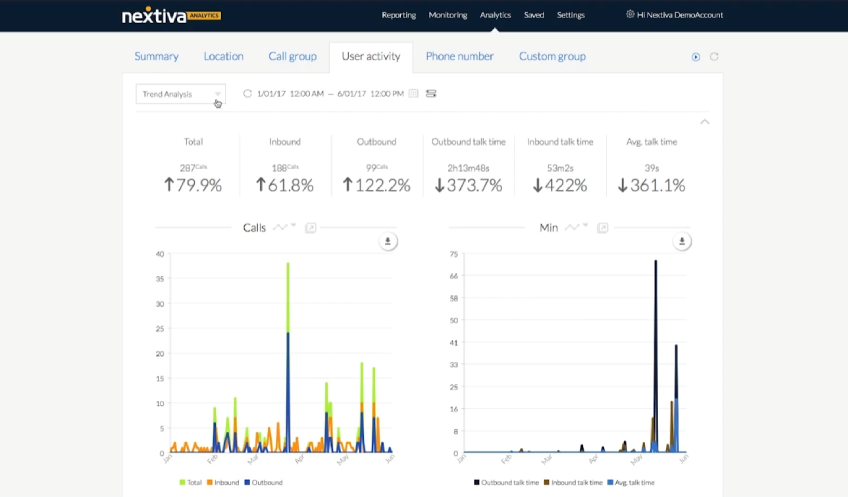
This level of insight keeps your business agile and responsive, ultimately improving the overall customer experience.
5. Cloud PBX can help you save money
Cloud PBX systems are cheaper than traditional systems for many reasons, but the biggest advantage is that you don’t have to buy a lot of equipment to implement it. With a cloud-based PBX phone system, you can use the equipment your team already has, such as desk phones, softphones, mobile devices, and headsets.
With a cloud PBX system, the costs associated with expanding operations are also reduced. If you plan to add more phone lines or new users, hire employees in different countries, or communicate with international clients and customers, a cloud PBX is an affordable option.
This is because VoIP providers allow you to adjust bandwidth and customize features without making any physical infrastructure changes to your office. You can add new users and remove users at any time from your online account.
Cloud-based collaboration solutions are also often the most cost-effective on a monthly basis.
When you’re looking for a PBX provider, it’s important to consider the additional fees you might pay for other software you’re already using. For example, you might be able to bundle video conferencing software, call recording tools, file sharing, and virtual whiteboard solutions with your VoIP PBX.
By moving to a unified solution, you can access a variety of communication channels and collaboration tools within the same platform. This simplifies operations for call agents, consolidates costs into monthly bills, and saves money by helping you move away from expensive single-function software products.
6. Hosted PBX connects with other software
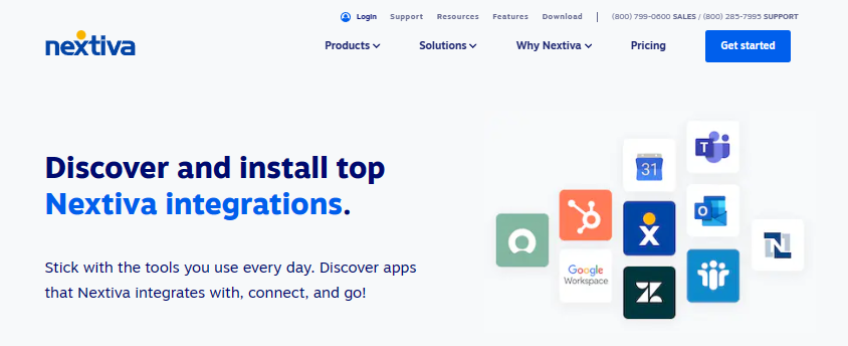
Transitioning to a new communication tool can seem daunting, especially if your team already has an established system. The good news is that hosted PBX services offer integrations with the most popular third-party applications. These connections streamline your team’s workflow and minimize manual data entry, saving them time and effort.
NextivaFor example, providing an app marketplace that connects to the most popular sales and marketing apps, e.g. Zoho and Salesforce. Once integrated, these platforms capture relevant contact details, making it easier for users to access customer information during a call or support interaction.
7. The right PBX depends on the operation
Now that you understand the different PBX systems and their features, which one should you invest in? The answer depends on how your company and team operate.
If you only use your landline for local calls or have already spent a lot on existing infrastructure, a traditional solution may be the best option.
However, if your team needs to make calls domestically or internationally, work remotely, or use call tracking features, you’ll need a hosted PBX that connects to a VoIP provider. A hosted system is also the best choice for businesses starting from scratch.
Here are some things you should consider when choosing a VoIP provider:
- reliability: A modern PBX is only useful when it works. It’s important to choose a service that is online most of the time. Look for a provider that promises an uptime of 99.999% or higher.
- flexibility: Modern phone systems can work with either a regular VoIP desk phone or a softphone, which you can use on your computer or smartphone. This means you can choose how you make and receive calls.
- support: If you have a problem with your phone system, you’ll want a team you can trust to help you.
- cost: When choosing a service, make sure it fits your budget. Look for a provider that offers plans you can afford, and ask about discounts for annual payments.
- Safety: To keep your phone system secure, look for a provider that offers 24/7 monitoring and special certifications, such as SOC 2 or ISO/IEC 27001, which means they meet certain security standards. You may also want to consider features like call encryption to keep your calls private.
The right PBX solution can unlock key areas of your business. It enables remote working, helps you acquire more customers, and provides a better experience, making it a valuable asset for your company.
[ad_2]
Source link

