

[ad_1]
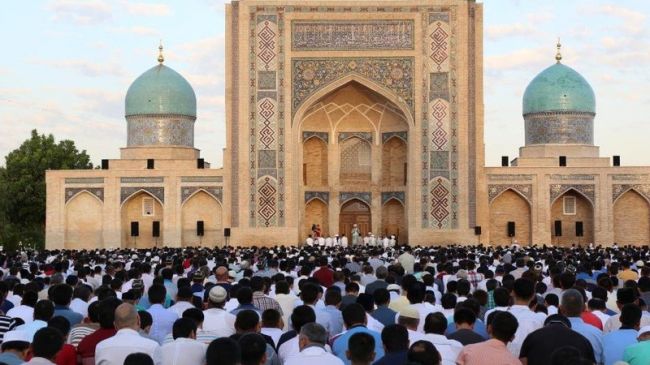
precious According to Ozodlik, sourcesClosely related to the Uzbek government, on June 24 this year, at a government meeting chaired by Prime Minister Abdullah Aripov, an order was issued to “demolish” more than 400 mosques and prayer rooms or hand them over to entrepreneurs with the aim of transferring some of them to industrial plants.
According to a source familiar with the details of the meeting, which was also attended by the heads of the Ministry of Internal Affairs and the National Security Service, Prime Minister Abdullah Aripov explained that the decision was related to the “concept of a secular state that will be implemented in the near future.”
At the same time, the Prime Minister stressed that when implementing this process, it is important to “take into account the feelings of the people and carry out explanation work to prevent possible conflicts among the people.”
Two independent sources close to the Uzbek government confirmed Aripov’s remarks at the government meeting.
One of them said that the buildings that are planned to be demolished or transferred to entrepreneurs to transfer them to production sites are objects built at the expense of the people, they have no organizational status and no one is responsible for paying taxes.
– In order to demolish or transfer these objects to industrial sites, a court decision is needed. I don’t know how the government will solve this problem,” a source told Ozodlik.
He pointed out that given the sensitivity of the issue, the Prime Minister specifically instructed that explanations should be given to the public to avoid possible dissatisfaction among citizens.
It is unclear whether the government has a special resolution on the matter.
Ozodlik sought official comments on the details of the government meeting and Aripov’s instructions from Uzbek Prime Minister’s press secretary Bekzod Sidoyatov.
In a letter on Telegram, Sidoyatov said he is currently in the city of Urumqi with Prime Minister Aripov, and he did not refute the information provided by Ozodelik’s sources.
He said that “material is being prepared” on the matter and promised to provide official information to “Ozodlik”.
At the time of preparing this article for publication, our editors had not received official communication from the Prime Minister’s Press Secretary.
Old practice
An Uzbek cleric interviewed by Ozodlik’s correspondent said he was not aware of the government’s decision to demolish or transfer some of the country’s mosques to entrepreneurs.
He noted that this approach is not some kind of innovation for Uzbekistan.
“Something similar happened during the previous president’s administration. The authorities ordered the transfer of mosques that were not officially registered to businessmen or other people. So, they turned the mosques into shops and places for people to live. Most of these mosques were handed over to businessmen. Although these mosques were built with the money of ordinary people. So before transferring these items to someone, you need to consult the people,” said an Uzbek cleric in a conversation without a microphone.
According to him, the people of Uzbekistan often support each other through hashar (voluntary public mutual assistance- Order.) and only after the construction is completed will they consider registering the object. Sometimes, people try to open old mosques that have been closed for many years.
In May 2018, Daryo.uz published an article with reference to the national news agency UzA wrote In addition to the officially registered Cathedral Mosque in Tashkent, there are 65 mosques that do not have organizational status.
Shukhrat Turdikulov, Tashkent’s deputy mayor for public and religious organizations, reported that “to register a prayer room as a mosque, it is necessary to collect the necessary documents in accordance with the Decision on the procedure for state registration of religious organizations in the Republic of Uzbekistan and submit them to the Ministry of Justice, and after approval by the Ministry of Justice, they will be considered by the Tashkent City Council.”
According to the Spiritual Administration of Muslims of Uzbekistan, as of January 2023, there are 2,118 mosques in the country.
In comparison, as of November 2022, Kazakhstan has a population of 13.3 million and 2,788 mosques.
In Uzbekistan’s larger cities, Muslims hold prayers in the streets due to a lack of space during Friday and holiday prayers.
Dozens of new mosques were opened in the country after Shavkat Mirziyev came to power and allowed the use of loudspeakers during prayers, but the scope for religious freedom has shrunk dramatically in recent times.
In April this year, Ozodlik Report Imams in Uzbekistan have been asked to surrender their foreign passports, and those who refuse are threatened with dismissal.
In September 2023, the Uzbek Cabinet held a meeting chaired by Prime Minister Aripov and National Security Service Chairman Azizov, attended by heads of state and heads of public organizations. The meeting expressed concern about the “increase in religious radicalization” in the country.
An Ozodlik source who was present at the meeting said that after the meeting, Abdullah Aripov asked officials to “choose religion or civil service.”
Soon after, the Ozodlik editorial office began to receive reports that the adhana of prayer in some mosques in Uzbekistan had weakened, and Muslim goods stores and halal restaurants in Tashkent began to close.
[ad_2]
Source link

