

[ad_1]
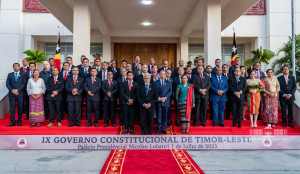
The Ninth Constitutional Government, led by Prime Minister Kay Rala Xanana Gusmão, celebrated its first year in office on 1 July 2024. During this period, the Government has undertaken a number of initiatives and measures that have laid the necessary foundations for a transformative programme aimed at promoting sustainable social and economic development for the benefit of all Timorese. The Government is committed to correcting irregularities and implementing structural reforms and reaffirms that it will continue to work tirelessly to build a prosperous and equitable future for Timor-Leste.
One of the highlights of the past year was Timor-Leste’s accession to the World Trade Organization (WTO), which was formally announced by Deputy Prime Minister Francisco Kalbuadi Lay during the 13th WTO Ministerial Conference in Abu Dhabi in February. This accession marks a major step forward in trade liberalization, integration into the global economy, facilitating access to international markets, and advancing the country’s economic reforms.
Timor-Leste also continues on its path to join ASEAN, with some members of the government regularly attending the organization’s meetings, including the 43rd ASEAN Summit. This year, it received a visit from ASEAN Secretary-General Kao Kim Hourn and launched the TL IMPACT program to coordinate domestic efforts and ensure compliance with ASEAN standards and regulations in various areas, including economics and trade, social policy, and culture.
In the field of oil and mineral resources, the 9th government has made fundamental adjustments to the development of the country. Diplomas related to key entities such as Timor Gap, the National Petroleum Authority, the National Mineral Authority, the listed company Murak Rai, and the Petroleum and Geological Research Institute were also approved. The agreement on onshore mineral and gas exploration was also approved.
The Greater Sunrise development is a strategic priority for Timor-Leste. Recently, the Prime Minister appointed Minister of the Presidency of the Council of Ministers, Agio Pereira, as interlocutor to discuss this important project with the Australian Special Representative, Steve Brax. This move is intended to ensure effective and coordinated management of negotiations aimed at maximizing Timor-Leste’s interests in the development of the country’s important energy resources.
The Ninth Constitutional Government is carrying out comprehensive structural reforms, with a focus on the reform of the judiciary, which is being coordinated by former Minister Lucia Lobato. This initiative has already led to the development of an action plan, the approval of a new system for training activities of the Legal and Judicial Training Center (CFJJ), and the signing of a cooperation agreement with the Portuguese Law School for the training of future magistrates and judges, public defenders, and other legal professions.
The government also introduced reforms to the Special Administrative Region of Oe-Cusse Ambeno (RAEOA) and the Timor-Leste Special Economic Zone for a Social Market (ZEESM), including amendments to Law 3/2014 and appointments. Rogério Tiago de Fátima Lobato is the Chairman of the RAEOA Administration, in addition to the creation of an Executive Committee to implement the Oe-Cusse Ambeno Special Economic Zone.
In education, the main goal of the Government is to promote efficient and equitable human resource management in the national education system in order to guarantee the quality and continuity of education throughout the country. Actions taken include recruitment and other career entry actions, as well as the effective management of existing resources for school staff. As part of recruitment competitions, candidate pools are established, which allows the Ministry of Education to quickly and effectively allocate human resources according to the specific needs of schools.
The Ministry of Higher Education, Science and Culture has achieved an important milestone with the approval of the Basic Law on Higher Education. This legislation, which outlines specific structures designed to address pressing challenges and improve the quality of higher education in Timor-Leste, represents a major step forward in the sector. Key measures include the introduction of Higher Technical Professional Programmes (CTePS), standardisation of Bachelor and Master cycles, and the authorization of distance learning, adapted to contemporary educational needs and lessons learned during the COVID-19 pandemic.
To combat malnutrition, joint programmes were launched with development partners, notably the National Technical Working Group on Early Childhood Development and the acquisition of special nutritious foods.
The government is promoting monthly increases in social disability benefits and pensions under the non-contributory social security system. The selective consumption tax and import tariff rates, which were significantly increased in 2023, have also been adjusted.
The recent installation of an undersea fiber-optic cable connecting Timor-Leste and Darwin, Australia, was another major milestone achieved, which is expected to transform the country’s digital infrastructure and boost economic development.
Timor-Leste’s infrastructure development is currently progressing, with several infrastructure projects underway and planned across the country. Meanwhile, the Government approved the first amendment to the diploma governing the Infrastructure Fund, aimed at improving the administrative efficiency of the Secretariat of Major Projects.
In the area of blue economy, Timor-Leste is developing a blue economy policy and the Prime Minister is participating in the 2023 Forum of Archipelago and Island Countries and the “Our Ocean” conference. The national plan “Ha’u Nia Tasi, Ha’u Nia Timor” has also been launched.
The Samoa Agreement is an important agreement signed with the European Union, which establishes common principles and priority areas of cooperation between the parties.
In the fight against corruption, Timor-Leste also improved its Corruption Perception Index ranking by seven places.
The Ninth Constitutional Government reaffirms its commitment to continue working for the sustainable development and well-being of the people of Timor-Leste and to building a prosperous and equitable future for all citizens.
[ad_2]
Source link
