

[ad_1]
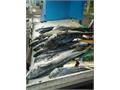
An operation to control the marketing of seafood products has been launched in the fishing port of Lauricisque. Numerous violations of the legislation have been noted.
The results for the five commercial activities controlled by Pointe-à-Pitre are as follows:
– 2 fines for lack of traceability of seafood products
– 3 reminders on the conditions of sugar coating, labelling and nature of materials used
– 1 The restaurant owner voluntarily withdrew and destroyed six fresh frozen lobsters, although the restaurant had no means to do so. A formal notice was also issued regarding the structural aspects of the restaurant’s food processing.
Furthermore, following these recurring violations, the Guadeloupe government reviewed the regulatory provisions that should be followed:
– Regularity of professional activities
When selling outside their registered place of residence, fish market sellers must present an administrative permit issued by the competent authority (city hall, etc.) of the place of sale, a professional certificate issued by the Chamber of Commerce and Industry, and a receipt for a declaration of activity covering health aspects issued by the Directorate of Food, Agriculture and Forestry (DAAF).
– Traceability of seafood products
The traceability of the product must be able to be proven during the inspection by presenting the corresponding invoice, which identifies the seller and the buyer and mentions details of the quantities sold by species. The seller, if not a fisherman, must make an official declaration to the Ministry of Food, Agriculture and Forestry.
– Consumer Information
Stalls must have signs indicating the name of the species sold, the fishing area and the corresponding sales price.
– Observe hygiene rules for handling and storage
The use of wooden boards for cutting seafood products should be avoided; professionals must use plastic boards designed for this purpose. Seafood products must be adequately refrigerated on shelves.
Restaurant owners must not defrost food directly at room temperature but should use a positive cold room. Restaurant owners cannot freeze freshly purchased seafood unless they have a health control plan (PMS) and appropriate equipment.
Seafood products are the main consumption during Lent.
In order to protect the activities of fishermen and guarantee food safety for consumers, professionals must firmly implement regulations and be able to produce documentation of what is expected during the control process.
Seafood products may be confiscated if documentation is lacking, hygiene regulations are violated or they are found to be undersized.
Furthermore, offenders face administrative closure of their activities and administrative and criminal fines of up to €22,500.
Control operations will continue in the coming weeks as part of a regional control program for marine fisheries and seafood products.
[ad_2]
Source link

