

[ad_1]
August 5, 2024 at 9:00 AM
August 5, 2024 at 9:00 AM
Bolivia is a melting pot of ecological floors, ancestral peoples, cultures and flavors. This incredible combination of ingredients, culinary traditions and preservation and cooking techniques has given rise to a unique cuisine in the world, in which each region has its particularities and seasonings.
Gastronomy is considered a cultural expression and a key part of the development of tourism in various countries, not only as a means of satisfying needs or services, but also because of the diverse experiences it can bring to people.
Many countries use gastronomy as a driver and promoter of tourist destinations, and Bolivia is no exception.
“Bolivia has a huge gastronomic potential, with flavors and dishes that are unique in the world, in many cases combining ancestral traditions with modern techniques, indigenous ingredients with others brought during the colonial period. We also have fusion cuisine, which aims to create and design original dishes. There is also street food, and they even have interesting tourist packages,” says Javier Rivera, director of the degree in Hotel and Tourism Management at the Unifranz Franz Tamayo University.
For chef Julio Moscoso, Bolivian cuisine has nothing to envy to its neighbours and there is huge potential to be explored.
“The texture, technique and presentation of Bolivian food is world class, from traditional to fusion food made in internationally renowned restaurants, our flavours are already making news around the world, all that’s needed is greater creativity and a big push to promote it so that we can conquer the world, one dish at a time,” he explains.
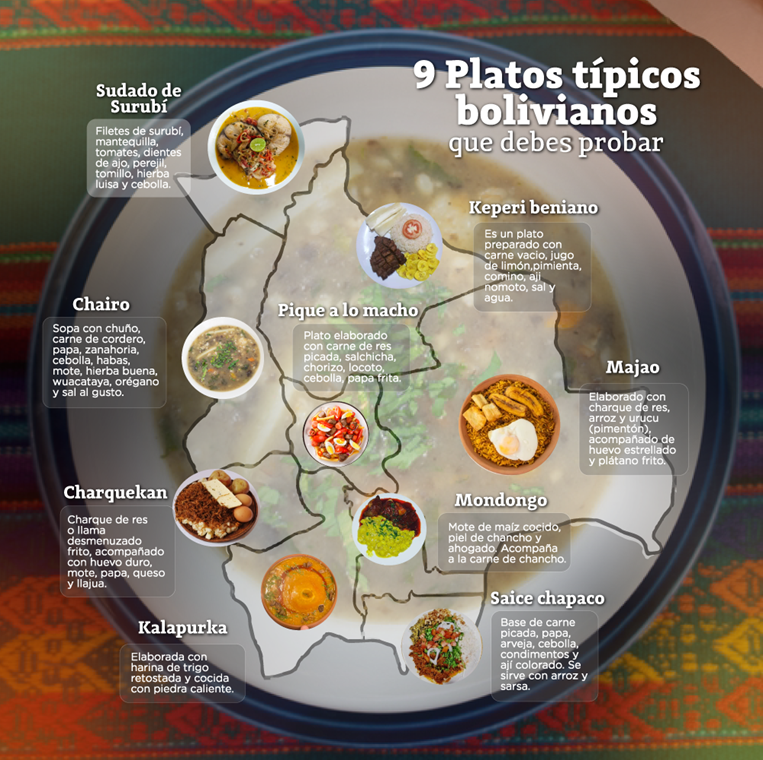
From salteñas to pique macho, from saice to majao, every department in Bolivia has a unique sauce worth exploring. Next, we invite you to take a trip through Bolivia, taste nine traditional dishes and more.
Our journey started in La Paz with a traditional soup to hug on a cold day: the traditional La Paz Presidente soup.
“This traditional soup from La Paz is made with chalona (dehydrated lamb), chuño (dehydrated potatoes), potatoes, corn and spices. It’s a comforting dish perfect for the cold highlands,” says Juan Carlos Núñez, professor at Unifranz’s Hospitality and Tourism Management degree.
The road took us to Oruro, a land of carnivals and mines, but also of devils and Chinese women, where charquekan rules over other stews.
This dish is made with beef char (dried meat) or llama that is chopped and fried until it reaches a crunchy and salty texture, balanced with the softness of the white and popping particles, the presence of unpeeled potatoes, the oiliness of the eggs and the freshness of the fresh cheese, with a generous amount of lljua to complete the experience.
“Crispy and comforting, charquekan is a feast for the senses, where every texture is completely different and every flavor pairs perfectly with the spicy kick of the lljua, balancing the heat with all the flavors, and is definitely a dish to be eaten with your hands and fingers-licked,” Moscoso says.
The cuisine of the Royal Villa is a blend of ancestral flavors, culture brought by the conquistadors, and techniques brought by travelers from around the world who came to Potosí in search of their fortune during the silver boom.
Kalapurka is a soup that consists of two parts, the dish itself and its preparation. The base is prepared with “charque caldito”, which is dehydrated camel meat and bone broth, corn flour and some vegetables, and is served with a little fried potatoes, fried camel char, chopped Andean herbs, quinoa flakes and a little hot sauce made from local chilies.
The star of the dish, however, is the volcanic stone, which is heated over embers for a few minutes before being dropped into the soup, causing the mixture to bubble up and make the dish a spectacle for the eyes and taste buds.
From the heights of the mountains we hopped down to the valleys, the breadbasket of Bolivia, where the richness of the food is reflected in the opulence of the dishes and the size of the portions, a great example being the Pico Masculine.
“This dish is a mixture of beef, chorizo, French fries, onions, tomatoes and locoto (a type of hot pepper). It is served with hard-boiled eggs and is known for its spicy taste and its ability to satisfy hunger after a long day at work,” says Núñez.
Tarija offers visitors a wide variety of typical Tarija gastronomic and pastry dishes. Cicada grass Spicy foods abound, as they are part of Tarija cuisine, as do rolls, rosquete and dough, not to mention delicious local drinks, such as the famous Patro wine.
Saice chapaco: It is the most representative dish of Tarija cuisine. It is made with minced meat, potatoes, peas, onions, spices and red peppers. It is served with rice and sarsa (tomato and onion salad).
“The Tarigenos are very proud and one of the sources of this pride is saice, a dish they defend without distinction, whether you are from the countryside or the city, when the chapaco pays you, it always comes with a very familiar recipe,” says the chef.
Chuquisaca cuisine is characterized by the clever use of red or yellow chili powder, chuquisaqueño chorizo and qóqo is a typical dish of some regions of Bolivia.
However, the most representative dish is beef tripe.
“To sum it up, the soul of the chuquisaqueño tripe dish is the big golden chunks of pork (not the offal), bathed in a sweet red chili sauce, garnished with chopped parsley, a ‘corn husk’ sauce. Dyed yellow, with soft pieces. of pork rind, and a couple of white potatoes,” says chef and researcher Federico Guardia.
From the valleys to the plains, our journey will take you to Santa Cruz, a region whose typical food origins date back to the Spanish conquest era. “Majao” is one of the most representative dishes of Santa Cruz. Its name comes from the Spanish verb “majar”, which literally means to grind.
Made of beef jerky, rice and urucú, flanked by two fried plantains and topped with a fried egg, the dish was historically created to strengthen the bond between Ñuflo de Chaves and the Itatines indigenous people of the time.
Its mix of textures and flavors makes it one of the region’s most popular dishes, whether served dry or “whipped,” the latter of which is moister and traditionally served with duck.
Benian cuisine is often associated with religious festivals. These specialties have survived from colonial times to the present day, offering varieties to suit all tastes. These include Keperi Beniano, Masako, Surubí al Horno, and many more.
Keperi Beniano: A dish made with meat sous-vide, lemon juice, pepper, cumin, salt and water, served with fried cassava and cheese rice, and sometimes with a salad, this stew entices diners with its mix of textures and flavors.
“The people of Benignano are warm and welcoming, and nothing says ‘welcome’ better than a juicy, well-served keperí,” Moscoso says.
Fish and game dominate in Pando, Bolivia’s youngest province, and the wild nature of the Amazon basin, the flow of rivers, the impenetrable forests and the proximity to Brazil make its food a gem worth exploring.
Typical dishes of the Pando department are farofa, escabeche de torcaza, Moroccan meat, etc. These are typical dishes of the eastern region of Bolivia whose products come from the rivers and mountains.
Surubí sudado is the region’s most important dish, made with surubí fish fillets, butter, tomatoes, garlic cloves, parsley, thyme, lemon verbena, chives and onions, delicately steamed, seasoned with herbs and served on a bed of vegetables, the dish retaining the texture of the fish.
“Surubí is a very noble meat in all its manifestations, but when sweated, its potential multiplies, its flavor becomes more concentrated and its aromas give it an incomparable aroma that brings sensory pleasure,” adds the chef.
The journey does not end here, we will retrace our steps and try to surprise ourselves with new flavors.
Saltenas: They are juicy empanadas filled with meat, chicken or pork, served with potatoes, peas, eggs and spices. Nunez says they are known for their unique flavor and juiciness, which makes them a delicious appetizer or breakfast.
They came from Potosí, and there is still a great debate about which region would be best for them.
Silpancho: Originally from Cochabamba, it consists of rice, boiled potatoes and a layer of breaded meat, topped with a fried egg and salad. It is a complete and nutritious dish, perfect for a hearty meal.
Chicharrón: Each region has a different way of making chicharrón, but essentially it is a crunchy and delicious dish made with pork fried in its own fat. Served with corn, potatoes and lljua. It is very popular during festivals and celebrations, the teacher concluded.
Rivera said the variety of flavors and aromas that Bolivian food exudes serve as another option to promote gastronomic tourism, which has become one of the favorites of tourists from all over the world.
[ad_2]
Source link

