


[ad_1]
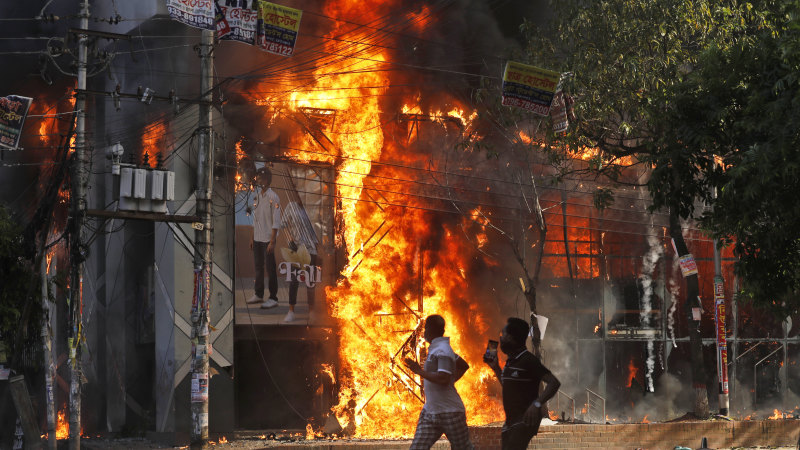
At least 11,000 people have been arrested in recent weeks. The unrest has also led to the closure of schools and universities across the country, and authorities have imposed a curfew.
Over the weekend, protesters called for “non-cooperation,” urging people not to pay taxes or utility bills or go to work, as Sunday is a working day in Bangladesh. Offices, banks and factories were open, but commuters in Dhaka and other cities faced challenges getting to work.
loading
Hasina on Saturday offered to talk to student leaders, but a coordinator refused and offered a condition that she resign. Hasina reiterated her promise to investigate the deaths and punish those responsible for the violence. She said she was ready to sit down if the protesters wanted.
Authorities shut down mobile internet on Sunday in an attempt to quell unrest, while broadband internet was briefly disrupted on Monday morning, the second blackout in the country since protests turned deadly in July.
Both broadband and mobile internet were restored on Monday after broadband services were disrupted for three hours.
Hasina has said protesters who engage in “vandalism” and sabotage are no longer students but criminals. She said they should be dealt with with an iron fist.
The 76-year-old was re-elected for a fourth consecutive term in January elections that were boycotted by her main opposition, raising questions about whether the vote was free and fair. Thousands of opposition members were jailed ahead of the election, which the government argued was held democratically.
Associated Press
[ad_2]
Source link

