

[ad_1]
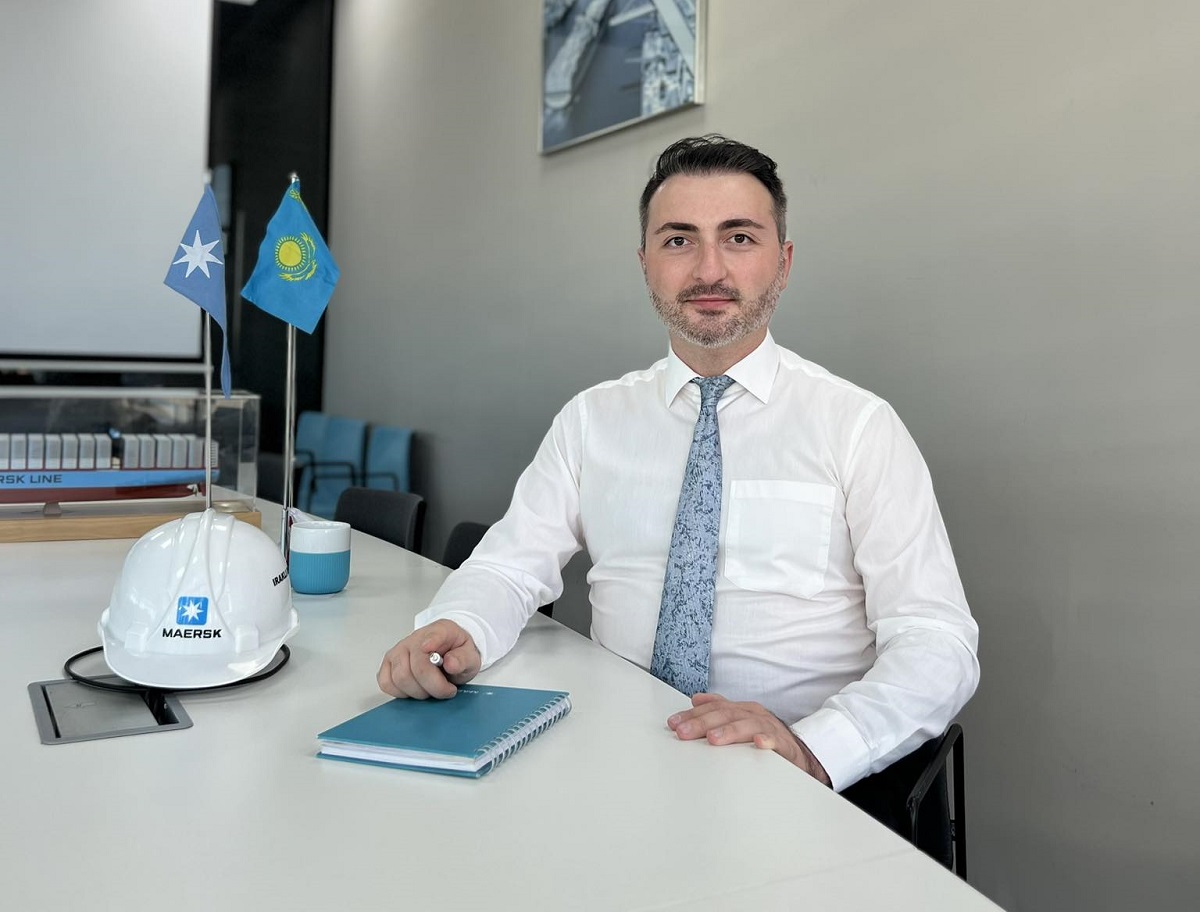
Baku, Azerbaijan, May 28. Maersk is actively working with key stakeholders in the Central Corridor project, primarily railway companies such as Kazakhstan Railways and Azerbaijan Railways, said Irakli Danielia, Maersk Business Development Manager for Central Asia and the Caucasus. trend In an exclusive interview.
“We are also working closely with our Chinese counterparts to build a competitive and efficient corridor for local customers, regional clients and international companies. Our goal is to facilitate seamless transport services between the East and the West, with a special focus on supporting and enhancing logistics solutions for the local market,” he said.
According to the development manager, Maersk previously focused on transit cargo transportation between China and Europe, but the company has now expanded its business focus to local markets such as Azerbaijan, Kazakhstan, Uzbekistan and Turkmenistan.
“In September 2023, we officially launched our sea-rail transport product, which provides connectivity to the Central Asian region through the Poti sea port, across the territories of Georgia, Azerbaijan and Kazakhstan, to Uzbekistan and Tajikistan. In addition, we are developing a direct solution from China to Central Asia. Therefore, the Central Corridor Initiative is our focus, covering both the western and eastern ends of the corridor,” Danelia pointed out.
He pointed out that Maersk currently has strategic cooperation agreements with Kazakhstan, Azerbaijan, Georgia and other countries.
“This means that we plan to shift regular operations to this corridor, which will undoubtedly support the macroeconomic development of these countries and enhance the potential of logistics services in Central Asia and the Caucasus countries. When it comes to logistics, our focus is not just on transport from point A to point B. Instead, we aim to provide additional services within these countries, such as first-mile and last-mile solutions. This approach shows our commitment to developing the corridor and the related countries from a comprehensive logistics perspective,” he explained.
Danelia further noted that Maersk has cooperation with all seaports along the Middle Corridor, including Baku, Alat Port (both in Azerbaijan) and Aktau Port (Kazakhstan). “Each port has its own capacity, and as a contributor to the Middle Corridor, we will support them with freight. This is good for all parties involved.”
He said that while Maersk supports the railway company’s freight, it also indirectly supports the operation of the seaport.
“Increasing the flow of cargo within the corridor is our common goal, which will make both our and their businesses successful, larger, more efficient and therefore more reliable. We are open to discussing and finding ways to further contribute to the initiatives of ports such as Alat Port. Currently, this is the solution available to us and we actively use Alat Port for our operations,” he said.
Danielia noted that Maersk is primarily focused on developing the central corridor through the ports.
“For exports, we transport goods from Central Asia and Azerbaijan to Poti by rail, a process we have been implementing for decades. From Poti, goods can be shipped directly to destinations around the world, including Turkey, Europe, Africa, the Far East and America. The same process is used for imports,” he said.
The regional manager noted that demand in the central corridor is growing steadily.
“This demand mainly comes from Caucasus countries, who want to ship goods from China to Baku via the Middle Corridor. We handle a large number of containers from China to various destinations such as Baku, Georgia, Turkey and Europe. In addition, there is a growing interest from Japan and South Korea to connect to the Middle East through China and ship to Caucasus countries and Europe. In addition, we also focus on import and export flows in Central Asia, with the Middle Corridor being a key route,” Danelia said.
Irakli Danielia further noted that Maersk believes the Middle Corridor will establish a strong position in the east-west logistics system and vice versa, promoting seamless trade between regions.
The official noted that demand for the Middle Corridor is growing steadily as Caucasus countries seek to transport goods from China to Baku via the Middle Corridor.
“We handle a large number of containers from China to various destinations such as Baku, Georgia, Turkey and Europe. In addition, there is growing interest from Japan and South Korea to connect to the Middle East via China and then to the Caucasus countries and Europe. In addition, we focus on imports and exports from Central Asia, with the Central Corridor being a key route,” Danelia explains.
He noted that Maersk is primarily focused on shipping containerized cargo, and therefore, the company works with local shippers, transportation and logistics companies to handle already containerized cargo.
“In addition, we are actively encouraging exporters in the region to containerise and convert bulk commodities, highlighting the benefits of containerisation,” Danelia added.
Regarding the World Bank report and the EBRD study, Danelia noted that it is indeed relevant and realistic to consider the costs involved.
“However, the implementation of these initiatives depends on the market’s willingness to act quickly as time is of the essence in this matter. The main focus should be on converting export bulk cargoes into containerised cargoes. This involves rapidly increasing the use of containers with the goal of optimising cargo handling,” he said.
He added that Maersk believes that all industry stakeholders should invest time and energy in this effort as the task is critical yet challenging.
“In Central Asia, most export goods are traditionally transported in bulk. Therefore, there is a need to raise awareness of the advantages of container transport, including standardized and simplified operational processes. In addition, stakeholders should emphasize the economic benefits of container transport, especially within multimodal transit corridors like the Central Corridor,” said Irakli Danielia.
[ad_2]
Source link
