


[ad_1]
By Hamish Wilson and John Douglas Dunbar* 

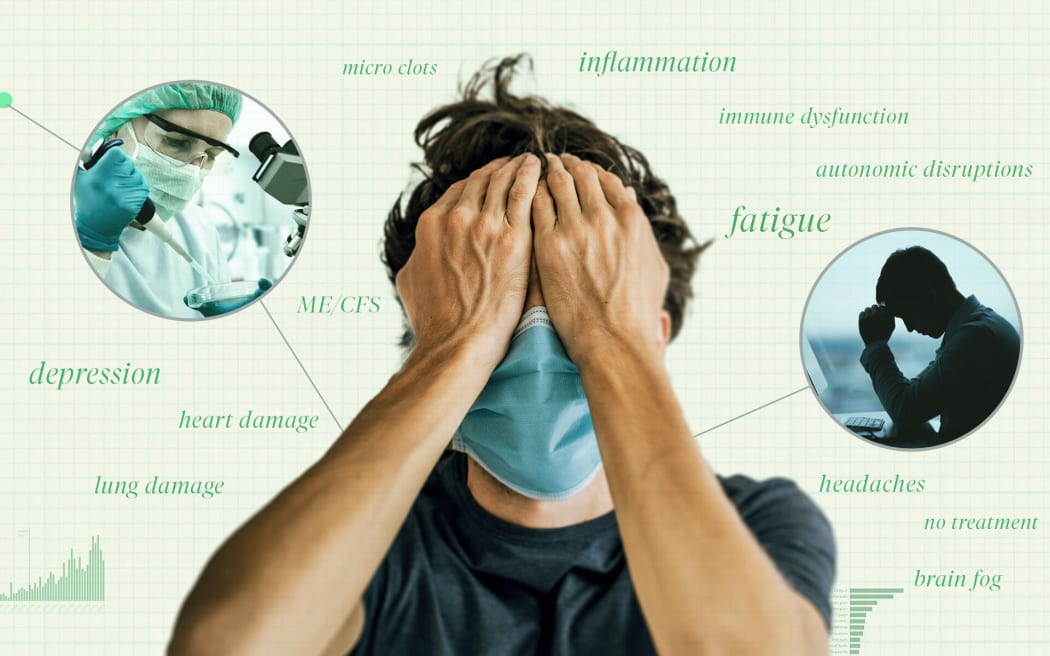
photo: Vinay Ranch
analyze – The emergence of long Covid as a mysterious new disease has renewed interest in The nature of the incapacitation caused by persistent fatigue.
Around the world, this unexpected outcome has become a major health problem, causing enormous personal suffering, work absence, and projected high societal costs.
Long-term COVID patients face an additional burden from medical skepticism and social discrimination, which leads to Self-doubt and shame.
Until now, attention has focused on the lack of available treatments, which means there is no cure. But persistent fatigue also often accompanies chronic pain. New insights into the neurophysiology of pain and sensation are now bringing more optimism to long-term COVID patients.
Similarities between long COVID and chronic fatigue
The virus that causes COVID-19 has infected 750 million people, many of whom died before widespread vaccination. Most people recover fully from mild infections, but about 10% experience persistent and debilitating fatigue, including brain fog, anxiety or difficulty breathing, and a host of other symptoms.
Many of the symptoms of long Covid are similar to those of chronic fatigue syndrome or myalgic encephalitis. Known as CFS/ME, the illness gained attention in the 1970s as a relapse after glandular fever, although we now know it can be triggered by other infections.
Recent insights from the emerging field of neuroscience can now guide the clinical management of chronic pain and may offer hope for people suffering from persistent fatigue.

photo: befunky.com
The neuroscience of pain and sensation
Neuroscience is the study of the central and peripheral nervous system, a complex, full-body network that monitors and regulates all of our internal functions, far below our conscious thought and control.
The fight-or-flight response in a stressful situation is a useful example. Our attention becomes more focused, our heart rate increases, and our blood pressure rises, pumping more blood to our muscles. We don’t have to think about it; it all happens naturally.
The sensation of pain is now understood to be a warning signal from the nervous system in response to an actual or potential threat to safety. The intensity of the pain signal depends not only on the physical injury but also on our prior experiences and expectations.
Persistent pain often stems from an overvigilant nervous system that continues to send out warning signals. The underlying neurophysiology of persistent pain is known as “central sensitization.” This term describes an oversensitive warning system that causes exaggerated pain signals even after damaged tissue has healed.
Central sensitization depends on the phenomenon of neuroplasticity. Neural pathways that we use regularly become more mature, efficient, and dominant. In cases of persistent pain and fatigue, the relevant neural pathways can become highly developed, even if this is detrimental to normal function.
While neuroplasticity can lead to the formation of unhelpful neural pathways, the reverse is also true: unhelpful pathways can be downregulated, thereby improving symptoms.
Applying neuroscience to CFS/ME and Long Covid
These insights underpin the concept of pain neuroscience education, which is used in pain clinics around the world to educate patients about the nature of pain and the factors that influence it, many of which are beyond conscious control.
These explanations provide a basic framework for understanding how specific activities, including group education, physical retraining, and identification of hidden beliefs, can promote recovery.
Research shows that appropriately trained GPs can provide helpful explanations for a range of persistent symptoms, including fatigue and pain.
Under normal circumstances, pain and fatigue are best viewed as adaptive responses. Like pain, fatigue is a warning sign that the body needs to rest. Fatigue levels are affected by many factors, including subconscious influences.
As with persistent pain, nervous system inflammation and dysfunction underlie a range of common problems in CFS/ME and Long Covid. Therefore, current approaches to treating chronic pain may also work for persistent fatigue syndromes.
Encouraging early results
Research shows promising early results. One study explored subconscious beliefs about the nature of illness and found that this reduced fatigue from long-term COVID-19, with the effects lasting for six months.
A Scandinavian research team also challenges the current characterization of persistent fatigue syndrome as “an incomprehensible, incurable disease without any available treatment.” Instead, they call for a more constructive narrative based on new insights into the nervous system and its role in generating (and sometimes unintentionally perpetuating) debilitating feelings of fatigue.
These insights may alleviate current concerns that long COVID is a mysterious illness. While there is no magic bullet, supportive care coupled with “fatigue neuroscience education” may give patients a better understanding of the mechanisms behind their symptoms and provide useful suggestions for recovery.
These concepts have yet to be integrated into medical training and clinical care for persistent fatigue syndrome. But ongoing neuroscience research and encouraging reports of clinical outcomes are now providing some optimism for understanding and treating Long Covid.
*Hamish Wilson is Associate Professor of General Practice at the University of Otago; John Douglas Dunbar is Clinical Senior Lecturer in Surgical Sciences at the University of Otago.
This article was originally published by The Conversation.
[ad_2]
Source link

