

[ad_1]
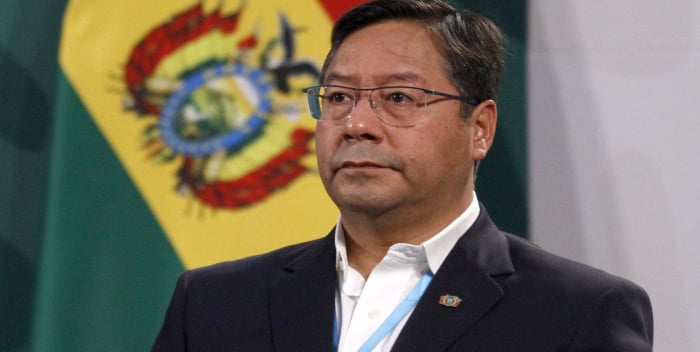
August 21, 2024 – Through voting, the people will decide the future of hydrocarbon subsidies, the re-election of the president and the determination of parliamentary seats.
The President of Bolivia, Luis Arce Catacora, sent this Wednesday to the Supreme Electoral Tribunal (TSE) the questions that will be put to citizens on December 1, when the referendum will be held to decide the future of hydrocarbon subsidies, the re-election and the determination of parliamentary seats.
Through social networks
He stressed that this participatory exercise will allow Bolivians to “unite and decide by democratic means on the future of hydrocarbon subsidies, seats in Parliament and the intermittent re-election of the President and Vice-President of the Plurinational State of Bolivia,” as envisioned in the Constitution.
Noting that his decision prioritizes the future of the country, the next generation and the well-being of Bolivian families, he made it clear that “it does not respond to electoral calculations or personal ambitions”.
In a letter to the TSE, the president argued that “the best way for Bolivians to find solutions to their differences is to strengthen forms of direct participation of the people in the search for common interests.”
Arce called the referendum on August 6. It will be held on December 1 next year, on the occasion of the judicial elections. The results of the consultation will be immediately binding. Your four questions are as follows:
Question 1: Do you agree to expand the constitutional one-time continuous election of the country’s president and vice president to non-consecutive elections, which would mean amending the country’s political constitution?
Question 2. Do you agree to maintain the current subsidies for special gasoline, despite the huge economic costs it implies for Bolivians and the fact that prices far below international gasoline prices lead to smuggling, damaging effects on the national economy, a shortage of dollars and fuel shortages?
Question 3. Do you agree to maintain the current diesel subsidies, despite the huge economic costs it implies for Bolivians and the fact that prices well below international prices lead to smuggling, national economic losses, shortages of dollars and fuel shortages?
Question 4: Do you agree to amend Article 146 of Section 1 of the country’s political constitution to increase the number of representatives by 130 so that the sectors no longer lose representation and the sectors with the largest population receive more representatives? Results of the 2024 Population and Housing Census?
Bolivia’s current constitution considers referendums a mechanism for strengthening democracy.
[ad_2]
Source link

