

[ad_1]

HARARE – Veteran academic and political analyst Igbo Mandaza on Saturday publicly launched a scathing critique against embattled former opposition leader Nelson Chamisa, urging him to step down and bring in a new leader.
Zimbabwe is at a crossroads, with discontent brewing within the opposition. At the centre of this growing discontent is the former leader of the Citizens’ Coalition for Change (CCC), whose tenure as opposition leader is increasingly being questioned.
In a tone of urgency and decision, Mandaza delivered a stern message: “Give up your Godisini now, leave opposition politics and let new leadership come to power,” he said, referring to Chamisa’s frequent invocation of religious themes in his political speeches. “As I have said before, you have served the country by systematically demobilizing the masses – this is shameful and you will pay a heavy price for it. Announce your departure or we will expose you.”
The comments highlight the deep dissatisfaction with Chamisa’s leadership among many in Zimbabwe’s political class. Critics argue that Chamisa, once hailed as a beacon of hope for a new Zimbabwe, continues to remain in opposition, preventing new faces and new ideas from rising. Rather than reinvigorating the opposition, they argue, Chamisa’s leadership has inadvertently created a vacuum that has left the ruling Zimbabwe African National Union-Patriotic Front virtually unchallenged.
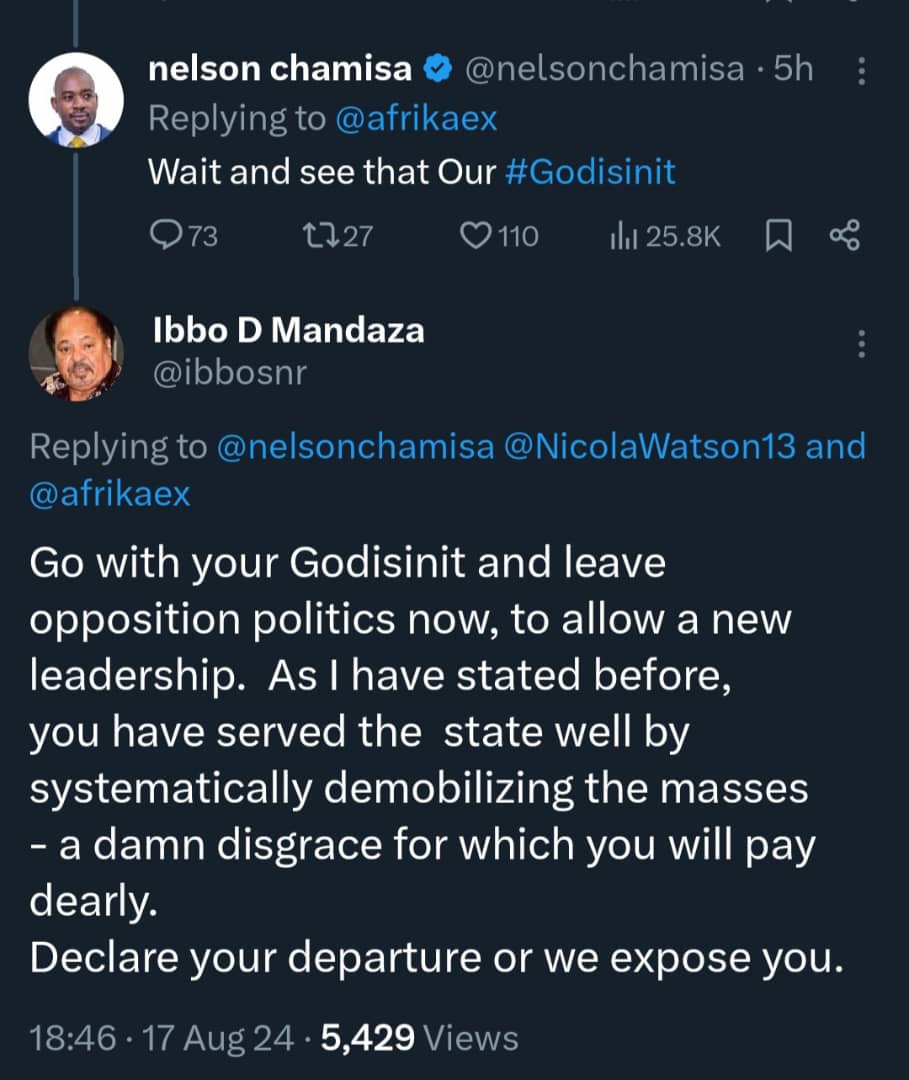
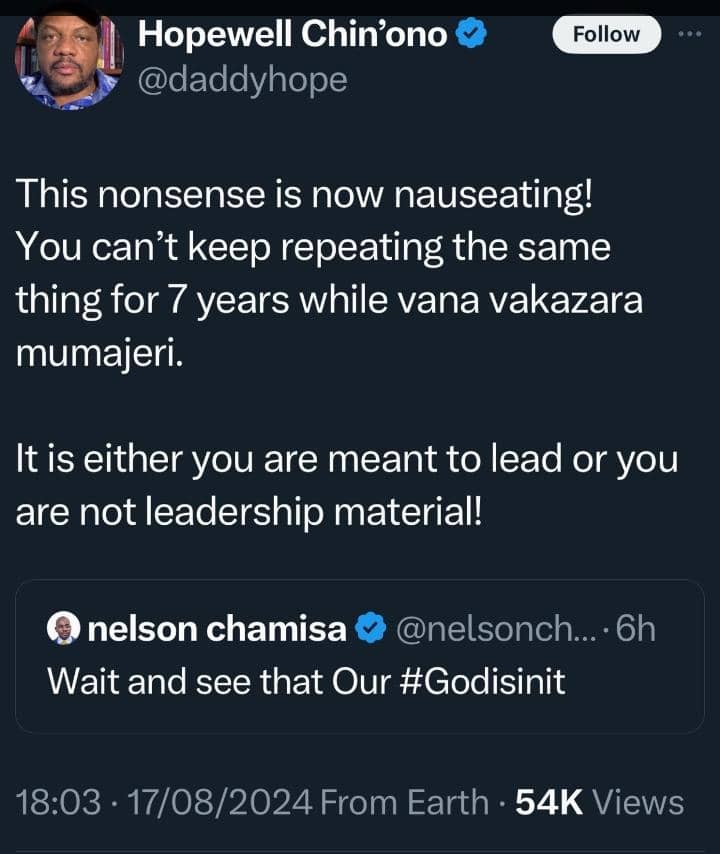
One of the key factors contributing to this discontent is the behavior of Chamisa’s fanatical supporters, who have developed what some have described as a cult-like following for the opposition leader. These supporters, whose passion and unwavering loyalty are often likened to football fans, have turned social media into a battleground, fiercely defending Chamisa against any criticism. This has created a toxic environment that has discouraged newcomers from joining the political fray, further entrenching Chamisa’s dominance at the expense of new leadership.
Once seen as a powerful tool for mobilization and democratic discourse, social media has become a double-edged sword for Zimbabwe’s opposition. While Chamisa frequently uses platforms such as Twitter and Facebook to communicate with his fans, his sporadic posts and lack of tangible political action have led many to question his leadership. At the same time, the aggressive tactics adopted by his supporters online have made it difficult for other voices to emerge, effectively silencing potential challengers and consolidating Chamisa’s control over the opposition.
This dynamic plays into the hands of the ruling ZANU-PF party, which currently has little credible opposition. Under Chamisa’s leadership, the opposition appears fragmented, disorganized, and unable to mount a serious challenge to the entrenched power of President Emmerson Mnangagwa and his party. While Chamisa’s presence on social media keeps his supporters active, it has done little to change the political reality on the ground, as the ZANU-PF remains dominant.
Mandaza is not alone in calling for Chamisa to step down. Over the past year, there has been a growing consensus in Zimbabwean political circles that if the opposition wants to defeat the Zimbabwe African National Union-Patriotic Front in future elections, it needs to innovate. Critics believe that Chamisa’s leadership era is over and if the opposition wants to continue to have influence, it must accept new voices and new ideas.
As Mandaza puts it, the disbanding of the masses is a particular concern. Many feel that Chamisa’s leadership has failed to harness the energy and momentum that the opposition movement once had. Instead, there is a sense of stagnation, with the opposition seemingly content to engage in sporadic social media clashes rather than take to the streets and challenge the status quo in a meaningful way.
This sentiment was echoed by other political observers who noted that the longer Chamisa remains in power, the more difficult it will be for a new leader to emerge. “We are seeing a situation where the opposition has been hijacked by one man,” said a prominent Zimbabwean commentator. “This is not good for our democracy. We need new blood, new ideas and a leadership that is willing to confront ZANU-PF head-on.”
Many believe that for Zimbabwe’s democracy to thrive, the opposition must find a path to rejuvenation. Whether that means Chamisa stepping down or embracing new voices within his party remains to be seen. But one thing is clear: the current trajectory is unsustainable. Without a strong and united opposition, Zimbabwe’s political future will grow increasingly bleak while ZANU-PF continues to consolidate its power and the hopes of millions of Zimbabweans for change remain unfulfilled.
Zimbabwe is facing a critical moment in its political history, and the actions of Nelson Chamisa and the CCC in the coming months may well determine the future of opposition politics in the country. Will Chamisa step up and forge a new beginning for the opposition, or will he continue to lead a fragmented and ineffective movement? The answer to this question will determine the fate of Zimbabwe for years to come.
Related
[ad_2]
Source link

