

[ad_1]
August 26, 2024 at 4:00 AM
August 26, 2024 at 4:00 AM
2,150 women detained in Bolivia There are 11 prisons in the country. Among them, 28.97% were prosecuted for the crime of trafficking in controlled drugs. In addition, among the total number of prisoners, 65% of the prisoners have not yet been finally sentenced and are under preventive detention, and 55.3% of the prisoners are in a vulnerable position in the prison center.
These data come from research Women in Bolivian Prisonspresented by the Office of the Ombudsman. The report also states that the number of women in prisons increased by 12.5% between December 2023 and June of this year, and that the number of people deprived of their liberty in Bolivia’s prison system increased from 1,871 to 2,150.
“Women deprived of their liberty were identified according to the 17 vulnerability identification criteria implemented in this report. 55.39% are in a disadvantaged position. Either because they are pregnant, have children, are elderly, disabled, etc., which increases their vulnerability in prison centres,” said Ombudsman Pedro Carriçaia.
The official explained that “the largest concentration of prisoners is along the central axis of the country” because 72% are held in prisons in the departments of Santa Cruz, La Paz and Cochabamba.
“The problem of crimes involving controlled substances has persisted for more than a decade, with data from 2012 showing that women accounted for 56% of all offences involving controlled substances.21 In 2018, the proportion of women in this “type” of crime reached 31.62%22, and by 2023, the proportion of women deprived of their liberty for crimes provided for in Law No. 1008 had risen again to 41.26%,” the defense study states in part.
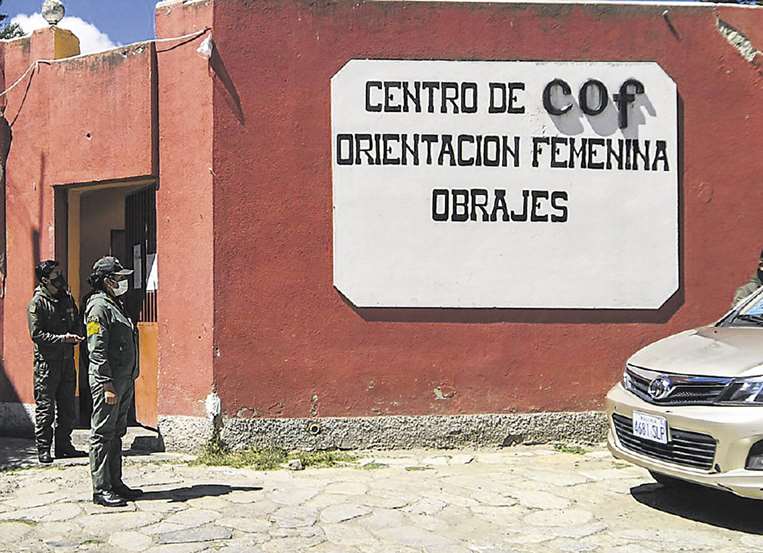
In the Obrajes prison in La Paz, there are 361 women.
The document said there was “clear evidence” that state action to prevent crime against women was flawed, reflecting increased penalties and a lack of perspective on protecting women’s rights. Gender in judicial decisions The concern is that of Law 1008, which provides for crimes that are disproportionate to the acts committed and therefore discriminate in prison.
“For example, a Women who smoke even a small amount of marijuana can be sentenced to eight to 25 years in prison. If you cannot prove that the amount of controlled substances was intended for consumption (Articles 48, 49, 51 and 55 of Law 1008). In addition to the statutory flaws, prosecutors and judges mechanically apply the norm without taking into account international human rights standards such as gender equality and the best interests of the child. The situation becomes even worse if you consider that 65% of women are deprived of their liberty without being sentenced. “The article reads.
In the following departments Oruro and Chuquisaca have more people sentenced than prevented. According to the report, this would lead to speculation that there was “diligent administration of justice” at sentencing. Crimes committed by women under Law No. 1008; However, it is noteworthy that from the testimonies collected in the preparation of the document, one of the reasons why the women felt they had convictions was that they were the product of accepting simplified procedural guidelines, which required them to pay attention to these cases in order to prevent innocent people from pleading guilty, especially in consumption cases.
In interviews conducted by the research team, the women said they became involved in crime because Financial Need Or that they were deceived: prisoners said “out of financial necessity,” “no money,” “out of necessity, it’s a pandemic, I have two kids,” “need,” “to protect my daughter,” “they deceived me,” “accused” others of a crime, “they forced me.”
When asked about their motivations for reoffending, women deprived of their liberty mentioned the same reasons and added others such as: “I felt depressed,” “I was wrong,” “bad luck,” “I was wrong,” “due to social judgment and isolation,” and “because of my drug addiction.”
“I remember it was during the epidemic. I work for a food delivery company So, I went out to work, while my husband and daughters stayed at home, and when my husband came, he scolded me, saying that I would infect everyone, and that the money I earned was mine. It was useless, I used to smoke marijuana when I was young, and I knew that you could buy and sell drugs in that square, and that’s why I entered this industry, to make a little more money,” said one of the statements.
The study also showed that 63% of the women interviewed mentioned that they did not receive a medical examination before being imprisoned.
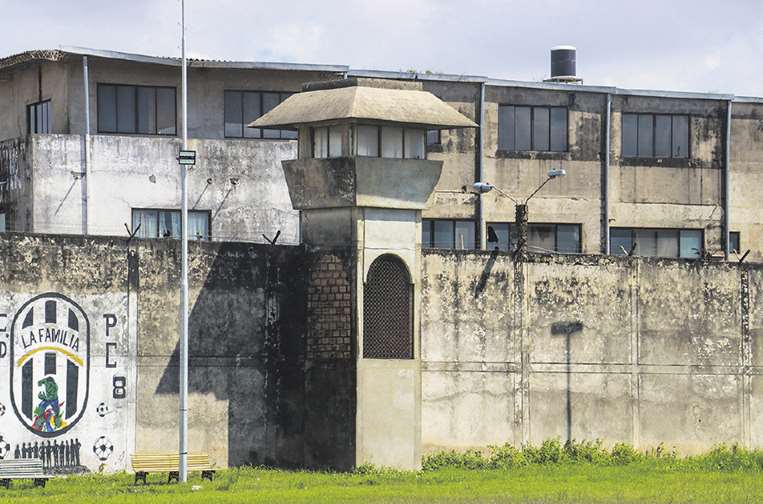
In Palmasola, most of the detainees were being held under Law No. 1008.
The Ombudsman’s Office presented the report “Women in Bolivian Prisons”, prepared by the National Mechanism for the Prevention of Torture (MNP), on the conditions of women deprived of their liberty in the country’s penitentiary centres.
The report covers three prison centers in Santa Cruz: Palmasola, Puerto Suarez and Montero CERPROM. All three have mixed populations.
Palmasola prison holds 521 women.
2.150 Women are held in different prison centres in the country. The total number of prisoners in Bolivia is 28,838.
278 For the purpose of preparing the report, interviews were conducted with women detained in prisons in the country. The figure covers 11 prisons.
No infrastructure: Karisaya criticises prison shortcomings
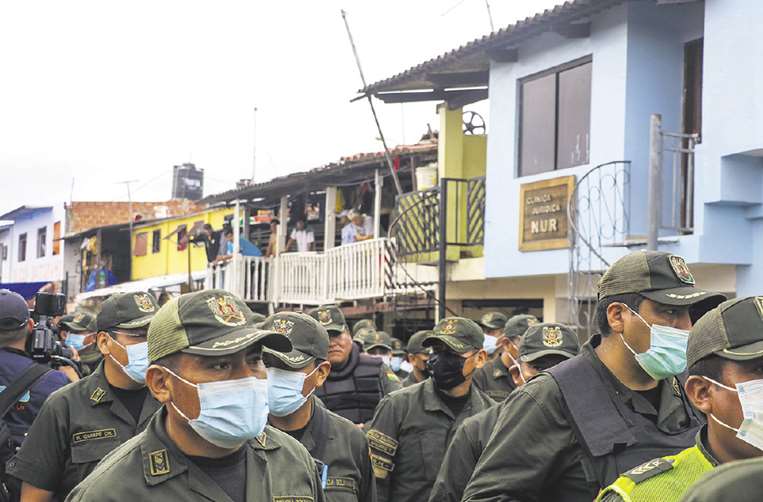
Only four of the country’s 21 prison centres provide dedicated space for detained women.
of There are 21 prisons in the country, 4 of which have special spaces for women. The rest is inside men’s prisons. The Ombudsman’s office warned that cells in isolation prisons are “precarious and uninhabitable” and that too often solitary confinement is “applied indiscriminately and for longer periods than is internationally permitted”.
For this study, the research was conducted by National mechanism for the prevention of torture Interviews were conducted with 278 women in 11 of Bolivia’s 21 prisons based on “17 categories of analysis,” such as type of crime, infrastructure, food, health, pregnancy and women with children, among others, explained the Ombudsman, Pedro Carriçaia.
The study showed that more than half of the female prison population belonged to one of the following vulnerable groups: foreigners, mothers, pregnant women, Women living in prison with boys and girls under the age of six, Elderly persons, of any nationality or indigenous people, women of all sexual orientations, persons with disabilities, persons living with HIV, persons with psychosocial disabilities, drug addicts, Afro-Bolivians or persons with sexually transmitted diseases.
Karisaya stressed that people deprived of their liberty suffer a range of conditions violations of their human rights, such as overcrowding, excessive use of preventive detention, lack of medical care, problems with the distribution of property (monetary allowances for food to each prisoner), and the inadequacy of these amounts.
“55% are in vulnerable situations, either because they are pregnant; They are accompanied by children, they are elderly, disabled, LGBTI, etc., which puts them in a highly vulnerable situation, that is, more than half of the women deprived of their liberty can be assumed to be in a vulnerable situation,” Karisaya noted.
This study also highlights the situation experienced 145 boys and girls under the age of six live in prison Together with their mother, they face the effects of precarious prison conditions and overcrowding that affect the entire Bolivian prison system.
Data collection deadline is December 2023The report states that there are 1,871 women deprived of their liberty, a figure that increased by 12.5% between January and June 2024, reaching 2,150 women deprived of their liberty.
The Ombudsman condemned the “lack of adequate care for pregnant women or mothers” in prisons, as some had to return to prison after giving birth “without any consideration”.
Karisaya also lamented “a very delicate situation”, namely the issuance of “prediarios”, that is, daily rations issued for the food and needs of prisoners. This amount reaches 248 Brazilian shillings per month.
[ad_2]
Source link

